The 2026 Arctic Report Card
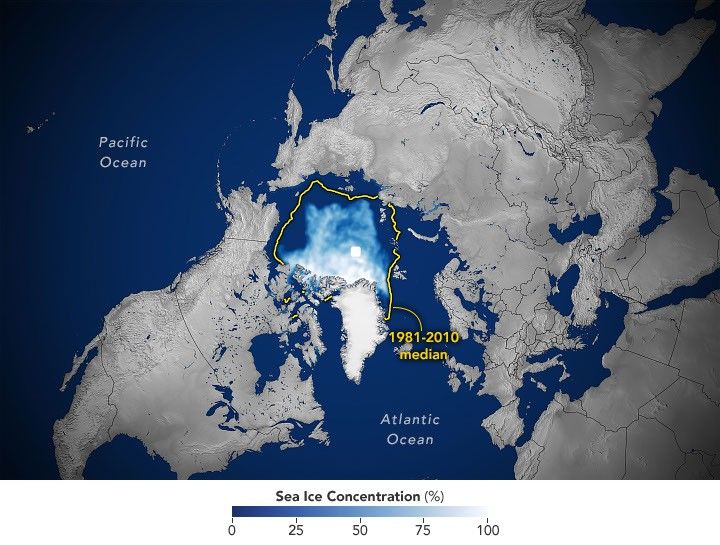
NASA just dropped the latest satellite data on Arctic sea ice, and the numbers are exactly what we expected, which is to say, they are not great. The ice cover has reached its minimum for 2026. This isn't just a seasonal shift; it is a persistent trend that has been documented since the late 1970s. For those of us in the tech and building space, this isn't just an environmental footnote. It is a fundamental shift in the geography of our planet.
When we look at the satellite records, we see a pattern of both winter and summer ice loss. The ice isn't just melting; it's thinning. Old, thick ice is being replaced by young, thin ice that melts away as soon as the sun comes out. If you are building for the long term, you have to look at this as a massive change in the physical layer of the world.
Why Builders Should Care
In the crypto and AI space, we often get caught up in the digital layer. We talk about nodes, hash rates, and compute power. But all that hardware sits on a physical planet. The shrinking Arctic ice opens up new shipping lanes and changes how we think about global connectivity. It also forces a conversation about resource extraction and regional stability.
If you are a founder, you know that instability is the enemy of growth. The shifting Arctic isn't just about polar bears; it is about the changing nature of maritime trade routes. We are looking at a future where the Northern Sea Route becomes a viable alternative to the Suez Canal. This has massive implications for supply chains, data centers located in northern climates for cooling, and the physical infrastructure of the internet.
The Data Doesn't Lie
Satellite imagery provides a level of transparency that we often try to emulate with blockchain technology. You can't argue with the pixels. The year-over-year decline in ice extent is a hard truth. For builders, this is a signal to start thinking about resilience. How does your stack hold up when the physical environment undergoes a radical transformation? Are you building for a world that existed ten years ago, or the one that is being mapped out by NASA today?
We see a lot of hype around green tech and sustainable AI, but most of it is marketing fluff. The real work is in understanding these fundamental shifts and building systems that can withstand them. Whether that is more efficient cooling systems for server farms or decentralized logistics platforms that can adapt to changing sea lanes, the opportunity is in the reality, not the rhetoric.
The Long Game
This isn't a problem that will be solved by a single DAO or an AI agent. It is a multi-decade shift. As builders, we have to move past the hype cycles and look at the long-term trends. The Arctic is telling us that the world is changing, and it is changing fast. The melting ice is a physical manifestation of the externalities that our current industrial systems have ignored for too long.
From a founder's perspective, this is about risk management. If your business model relies on a stable climate or traditional shipping routes, you are carrying more risk than you realize. The NASA data is a reminder to audit that risk. Don't wait for a crisis to pivot. Look at the data now and start building for the world as it is, not as we wish it would stay.
Final Takeaway for Founders
The 2026 Arctic minimum is a milestone in a long-running trend of environmental decline. For the builder community, this is a call to focus on real-world utility and resilience. Stop chasing the latest memecoin and start looking at how tech can solve the massive physical challenges coming our way. The ice is melting, and the world is changing. The question is whether you are building something that can survive the thaw.
- Satellite data shows a consistent decline in Arctic ice during both winter and summer months.
- New maritime routes and resource shifts are inevitable as the ice thins.
- Resilience and physical-world awareness are becoming critical for tech infrastructure.
- Founders must look past the hype and account for long-term environmental risks.
Read the original at NASA Breaking News →