The Physical Reflection of Digial Scarcity
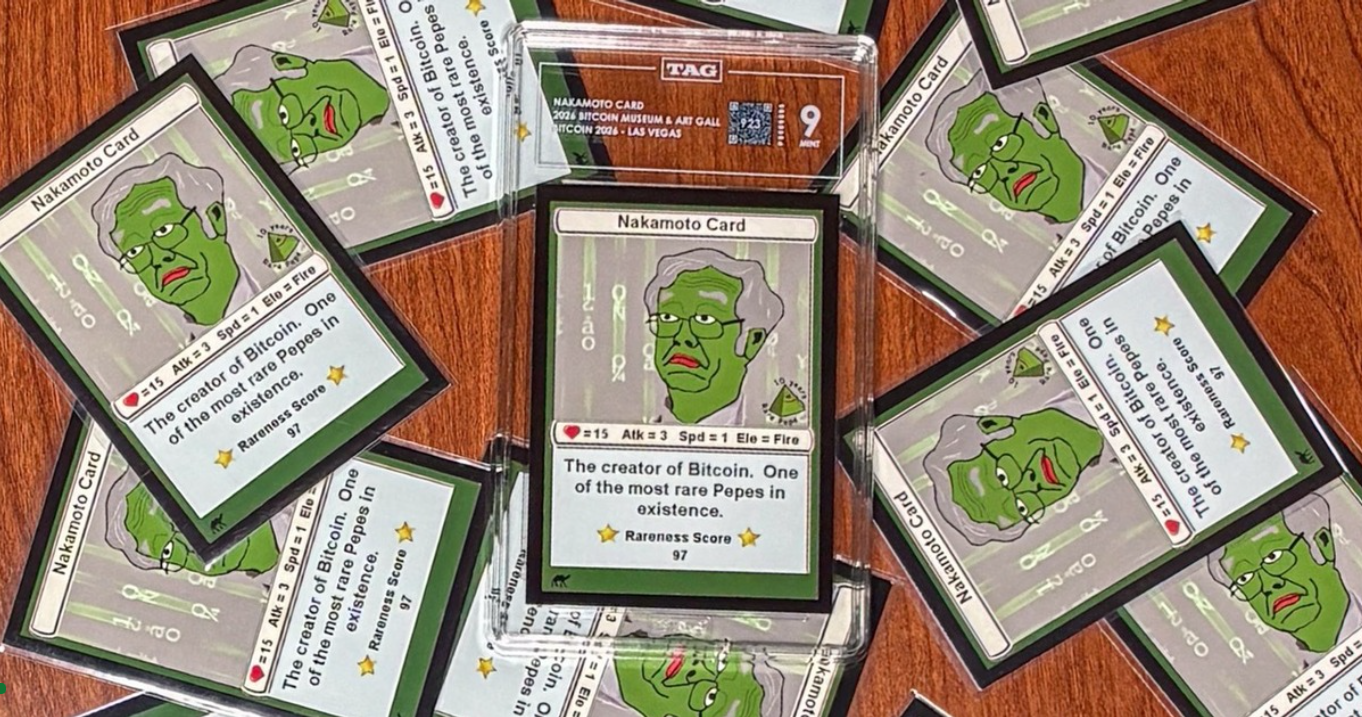
Bitcoin Magazine recently announced a shift in focus toward the world of trading cards. At first glance, it feels like a pivot toward nostalgia. But if you look closer at what builders are actually doing in the space, it is a logical progression of the scarcity argument. Collectors and developers are starting to realize that the same mechanics that make a satoshi valuable are the ones that make a holographic cardboard rectangle worth five figures.
We have spent a decade trying to convince the world that digital items can be rare. We built complex protocols to ensure that nobody could double-spend a coin or counterfeit a token. While we were looking forward at code, a massive community of collectors was looking backward at physical assets that already solved these problems through physical authentication and secondary market liquidity. The crossover was inevitable.
Why Cards Matter to the Bitcoin Builder
If you are building in the Bitcoin ecosystem, you are likely obsessed with the concept of provenance. You want to know exactly where an asset came from, who held it before you, and whether it is genuine. Trading cards are the original proof-of-stake assets. You buy in, you hold, and the value of your position is determined by the total supply and the condition of the asset.
The current fascination with Ordinals and inscriptions proves that Bitcoiners want more than just a currency. They want a ledger of culture. By integrating trading card mechanics into the Bitcoin conversation, BMAG is acknowledging that the store-of-value narrative is expanding. It is no longer just about digital gold; it is about the tokenization of everything that has a limited supply.
The Authenticity Problem
In the crypto world, we use private keys to prove ownership. In the card world, collectors use third-party grading services like PSA or BGS. Both systems are attempts to solve the same human problem: trust. When you buy a high-value card sealed in foil, you are buying the probability of a specific outcome. When you buy Bitcoin, you are buying the certainty of a mathematical outcome.
The intersection here is where builders should be paying attention. We are seeing a rise in "phygital" goods—physical items backed by a digital twin on the blockchain. If you can take a rare trading card, vault it, and trade a digital representation of that card on a Bitcoin layer-2, you have removed the friction of shipping and the risk of damage while retaining the underlying value. This is the infrastructure being laid right now.
The Myth of the Rare Pull
There is a psychological element to trading cards that mirrors the early days of mining. The "rare pull" is essentially a lottery. You open a pack, hoping for the statistical anomaly that puts you in the green. It is the same dopamine hit that miners get when they find a block, or that traders get when they catch a bottom. This isn't just about hobbies; it is about the gamification of scarcity.
Builders often forget that utility is not always technical. Sometimes, utility is simply the joy of ownership. If Bitcoin is the ultimate ledger, then it should be the home for the world's most prized assets. Moving the trading card conversation onto Bitcoin platforms allows for a level of transparency that the traditional hobby has never seen. No more shill bidding on centralized auction sites if the entire history of the asset is recorded on an immutable chain.
The Pivot to Tangibility
I have always been a bit skeptical of NFTs that have no connection to the real world. A JPEG is easy to ignore when the market turns sour. But a physical asset that you can hold in your hand—one that has been sealed in foil for twenty years—has a different kind of staying power. It represents a moment in time that cannot be reproduced.
Bitcoin Magazine focusing on this niche tells me they are looking for ways to ground the digital hustle in something tactile. It is a smart move. It bridges the gap between the Gen X collector who understands physical value and the Gen Z developer who understands digital systems. It is about creating a common language centered around the idea that some things should be hard to get.
Real Scarcity vs. Narrative Scarcity
We see a lot of fake scarcity in the crypto space. Developers launch tokens with trillions of units and then burn some to create the illusion of value. Trading cards don't work that way. The print run is the print run. Once a set is out of production, the supply is capped forever. This is the closest thing the physical world has to the 21 million cap.
For founders, the takeaway is simple: stop trying to manufacture importance and start looking at what people already value. If you can build tools that make it easier to verify, trade, and secure physical collectibles using the Bitcoin network, you aren't just building a toy. You are building the future of the high-end secondary market. The foil seal is just the beginning of the security layer.
The Long Game
Collectibles are a trillion-dollar industry. Bitcoin is a trillion-dollar asset. The friction between these two worlds is where the next decade of growth will happen. Whether it is through Ordinals, sidechains, or simple vaulting services, the goal is the same: making sure that the things we spend our hard-earned money on actually belong to us.
I don't expect every Bitconer to start carrying around binders of cards. But I do expect the smartest builders to look at the mechanics of the hobby. Learn how they handle grading, how they handle secondary sales, and how they maintain community interest over decades. There is a lot to learn from an industry that was mastered by kids in the 90s before the whitepapers were ever written.
Final Founders Takeaway
Don't dismiss the card focus as a distraction. It is a stress test for how we handle non-fungible value on the world's most secure network. If we can't figure out how to track a physical card, we have no hope of tracking complex real-world assets like real estate or equity. The cards are a sandbox for the real economy.
- Physical scarcity is the best teacher for digital scarcity.
- Provenance is the most valuable feature of any ledger.
- The crossover between collectors and coiners is larger than you think.
- Building bridges between physical assets and Bitcoin is an untapped market.
Read the original at Bitcoin Magazine →