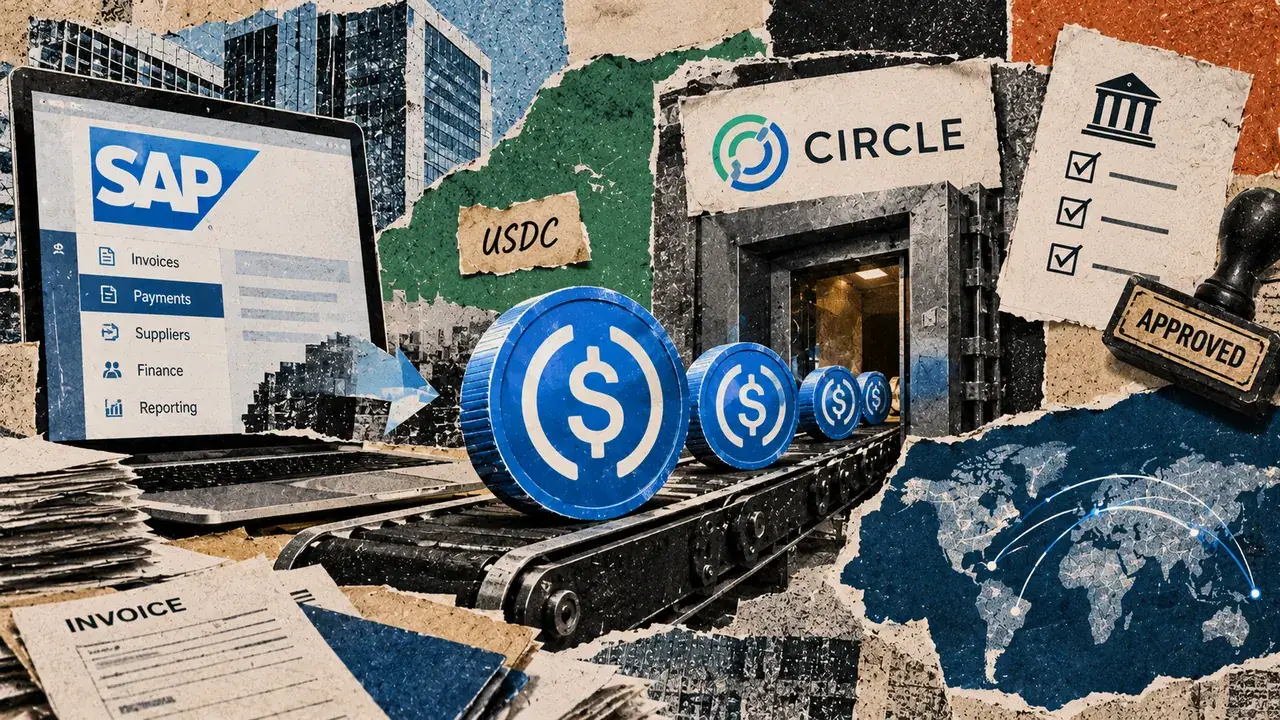
When enterprise software meets crypto, the result is usually a confusing mix of press release hype and middleware that nobody actually uses. But when SAP moves, the industry usually pauses. The latest development—SAP Pay integrating USDC for settlements via Tereina—is a functional step toward the boring, stable future of on-chain finance. It is a sign that the rails are being laid, even if the gatekeepers are strictly guarding the platform.
The Boring Reality of Enterprise Settlement
For builders, the term "enterprise" often feels like a death sentence for innovation. It implies committees, legacy code, and slow deployments. However, the integration of USDC into the SAP ecosystem through Tereina is a pragmatic play. SAP handles the vast majority of the world's transaction flows. If a company wants to move money, they are likely doing it through an SAP dashboard.
By allowing USDC settlements, SAP is essentially admitting that the legacy banking system is too slow for the modern supply chain. We are moving away from the era where a transaction takes three days to settle and entering one where it happens in seconds. For a founder, this is the validation of the stablecoin thesis. It turns the dollar into a programmable asset that fits into existing accounting workflows.
The Catch: Circle Mint and Regional Logic
The announcement comes with a heavy dose of reality: you need an eligible Circle Mint account. This isn't permissionless finance. This isn't the dream of a decentralized world where anyone with a private key can participate. This is a walled garden built on top of a public ledger.
Circle Mint acts as the compliance layer. To use this specific SAP settlement route, organizations have to pass the institutional-grade vetting that Circle requires. This includes heavy KYC, regional restrictions, and specific eligibility criteria that will likely exclude smaller startups or entities in "gray" jurisdictions for the time being. As a builder, you have to realize that enterprise crypto is not about escaping the system; it is about making the system more efficient by using better tools.
What This Means for Founders
If you are building in the B2B space, this integration should change how you think about your product's roadmap. You no longer have to convince an enterprise to use a "crypto wallet." You now have the opportunity to build tools that interact with the software they already use. The goal shouldn't be to replace SAP; it should be to make the data inside SAP more liquid and useful through stablecoin rails.
We are seeing a shift where the underlying technology (blockchain) is becoming invisible. A corporate treasurer doesn’t care about gas fees or consensus mechanisms. They care about reconciliation. If the SAP integration can prove that USDC reduces the time spent on manual accounting and cross-border bank fees, the adoption will be driven by the balance sheet, not by the philosophy of decentralization.
The Infrastructure Play
Tereina, the firm facilitated the integration, is playing the role of the plumber. In the crypto world, we often focus on the flashy consumer apps, but the real money is in the plumbing. Building the connective tissue between a Circle Mint account and an SAP ERP (Enterprise Resource Planning) system is tedious work, but it is the kind of work that creates moats.
For those of us observing from the builder's perspective, the lesson here is simple: focus on where the friction is. The friction for a massive corporation isn't that they can't buy crypto; it's that they can't account for it, report on it to the auditors, or move it within their existing legal frameworks. This integration solves a piece of that puzzle.
Compliance as a Product
The requirement for Circle Mint access underscores a growing trend—compliance is becoming a product feature. In the early days, we thought we could code our way around regulators. Now, we see that the biggest players in the space are the ones who figured out how to make compliance a seamless part of the user experience.
Circle has positioned itself as the "safe" bridge to the US dollar. By partnering with SAP-adjacent workflows, they are effectively locking in the enterprise market. If you want to build an alternative, you have to decide if you want to compete on tech or if you want to compete on the legal infrastructure. Most founders underestimate how hard the latter is.
The Skeptic's View
We should remain slightly skeptical about the immediate volume this will generate. Just because the option exists in SAP doesn't mean every CFO is going to start flipping the switch to USDC tomorrow. There is still a significant education gap. There is also the risk of centralization. If Circle decides a company is no longer "eligible," that company’s settlement rail disappears instantly. This is a far cry from the un-stoppable finance we talk about at conferences.
However, the existence of the rail is better than the absence of it. It provides a blueprint for how other stablecoins and other ERP systems might eventually talk to one another. It's a v1.0 of corporate on-chain finance.
Final Takeaway for the Builder Community
The SAP and Circle integration is a massive signal that the "wait and see" period for enterprise stablecoin usage is ending. But it's also a reminder that the path to mass adoption is through the front door of compliance, not the back door of anonymity. If you are building tools for this space, ensure you are thinking about how your software talks to the accountancy giants. The future of crypto isn't just about the code you write; it's about the legacy silos you can successfully bridge.
Read the original at CryptoSlate →