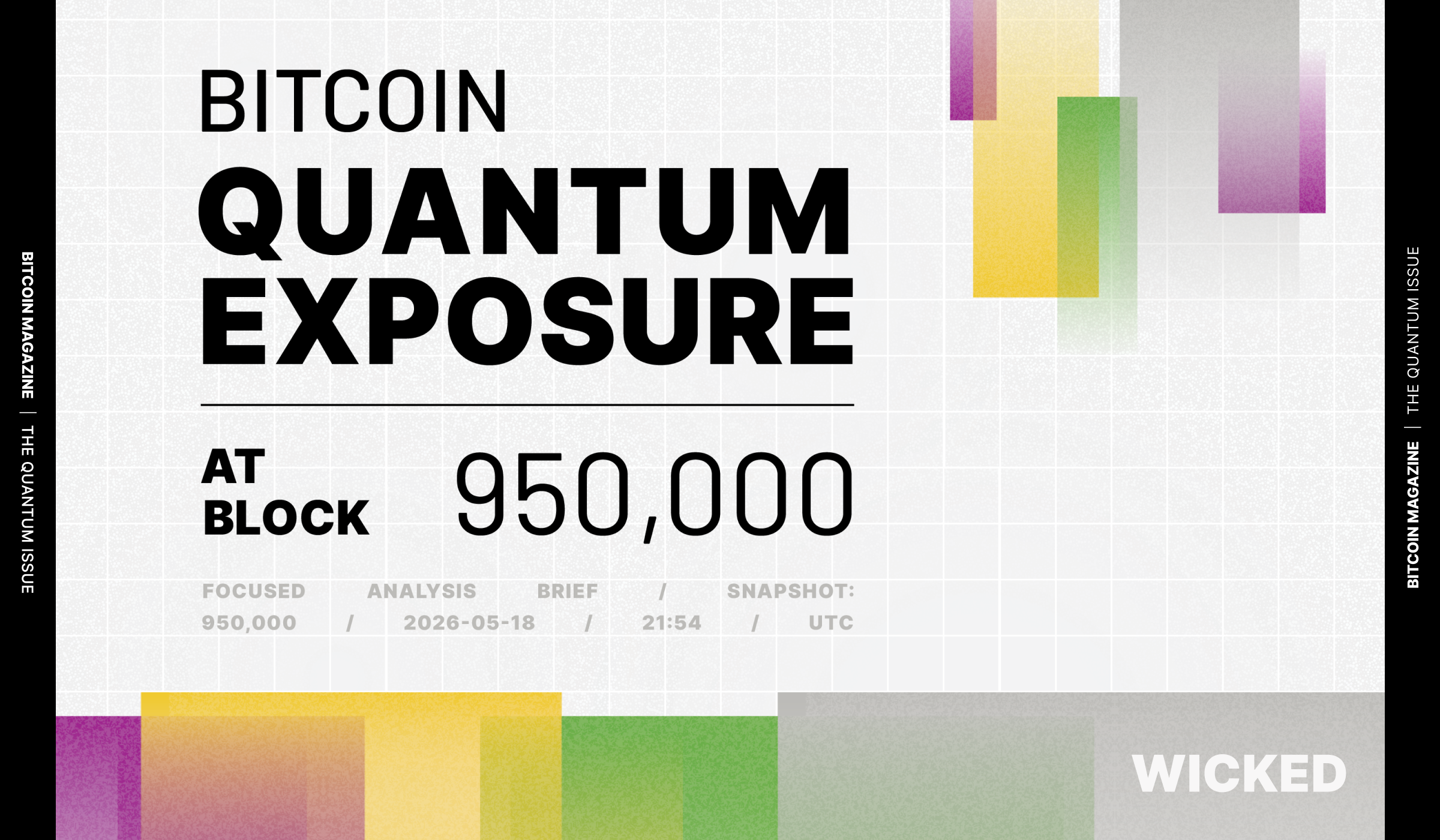
We have reached a weird crossroads in the Bitcoin lifecycle. For years, the 'quantum boogeyman' was something we talked about at conferences to sound smart, usually dismissed as a problem for our grandkids. But as we approach block 950,000, the math is starting to look a lot more urgent. We aren't just talking about a theoretical threat anymore; we are talking about a specific subset of the Bitcoin supply that is sitting ducks for a sufficiently powerful quantum computer.
The Vulnerability Gap
To understand the risk, you have to look at how Bitcoin evolved. In the early days, we used P2PK (Pay-to-Public-Key) addresses. These were simple. Your public key was right there in the script. Later, we moved to P2PKH (Pay-to-Public-Key-Hash), which added a layer of protection by hashing the public key. A quantum computer can derive a private key from a public key using Shor’s algorithm, but it can’t easily reverse a hash.
Here is the problem: for a huge chunk of early Bitcoin, including the famous Satoshi stash, those public keys are already visible on the ledger. If you have spent Bitcoin from an old address, or if you use the original P2PK format, your public key is public. As of now, millions of BTC fall into this 'exposed' category. At block 950,000, we are looking at a legacy debt that could destabilize the market if a quantum breakthrough happens suddenly.
The Founder Perspective on Technical Debt
As a founder, I look at this as classic technical debt. When you build something new, you make trade-offs for speed and simplicity. Satoshi did the same. But eventually, the debt comes due. The issue isn’t that Bitcoin can’t be upgraded—it can. We can implement quantum-resistant signatures like Winternitz or Lamport. The real issue is the logistics of the transition.
Think about the millions of coins held by people who have lost their keys, or the coins sitting in 'dead' wallets. Those people cannot move their funds to new, quantum-secure addresses. If the network forces a migration, those coins are effectively burned. If the network doesn't force a migration, a quantum attacker eventually drains them. It is a lose-lose scenario for the total circulating supply.
Why Builders Should Care
If you are building in the Bitcoin ecosystem right now, you need to be thinking about abstraction. We cannot rely on the current ECDSA standard forever. Builders should be pushing for Taproot adoption and looking toward future soft forks that introduce post-quantum cryptography (PQC). The goal is to make the transition invisible to the end user.
We also have to consider the 'harvest now, decrypt later' strategy. While a quantum computer powerful enough to crack Bitcoin might not exist today, bad actors can record current encrypted traffic and wait. For Bitcoin, the 'traffic' is the public ledger. The data is already harvested. We are just waiting for the processing power to catch up.
The Fork in the Road
There are two ways this plays out. The first is a coordinated, proactive upgrade where the community agrees on a PQC standard and everyone moves their funds. This is the 'clean' way, but it requires a level of social consensus that Bitcoin rarely achieves without a fight. The second way is a reactive scramble following a public demonstration of quantum supremacy. That second path usually involves a massive price crash and a loss of trust.
The biggest risk to Bitcoin isn't the math; it's the inertia. We know the fix, but we aren't sure we have the collective will to implement it before it's required.
A Reality Check
Let’s be honest: Bitcoin is a slow-moving beast by design. That stability is why we trust it. But that same slowness is a liability when facing an exponential technology like quantum computing. By block 950,000, the volume of exposed BTC is too high to ignore. We aren't just protecting the future of the network; we are trying to prevent the past from being looted.
The takeaway for founders and investors is simple. Don't buy into the hype that quantum is a 'non-issue,' but don't panic either. The solution exists in the code. The challenge is in the execution. If you are holding significant assets in legacy addresses, now is the time to start looking at moving toward more modern, hashed outputs. You don't want to be the last one trying to squeeze through the exit when the quantum threat turns from a headline into a reality.
What This Means for the Roadmap
- Education: We need to stop pretending the ledger is immutable against all future physics.
- Development: Prioritize research into signature schemes that don't balloon the block size.
- User Experience: Wallets need to start prompting users to migrate away from vulnerable legacy formats.
Bitcoin has survived every 'killer' threat thrown at it for fifteen years. Quantum is just the next boss fight. It’s winnable, but only if we stop treating it like a science fiction movie and start treating it like the critical infrastructure vulnerability it actually is.
Read the original at Bitcoin Magazine →