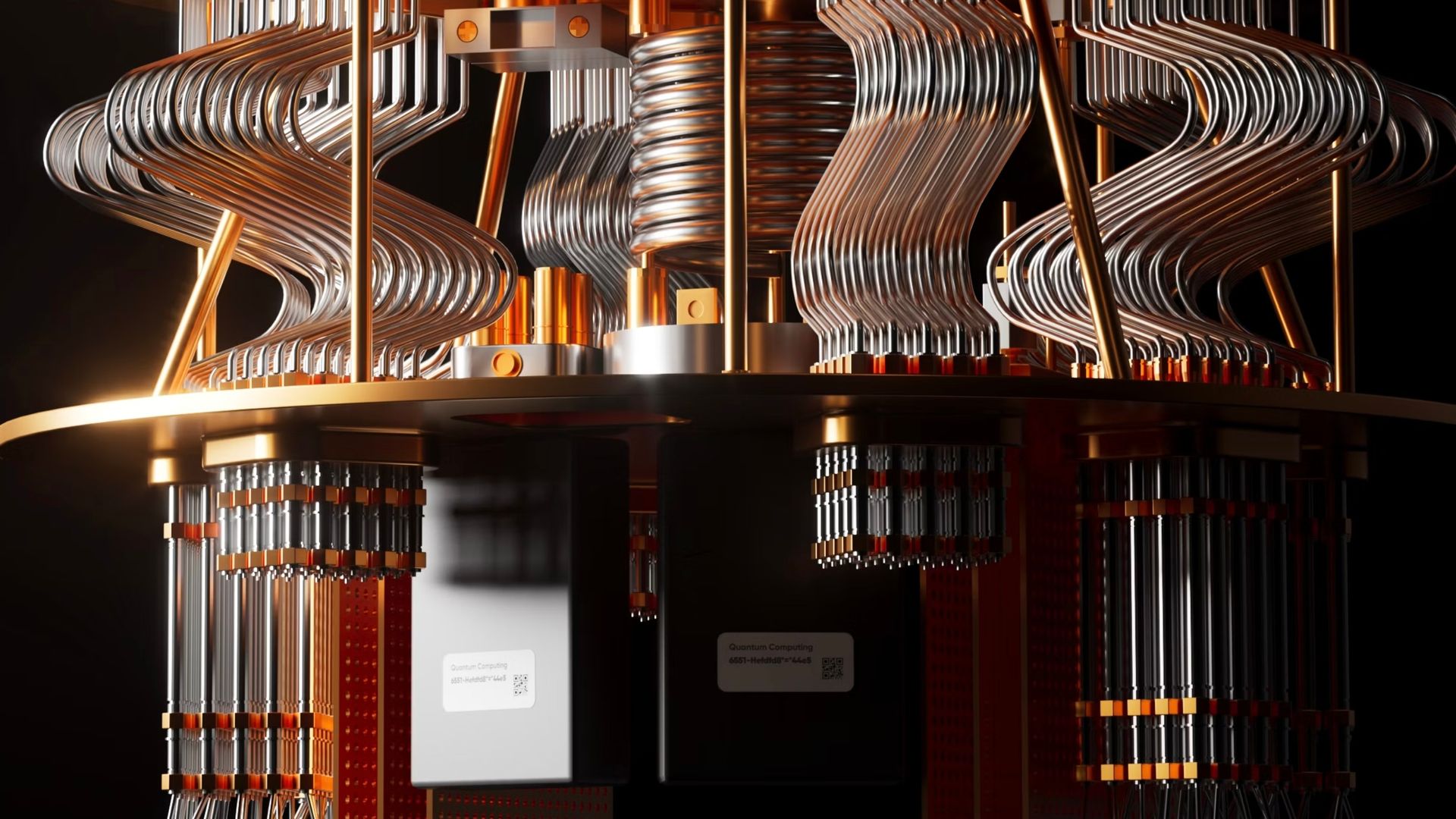
We have been talking about the quantum threat for years, usually in the context of some far-off sci-fi scenario where every encrypted database on earth suddenly turns into an open book. But a recent warning from Europol shifts the conversation from theoretical doom to immediate operational risk. The message is clear: the threat isn't just about the blockchain breaking; it is about your private keys being harvested today and cracked tomorrow.
The Private Key Vulnerability
Most people in the crypto space focus on the integrity of the ledger. They worry about whether a quantum computer can perform a 51% attack or rewrite history. While those are concerns, Europol points out that the real, tangible danger lies in the cryptographic primitives we use to sign transactions. Specifically, the elliptic curve cryptography that secures the vast majority of digital wallets is vulnerable to Shor’s algorithm.
If you are a builder, you know that a private key is essentially just a very large number. The math that keeps that number secret relies on the fact that classical computers are terrible at factoring large integers or solving discrete logarithm problems. Quantum computers, however, are built for this. A sufficiently powerful quantum machine can derive a private key from its corresponding public key. This is not a guess; it is a mathematical certainty.
Why Public Keys Are the Weak Point
The nuance here is that for a quantum computer to steal your money, it needs to see your public key. On many blockchains, your public key isn't fully revealed until you actually broadcast a transaction. Before that, the network only sees a hash of your public key. Hashing is currently considered much more resistant to quantum attacks than the signing algorithms themselves.
The problem is that once you make a transaction, your public key is out in the wild. In a future where quantum computers are accessible, an attacker could watch the mempool, see a high-value transaction, derive the private key in seconds, and front-run the original owner to drain the wallet. Even worse, many older addresses or specific types of smart contracts have their public keys permanently exposed on the ledger. These are sitting ducks.
The Europol Call to Action
Europol isn't just flagging this for fun. They are urging exchanges, developers, and users to start phased post-quantum migrations immediately. This is a massive logistical undertaking. For a founder, this means you can no longer treat quantum resistance as a “version 3” feature. It needs to be part of the architectural conversation today.
Law enforcement is concerned because if the transition happens too late, the resulting chaos will be impossible to police. If millions of wallets are suddenly compromised, there is no way for agencies to track or recover those funds. They are advocating for a proactive approach where we move toward lattice-based cryptography and other quantum-resistant standards before the hardware actually arrives.
The Founder Perspective: Build for Longevity
As builders, we tend to move fast and break things. We prioritize user experience and shipping features over long-tail catastrophic risks. But quantum computing is a unique beast. It represents a “break-once, break-everywhere” scenario for specific cryptographic standards. If your protocol relies on vulnerable signatures, every user on your platform is at risk the moment a powerful enough quantum computer goes online.
This means you need to look at your tech stack. Are you using standard ECDSA? Are you planning a migration path for your users? Transitioning a blockchain to quantum resistance isn't as simple as a software update. It often requires users to manually move funds to new addresses generated with new cryptographic rules. That is a UX nightmare, and it is better to start designing that transition now rather than during a panic.
Skeptical Reality Check
Now, let's be honest. We don't have a cryptographically relevant quantum computer yet. The machines built by IBM, Google, and IonQ are impressive, but they don't have the qubit count or the error correction necessary to crack a 256-bit key today. Some skeptics argue we are decades away. Others think a breakthrough could happen in five years.
But here is the catch: “Harvest Now, Decrypt Later.” Nation-states and sophisticated bad actors are already collecting encrypted data and public keys. They are betting that they can store this information today and unlock it once the hardware catches up. For crypto, this means that even if you think quantum computers are ten years away, your data is already being targeted.
The Practical Path Forward
What should you actually do? First, stop ignoring the research. Look into NIST’s post-quantum cryptography standards. If you are building a new L1 or L2, consider integrating quantum-resistant signature schemes from day one. If you are running an exchange, start auditing your cold storage to see how many addresses have exposed public keys.
- Audit Exposed Keys: Identify which assets are held in addresses where the public key is already known to the ledger.
- Implement Hybrid Signatures: Consider using systems that require both a classical signature and a quantum-resistant signature. This provides safety against current threats while preparing for future ones.
- Educate Users: Start the conversation with your community. They need to know that security is a moving target and that migrations are a sign of health, not a sign of weakness.
Building in crypto is a race between innovation and obsolescence. Quantum computing is the ultimate deadline. You can either be the founder who prepared for the shift, or the one who watched their users' assets vanish because you thought you had more time.
Final Thoughts for Builders
We shouldn't be alarmist, but we should be prepared. Europol’s warning is a reminder that the regulatory and law enforcement landscape is waking up to the technical debt of modern cryptography. For those of us in the trenches, it is a call to prioritize the boring, hard work of security over the flashy, high-hype features. The integrity of your project depends on your ability to outlast the technology that tries to break it. Start your migration plan now.
Read the original at CoinDesk →