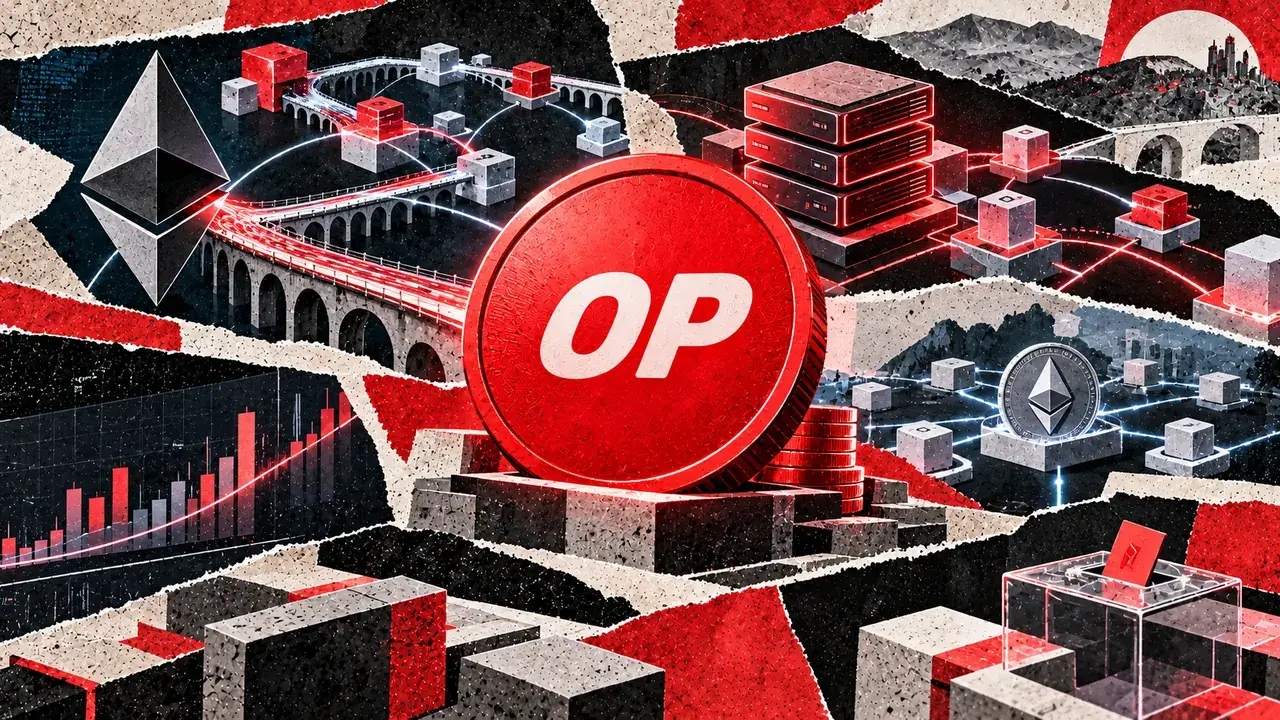
We need to talk about the business of being a rollup service provider. Recently, the news cycle focused on Uniswap launching its own chain, but the quieter story is who is actually running the machine under the hood. Optimism is aggressively expanding its operating plans to include Unichain, effectively positioning itself as the primary landlord for the industry's biggest DeFi tenants.
The Multi-Chain Monolith
For a long time, the pitch for Ethereum Layer 2s was decentralization. We were told these networks would eventually be sets of autonomous pipes. What we are seeing instead is a consolidation of operation. When a major player like Uniswap decides to build on the OP Stack, they aren't just using open-source code; they are entering a specific operational ecosystem managed by Optimism.
This isn't necessarily a bad thing for a founder who wants to get to market fast. If you're building a dApp, you want the deepest liquidity and the best interoperability. Optimism's "Superchain" vision promises that. But as a builder, you have to ask: who is actually in control when the lights go out? As more chains move under one operator, the blast radius of a single operational failure grows significantly.
The Exit Problem
The most technical, and frankly most important, part of the Unichain-Optimism deal involves how users get their money out if things go south. In the crypto world, we call this the "exit right." Ideally, if an L2 sequencer stops working, you should be able to force a transaction through the Ethereum mainnet to get your funds back.
The reality is messy. Each chain in the Optimism ecosystem has its own set of deployed contracts. This means the fallback routes aren't uniform. For builders, this creates a fragmentation of risk. You might think your assets are safe because they are on an "Ethereum-aligned" rollup, but the actual security guarantees depend on the specific implementation of that chain's bridge and sequencer logic.
If you are building a product that holds user funds, you can't just trust the marketing. You have to look at whether the exit rights are actually functional or if they are just theoretical. Right now, those rights are uneven across the board.
Efficiency vs. Sovereignty
The trade-off here is obvious: efficiency. By putting more chains under one operator, Optimism can offer features like cross-chain atomic swaps and shared sequencing. This makes the user experience feel much more like a single, unified network rather than a dozen different islands. This is the dream for any founder trying to solve the onboarding friction that has plagued crypto for a decade.
However, this efficiency comes at the cost of sovereignty. When you build on a shared stack managed by a single entity, you are essentially a tenant in their building. If they decide to change the rules of the stack—whether that's fee structures or data availability requirements—you have to follow suit or face a very difficult migration.
What This Means for Founders
If you're currently deciding where to deploy your protocol, this shift toward concentrated operations should change your checklist. You shouldn't just be looking at gas fees or TVL. You need to look at the operational dependency.
- Who manages the sequencer? In the case of this new deal, it’s increasingly centralized under the Optimism umbrella.
- What are the emergency out-clauses? Check the specific contract deployments for Unichain and how they differ from the standard OP Mainnet.
- Is there a path to true decentralization? Ask the team for a timeline on shared sequencing that doesn't involve a single point of failure.
The Long Game
I’ve seen this movie before in the traditional tech world. We move from fragmented servers to centralized cloud providers like AWS. It makes building easier, but it makes the ecosystem fragile. We are effectively building "AWS for Blockchains."
The move to bring Unichain into the fold is a massive win for Optimism's business model. It secures their position as the dominant stack for DeFi. But as builders, our job isn't to cheer for the winning corporation. Our job is to ensure that the infrastructure we build on is actually as resilient as we claim it is to our users.
The move toward a Superchain is a move toward convenience, but we shouldn't mistake convenience for security. If the exit routes aren't standardized, we are just building another walled garden with a different name.
We need to be honest about what we're building. We are currently in a phase of heavy consolidation. While the headlines focus on the partnership and the growth, the real work for founders is in the fine print of the smart contracts that govern these chains. If the operator has the keys, you're not building a decentralized protocol; you're building a fintech app on a very expensive database.
Final Takeaway
The expansion of Optimism’s operating plans to include Unichain proves that the market value is shifting toward those who can provide a seamless, multi-chain experience. For builders, the lesson is to prioritize interoperability while hedging against the risks of operational centralization. Don't assume every chain in a "Superchain" is built equal—audit the exit rights before you commit your users' capital.
Read the original at CryptoSlate →