The Reality Check Arrives
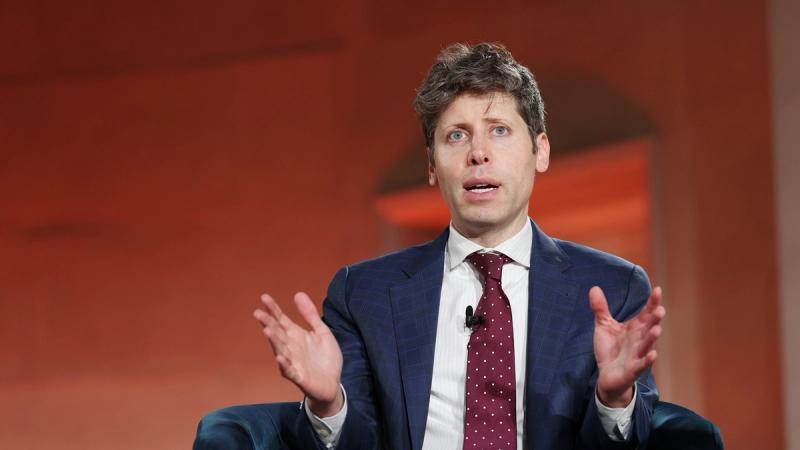
For the last eighteen months, the AI sector has operated under a sort of suspended gravity. We have seen valuations that defy traditional math and burn rates that would make a venture capitalist from 2021 blush. But the wind is shifting. OpenAI, the poster child for this current cycle, is reportedly trimming its fundraising targets and lowering its valuation expectations. This is not just a minor adjustment for Sam Altman; it is a signal to every founder in the space that the era of the blank check is ending.
The broader market is feeling the same chill. The Nasdaq 100 has taken a significant hit, dropping roughly 10% in a matter of weeks. When the public markets start to question the immediate ROI of massive infrastructure spending, the private markets follow suit. We are moving from the 'wow' phase of AI into the 'how' phase. How does this scale? How does this turn a profit? How do we justify a trillion-dollar valuation on a product that still hallucinates basic facts?
The Infrastructure Trap
The problem for OpenAI and its peers is the sheer cost of staying relevant. Building frontier models is the most expensive arms race in human history. You need thousands of H100s, massive data centers, and a talent pool that demands seven-figure salaries. When you are raising money at a $100 billion-plus valuation, you aren't just selling software; you are selling the promise of a new global operating system.
But investors are starting to look at the margins. If OpenAI has to cut its fundraising target, it suggests that even the biggest players are hitting a ceiling on what the market is willing to absorb. For builders, this is a warning. If the king of the hill is struggling to maintain its trajectory, the trickle-down effect on seed and Series A rounds will be felt almost immediately. The 'AI premium' that founders have enjoyed is evaporating.
Why the Jitters are Healthy
I have always been a bit skeptical of the 'everything is AI' narrative. We saw this with the pivot to crypto in 2017 and the metaverse in 2021. When a technology becomes a buzzword, the signal-to-noise ratio goes to zero. A market correction, even a painful one, is actually good for the people who are actually building useful things. It flushes out the tourists who are just wrapping GPT-4 in a pretty UI and calling it a startup.
The current slump in the Nasdaq, including that sharp 4.5% drop on a single Friday, reflects a realization that the 'AI revolution' might take longer to hit the bottom line than the hype cycles suggested. Enterprises are slow to adopt. Security concerns are real. Integration is a nightmare. These are the problems that builders should be solving, rather than chasing the next massive model release.
What This Means for Founders
If you are building in the AI space right now, your pitch deck needs to change. A year ago, you could get away with talking about 'AGI' and 'transformative impact.' Today, you need to talk about unit economics. You need to show that you aren't just a middleman for a larger LLM provider who can turn you into a feature with a single API update.
- Focus on Vertical AI: General-purpose models are becoming a commodity. The value is moving to specialized applications that solve specific, boring problems in industries like legal, healthcare, or logistics.
- Own Your Data: If you are relying entirely on public datasets, you have no moat. The companies that survive this correction will be the ones with proprietary data loops.
- Efficiency Over Scale: We are seeing a shift toward smaller, more efficient models. You don't always need a sledgehammer to hang a picture frame. Builders who can deliver results with less compute will be the winners in a capital-constrained environment.
The Valuation Reset
OpenAI lowering its targets is a reset for the entire ecosystem. It sets a new, more realistic benchmark. When valuations are hyper-inflated, it creates a 'liquidation preference' trap for founders. If you raise at a $100 million valuation but your business is only worth $50 million, you are effectively working for your investors. A lower, more honest valuation gives you more room to grow and more options for an exit.
We are seeing a return to fundamentals. The market is asking for proof of utility. It is no longer enough to show a cool demo on Twitter. You need to show a churn rate that isn't terrifying and a path to profitability that doesn't require another $10 billion in funding.
The era of 'growth at all costs' is being replaced by 'utility at a sustainable cost.' This is the filter that will separate the next generation of tech giants from the footnotes of history.
The Takeaway
Don't let the headlines scare you, but do let them sober you up. The AI boom isn't over, but the easy money is gone. OpenAI's reported pivot is a sign that the market is maturing. For the builders who are focused on solving real problems rather than chasing valuation milestones, this is actually an opportunity. There will be less competition from hype-driven projects and more focus on genuine innovation.
The Nasdaq slump and the OpenAI fundraising shift are just the market's way of asking: 'What have you actually built?' If you have a good answer to that question, you'll be fine. If your business model relies on infinite venture capital and zero-cost compute, it's time to go back to the drawing board.
Read the original at CoinDesk →