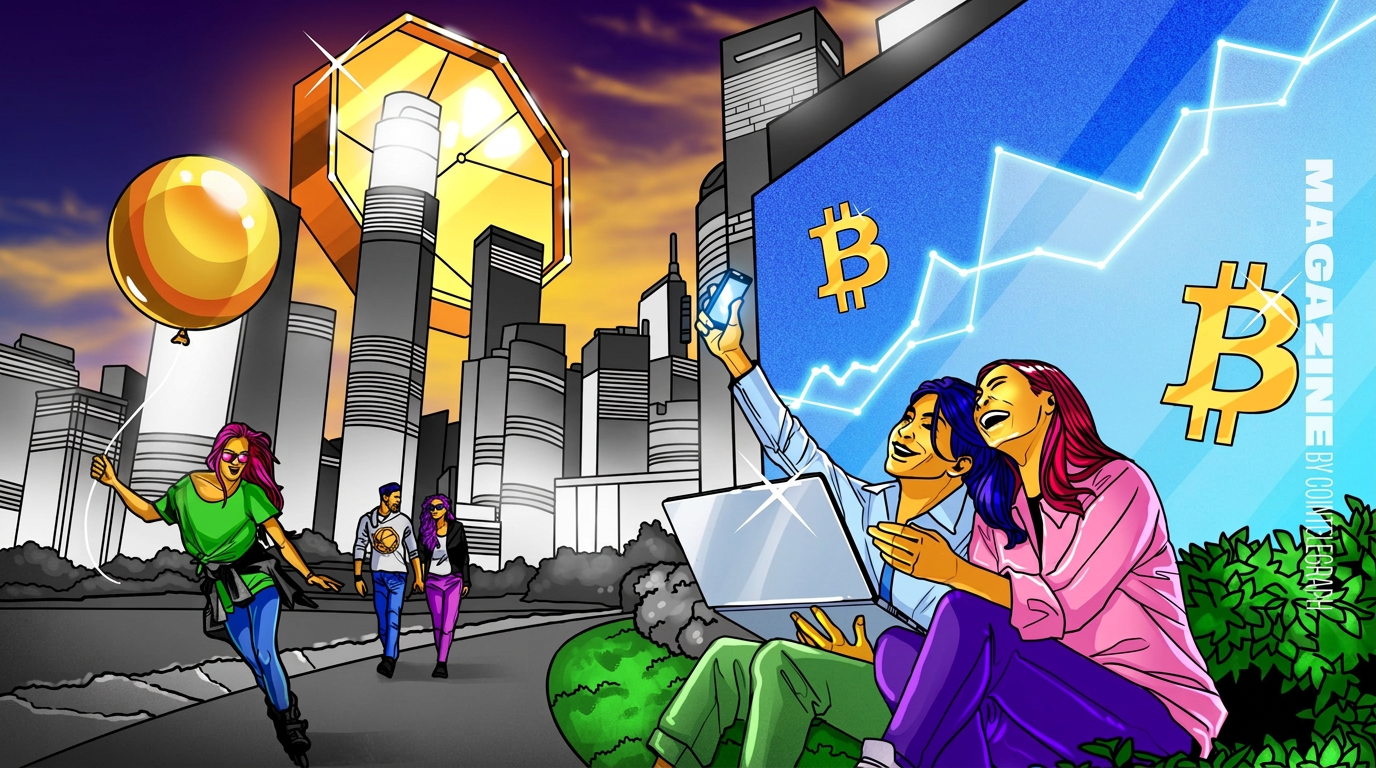
Eighteen years ago, a whitepaper landed on a mailing list and changed the trajectory of how we think about value. Today, Bitcoin is technically an adult. But as any founder will tell you, reaching maturity isn't about the years on the clock; it is about the scars earned along the way. We are no longer in the era of cypherpunks trading magic internet money for pizza. We are in the era of spot ETFs, nation-state adoption, and institutional custodians.
The Shift from Rebellion to Infrastructure
In its early days, Bitcoin was the ultimate middle finger to the legacy financial system. It was built to be outside the tent, looking in. Now, it is the tent. For those of us building in this space, this shift creates a weird tension. We want the decentralization, but we also want the liquidity that comes with the suits. The problem is that as Bitcoin matures, the threats against it are maturing too.
We have moved past the simple days of worrying about a 51% attack from a few disgruntled miners. The current landscape is defined by sophisticated, AI-enhanced social engineering and the looming shadow of quantum computing. If Bitcoin is going to survive its adulthood, it has to prove it can handle the next generation of technical debt and external pressure.
The AI and Security Paradox
One of the most pressing issues for Bitcoin at eighteen isn't just the price action; it is the evolution of the adversary. We are seeing a massive uptick in AI-driven security threats. Phishing is no longer about poorly spelled emails. It is about deepfakes and automated systems that can simulate a founder’s voice or writing style to compromise keys.
For builders, this means the security layer of the Bitcoin ecosystem needs a massive upgrade. We can't rely on the user being smart enough to spot a scam anymore. The UX of security has to catch up to the reality of AI-enabled attackers. If we don’t solve this, Bitcoin remains a niche asset for the paranoid rather than a global standard for the masses.
The Quantum Question
Then there is the quantum boogeyman. Every few months, a new headline claims that quantum computers will crack ECDSA and drain every wallet in existence. While we aren't there yet, the threat is real enough that developers are already looking at post-quantum cryptography. The challenge for Bitcoin is its rigidity. Unlike newer chains that can fork or upgrade with relative ease, Bitcoin is slow by design. That slowness is a feature for stability, but it could be a bug when a rapid cryptographic transition is required.
Institutionalization vs. The Individual
We recently witnessed some of the largest exchange hacks in history. These events serve as a brutal reminder that even as Bitcoin grows up, the bridges we build to it are often flimsy. When an exchange goes down, it isn't Bitcoin failing; it is the centralized layer failing. However, the average person doesn't make that distinction.
As founders, we need to be honest about the trade-offs. The influx of institutional money through ETFs brings price stability and legitimacy, but it also creates central points of failure. If the majority of Bitcoin ends up in the hands of three or four major custodians, have we actually achieved the goal of decentralization? Or have we just built a faster, more volatile version of the old system?
The Builder’s Perspective
If you are building on Bitcoin today, you aren't just building a currency application. You are building in a high-stakes environment where the original code is treated as gospel, but the environment around it is shifting like sand. The real work now isn't in convincing people Bitcoin has value—the market has largely decided that. The work is in scalability, privacy, and true self-custody that doesn't require a computer science degree to execute safely.
- Scalability: We still haven't truly solved how to move small amounts of value without friction on the main layer.
- Privacy: Bitcoin is a glass bank account. For it to be a global reserve, we need better ways to handle financial data without exposing every transaction to the world.
- Usability: If a user loses their keys and their life savings vanishes, that is a design flaw, not a user error.
The Road Ahead
Bitcoin at eighteen is a survivor. It has outlasted thousands of competitors, survived multiple bubbles, and shrugged off bans from major economies. But the next decade will be harder than the last two. The novelty has worn off. Now comes the hard part: functioning as the backbone of a new digital economy while under constant siege from tech that didn't even exist when Satoshi wrote the first line of code.
Bitcoin's greatest strength has always been its persistence. It doesn't care if you believe in it, and it doesn't care if the world changes around it. It just keeps producing blocks.
For those of us in the trenches, the takeaway is clear: stop chasing the hype of the next cycle and start building the defensive and utility layers that an adult Bitcoin requires. The rebel has grown up, and it is time for the ecosystem to do the same.
Read the original at Cointelegraph →