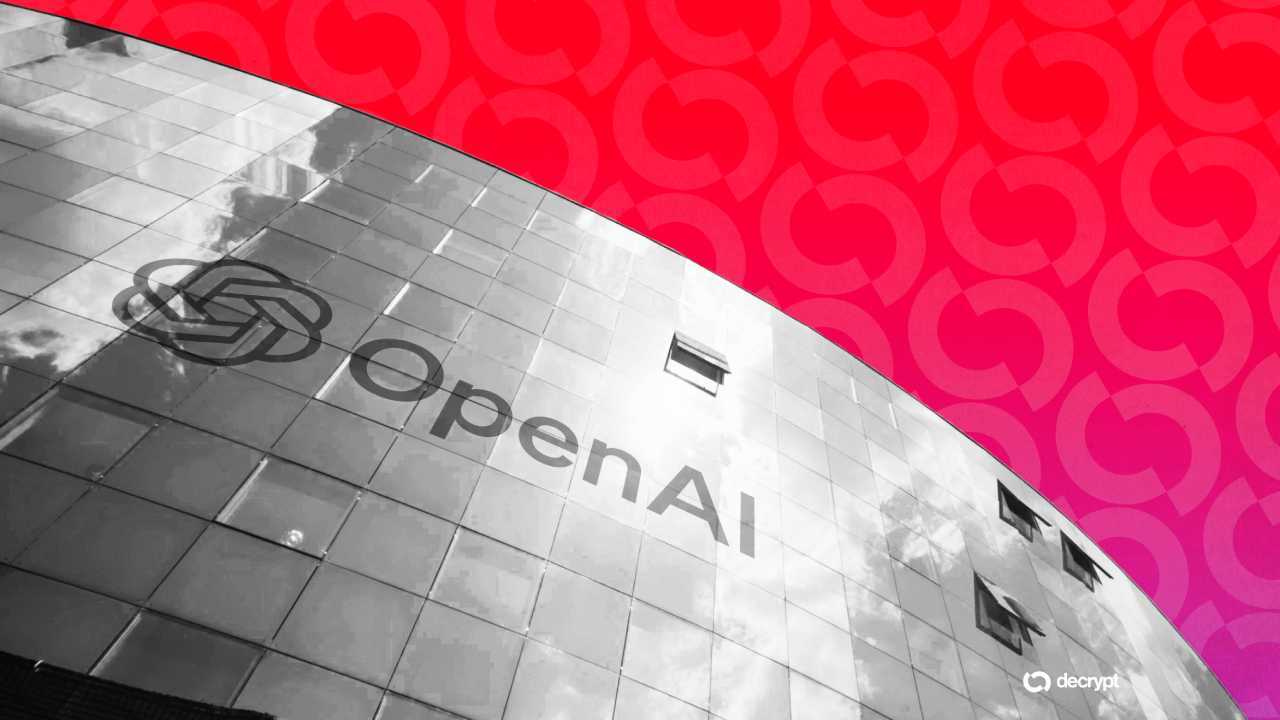
For the last two years, the AI narrative has been driven by one simple, physical bottleneck: H100s. If you wanted to build anything meaningful in the generative space, you had to pay the Nvidia tax. You waited in line, you paid a premium, and you built your business on top of a single company's hardware architecture. But the winds are shifting. Recent reports suggest that OpenAI, the poster child for the current AI boom, is preparing to source AI chips from Google.
The Practicality of Diversification
This move isn't just about supply chain logistics; it is about survival. As a founder, you know that depending on a single vendor for a mission-critical component is a recipe for disaster. For Sam Altman and the team at OpenAI, Nvidia has become a brilliant but expensive problem. By looking toward Google’s Tensor Processing Units (TPUs), OpenAI is making a clear statement: the hardware monopoly is cracking.
Google has been quietly refining its TPU architecture for years. While the world was focused on general-purpose GPUs, Google was building specialized silicon designed specifically for the heavy lifting of machine learning. TPUs aren't just an alternative; for certain workloads, they are significantly more efficient. If OpenAI can successfully port its training and inference workloads to Google infrastructure, they gain massive leverage over their cost structure and their primary hardware provider.
Why Google Chips Matter Now
We are moving out of the era of experimentation and into the era of industrial-scale efficiency. In the beginning, you just needed raw power. Now, you need power that doesn't bankrupt you. Google's TPUs offer a different performance-per-watt profile than Nvidia's Blackwell or Hopper series. For a company like OpenAI, which is burning billions of dollars on compute, even a 10% increase in efficiency across a massive cluster translates to hundreds of millions of dollars saved.
But there is a deeper layer here. OpenAI and Google are, on the surface, direct competitors in the LLM space. OpenAI’s GPT-4o competes directly with Google’s Gemini. Seeing OpenAI leverage Google's hardware suggests a strange, new "co-opetition" model. It shows that in the AI world, the layer at which you compete matters less than the layer at which you survive.
The Founder's Perspective on Hardware lock-in
For those of us building in the crypto and AI space, there is a lesson here about infrastructure debt. We often talk about technical debt in terms of code, but hardware debt is just as real. If you build your entire stack to be optimized for a specific proprietary chip, you are locking yourself into that vendor's roadmap and pricing forever.
OpenAI moving toward TPUs is a signal to every other builder that cross-platform compatibility is the new gold standard. If your models only run efficiently on CUDA, you are at the mercy of Jensen Huang. If you can build your stack to be chip-agnostic—capable of running on Nvidia, Google TPUs, or even AMD’s latest offerings—you have successfully de-risked your business.
The End of the H100 Era?
Don't get me wrong: Nvidia isn't going anywhere. They have the best software ecosystem in the world. But the "scarcity" phase of the AI cycle is ending. We are entering the "commoditization" phase. When the biggest customer in the room starts looking at the exit sign, the market follows. We are seeing a shift where chips are no longer treated like rare luxury goods, but like utilities.
Google’s willingness to sell these chips to a rival also tells us something about their strategy. Google knows that the real long-term moat isn't just the model; it's the cloud. If they can get OpenAI to run on Google Cloud via TPUs, Google wins regardless of whether Gemini or GPT-5 is the top-ranked model on the leaderboards.
What This Means for the Future
This report confirms that the AI arms race is moving into the basement. It's no longer just about who has the best prompt engineering or the biggest dataset. It's about who can manage the physical reality of data centers most effectively. For builders, this means three things:
- Compute costs will eventually stabilize. As more players like Google and potentially Amazon (with Inferentia) provide viable alternatives to Nvidia, pricing power will shift back to the developers.
- Architecture flexibility is a competitive advantage. Stop optimizing for a single hardware provider. Build with portability in mind.
- The cloud wars are evolving. The next few years will be defined by which cloud provider offers the best specialized hardware, not just who has the most storage.
We should remain skeptical of the timeline, as neither company has officially confirmed the size of these orders. Transitions like this take months, if not years, to fully implement. But the intent is clear. The monoculture of AI hardware is dying, and that is a very good thing for the ecosystem.
The move from Nvidia to a multi-vendor strategy is the most honest admission yet that the current cost of AI is unsustainable.
If you're a founder, watch this space closely. Don't just watch what OpenAI says; watch what they buy. They are telling us that the future of AI isn't just about better algorithms—it's about better economics. And you can't have better economics when you're reliant on a single supplier who knows they have you over a barrel.
Read the original at Decrypt →