The Land Grab for Digital Real Estate
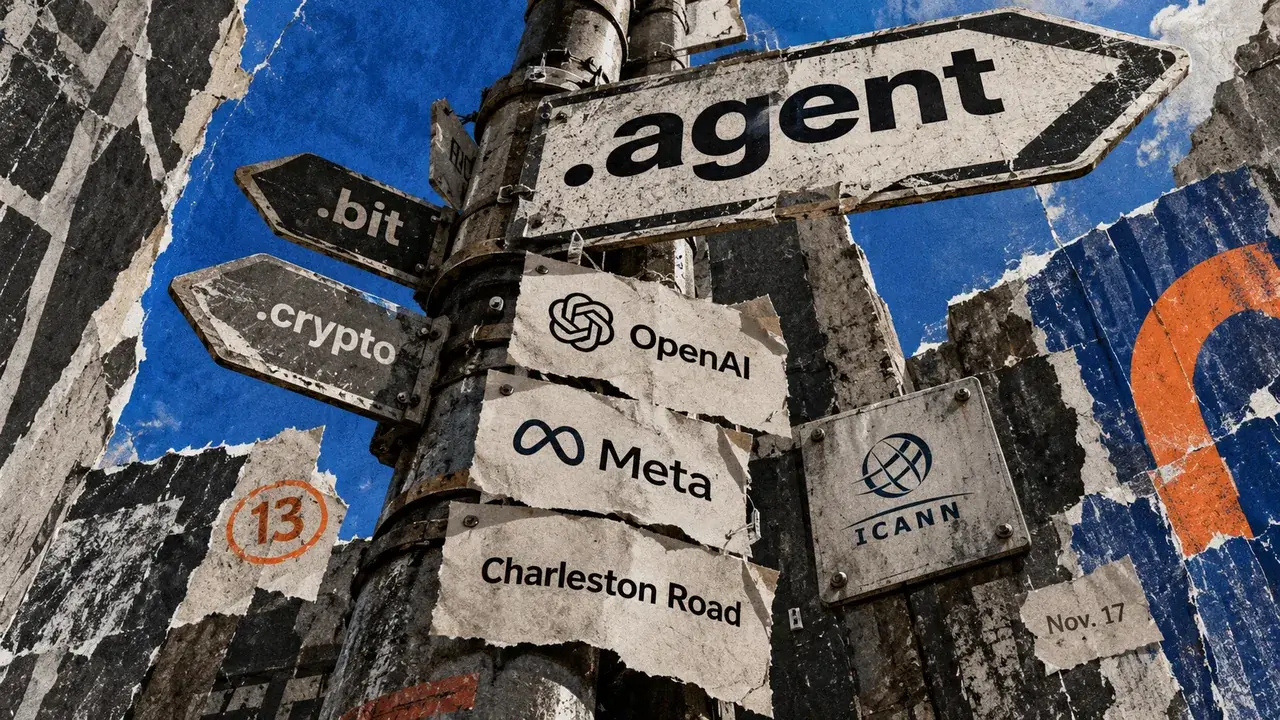
We are witnessing a quiet but aggressive land grab that reminds me of the early days of the commercial internet. Only this time, the stakes aren't just about who owns a catchy URL; it is about who controls the infrastructure of identity in the age of artificial intelligence and decentralized finance. The latest filings for top-level domains (TLDs) reveal a massive push from the biggest names in tech—OpenAI, Google, and Meta—to lock down anything related to AI, while the crypto sector is doubling down on .bitcoin and .wallet.
For those of us building in this space, this isn't just corporate maneuvering. It represents a fundamental shift in how users will find and interact with decentralized services. If you think the dot-com era was competitive, you haven't seen anything yet. The current tally shows eleven applications for .bit and five for .crypto, creating a bottleneck that will likely be settled by deep pockets and legal teams rather than technical merit.
The Silicon Valley Defensive Play
Google and Meta aren't newcomers to the domain game, but their sudden urgency around AI-specific domains tells us exactly where their priorities lie. They are moving to prevent newcomers from owning the linguistic high ground. When a company like OpenAI bids for a specific domain extension, they aren't just looking for a new home for ChatGPT; they are trying to establish a standard. They want their brand to be synonymous with the technology itself.
From a founder's perspective, this is a warning. If the giants own the primary gateways—the TLDs that everyday users trust—it becomes significantly harder for a lean startup to gain traction without paying a premium for secondary market names. We are seeing a consolidation of power before the technology has even reached full maturity.
Crypto's Identity Crisis
On the blockchain side of the fence, the focus is much more functional. The push for .bitcoin, .wallet, and .crypto is an attempt to solve the UX nightmare that has plagued this industry for a decade. Nobody wants to send money to a string of sixty random characters. We want human-readable names. However, the competition over these strings highlights a growing friction between traditional internet governance and the decentralized ethos.
The problem is that a TLD is only as good as its universal acceptance. If one group wins the rights to .wallet in the traditional DNS system, but another group uses the same string for a decentralized naming service like ENS or Unstoppable Domains, we face a collision. This creates user confusion, security risks, and a fragmented internet. As builders, we have to decide which system we are going to support, or if we are going to try and bridge the two.
Why Builders Should Care
I often talk to founders who treat their domain name as an afterthought, something to be handled after the MVP is finished. That is a mistake in this environment. The domain is the first layer of your product's user interface. If the big players are fighting for these strings, it is because they know that ownership of the namespace equals ownership of the user journey.
For a crypto startup, securing a .bitcoin or .wallet extension could be the difference between being a niche tool and a mainstream application. But the cost of entry is rising. With the deadline for these filings fast approaching in mid-November, the window for independent players to stake a claim is closing. We are moving toward a world where your digital address is your brand, your bank account, and your identity all rolled into one.
The Skeptic's View on Universal Strings
I have to be honest: there is a lot of theater in these applications. Many of these firms are filing for domains they may never actually use, simply to keep them out of the hands of competitors. It is a defensive moat. For the average builder, this means you shouldn't put all your eggs in one basket. Relying on a single TLD that is currently the subject of a multi-billion dollar legal tug-of-war is risky business.
Furthermore, the utility of these new domains is still unproven. We have seen hundreds of new TLDs launch over the last decade—everything from .guru to .pizza—and most of them failed to gain any real cultural relevance. The difference now is the integration of AI and crypto. These aren't just vanity extensions; they are meant to be functional layers of a new tech stack. Whether the public actually adopts them is a different story.
What Happens Next?
The mid-November deadline is just the beginning. Once the applications are in, the real fighting starts. We will see auctions, private settlements, and likely some high-profile litigation. For those of us in the trenches, the move is to stay agile. Don't marry yourself to a specific naming convention until the dust settles.
Watch the .bit and .crypto filings closely. These will be the bellwethers for how the traditional web intends to coexist—or compete—with the decentralized web. If Google or Meta successfully captures these strings, it could signal a more centralized future for crypto-adjacent services than many of us would like to see.
Final Takeaway for Founders
The battle for .ai, .bitcoin, and .wallet is a reminder that the underlying infrastructure of the internet is still up for grabs. If you are building in AI or crypto, you need to think about your naming strategy as a strategic asset, not a utility bill. The giants are playing for keeps, and they are using their balance sheets to ensure they own the map of the future. Your job is to make sure you aren't left off it.
Read the original at CryptoSlate →