The $60 Billion Target
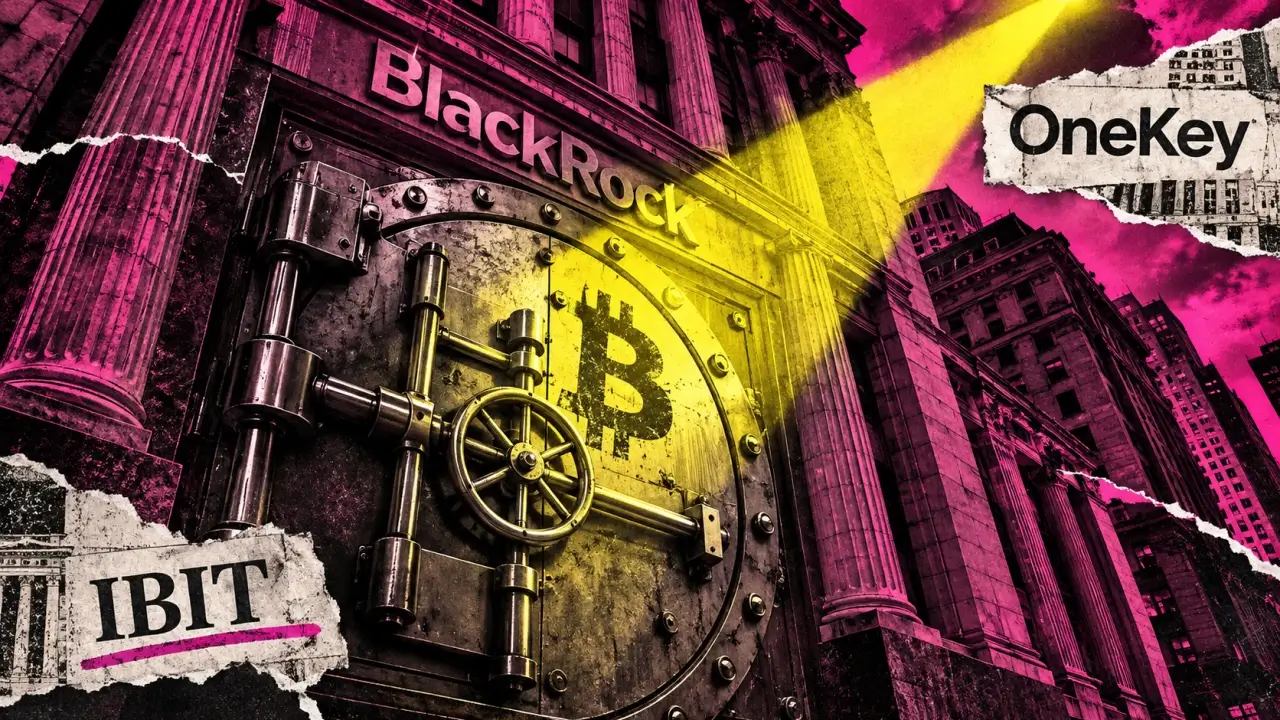
In the early days of crypto, we worried about losing our private keys or getting phished by a fake wallet update. Today, the stakes have shifted from individual users to the largest financial institutions on the planet. When BlackRock stepped into the Bitcoin arena with IBIT, they didn't just bring legitimacy to the space; they created the single most attractive target in the history of digital assets.
Yishi Wang, the founder of OneKey, recently voiced what many of us in the security space have been whispering: North Korean hacking syndicates likely have BlackRock’s Bitcoin holdings at the top of their hit list. We aren't talking about a few million dollars in a DeFi protocol. We are talking about a $60 billion honeypot. For a state-sponsored group like the Lazarus Group or the TraderTraitor operation, this isn't just a hack—it’s a national budget goal.
The Coinbase Bottleneck
To understand the risk, you have to look at the plumbing. BlackRock isn't self-custodying this Bitcoin in a cold room in Manhattan. They rely on Coinbase. In fact, most of the major spot Bitcoin ETFs rely on Coinbase. This creates a massive concentration of risk that the market seems to be ignoring because of the brand names involved.
If you’re building in this space, you know that centralization is always a vulnerability. We spent a decade trying to move away from single points of failure, only to build a multi-billion dollar financial product that funnels its entire security burden into one entity. If Coinbase’s custody infrastructure is compromised, it’s not just one company that goes down—it’s the entire institutional credibility of the crypto market.
State-Level Adversaries vs. Corporate Security
We need to be honest about the level of threat here. This isn't a kid in a basement looking for an exploit. These are state-sponsored actors with unlimited time, significant resources, and a desperate need for hard currency. They have already proven they can breach major exchanges and bridges, moving billions of dollars through sophisticated laundering chains.
When a founder like Wang warns about this, he isn't being a doomer. He’s pointing out a structural reality. The security protocols required to fend off a bored teenager are vastly different from those needed to stop a government-funded cyber-warfare unit. While Coinbase has a stellar record compared to defunct platforms like Mt. Gox or FTX, the pressure on their systems is now orders of magnitude higher than it was two years ago.
What This Means for Builders
For those of us building the next generation of financial tools, this is a wake-up call regarding dependencies. Relying on a single custodian because they are the 'regulated' option feels safe on a balance sheet, but it’s a nightmare for systemic resilience. We should be looking at multi-custodian models and decentralized verification of reserves as mandatory features, not optional extras.
The industry has mistaken regulation for security. Just because a product is approved by the SEC doesn't mean the underlying assets are immune to a state-sponsored North Korean operation.
If you are developing a project that interfaces with these ETFs, you need to consider the 'Black Swan' event of a major custodian breach. How does your protocol react if the price of an ETF deviates significantly from the spot price due to a security scare? If you haven't modeled that scenario, you aren't prepared.
The Long Game
The irony is that Bitcoin was designed to be unseizable and decentralized. By wrapping it in an ETF, we’ve re-centralized it. We’ve essentially taken the world’s most secure, distributed network and stuffed a huge chunk of it into a single vault. The North Koreans know exactly where that vault is. They are patient, they are methodical, and they only need to be right once. BlackRock and Coinbase have to be right every single second of every single day.
This isn't an argument against ETFs. They are a vital tool for adoption. But as builders and investors, we have to stop pretending that institutional involvement magically removes risk. In many ways, it increases the severity of a potential disaster. We are no longer guarding against a thief in the night; we are guarding against an army at the gates.
Final Takeaway
The concentration of Bitcoin in a handful of institutional custodians has created a systemic risk that hasn't been fully priced in. While the market celebrates the inflow of billions, we should be equally focused on the unprecedented security challenge those billions represent. Security isn't a static achievement; it is a constant war, and the enemy just got a lot more interested in the spoils.
Read the original at CryptoSlate →