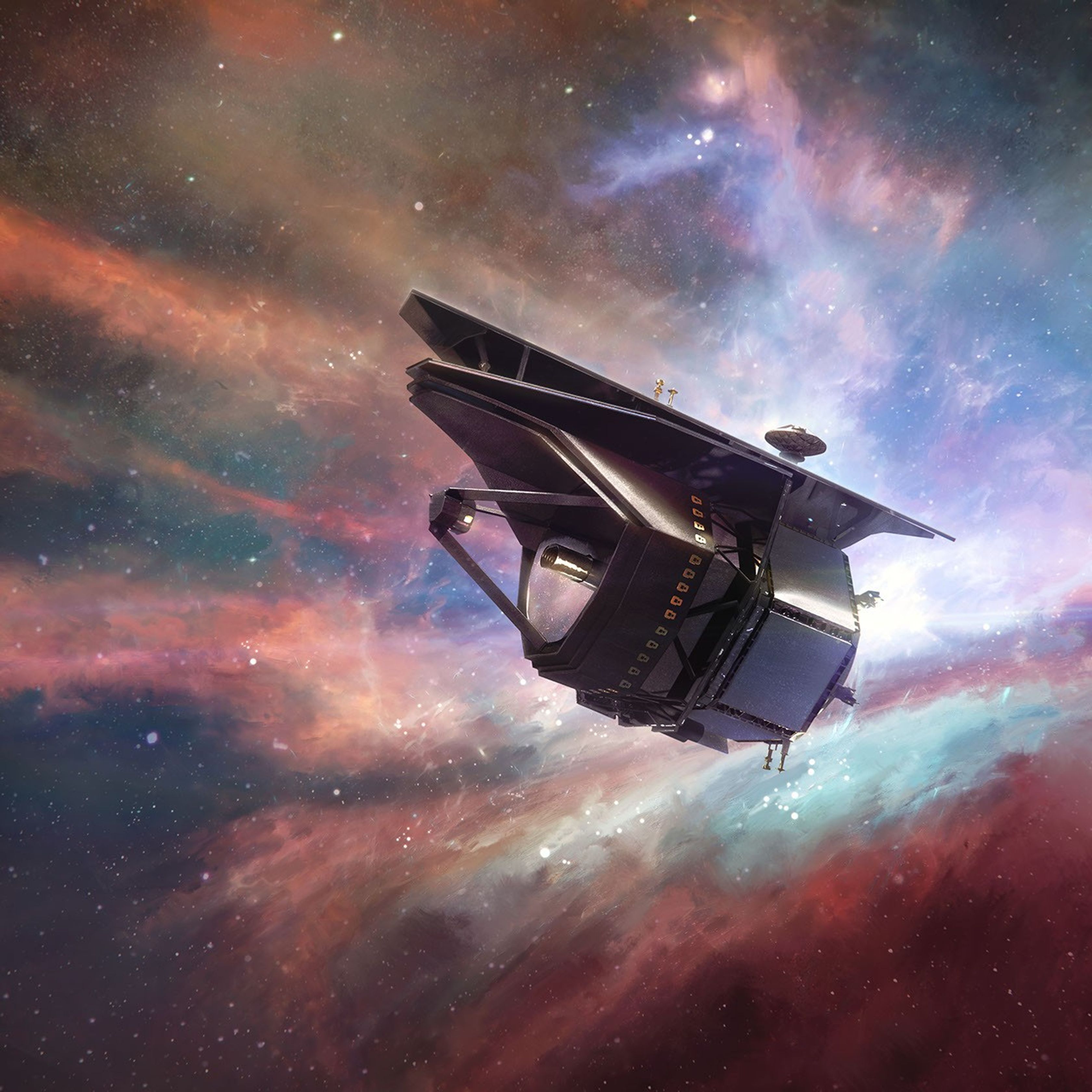
NASA just pulled the trigger on a new kind of mission. It is called PRIMA—short for the PRobe far-Infrared Mission for Astrophysics. While the name is a mouthful, the strategy behind it is what caught my eye. This isn't just another telescope; it represents the debut of a new category of spacecraft called Probe Explorers. For those of us building in tech and AI, there is a lot to learn from how NASA is pivoting their hardware architecture here.
The Far-Infrared Gap
Most of what we see in space is the bright stuff. We have the James Webb Space Telescope (JWST) looking at the near and mid-infrared, and Hubble looking at visible light. But there is a massive chunk of the electromagnetic spectrum that we have essentially ignored because it is hard to capture: the far-infrared. This is the realm of cold dust and gas.
If you want to understand how a galaxy actually forms, you have to look at the dust. In the startup world, we talk about the 'messy middle' of building a company. In astrophysics, far-infrared is the messy middle of star formation. PRIMA is designed to peer directly into these dense, cold clouds to see how heavy elements are cooked up and how water—the basic requirement for life as we know it—moves through the cosmos.
Building for a Specific Scale
The selection of PRIMA in late 2026 marks a shift in how NASA manages risk and budget. For years, we have seen a binary choice: small, cheap Discovery-class missions or multi-billion dollar Flagship missions that take decades to build. The Probe Explorer class is NASA’s attempt at a mid-scale solution. It is the Series B of space missions.
As a founder, I appreciate this. When you try to build something that does everything for everyone, you end up with a bloated, delayed product. By carving out a mission that focuses specifically on the far-infrared gap, NASA is giving scientists a specialized tool rather than a general-purpose Swiss Army knife. PRIMA is meant to be more agile than a flagship, yet more capable than a cube-sat.
Technical Hurdles and Data Pipelines
The hardware requirements for PRIMA are intense. To see far-infrared light, the telescope has to be incredibly cold. If the mirrors are even slightly warm, their own heat signature drowns out the faint signals from distant galaxies. We are talking about cooling instruments down to nearly absolute zero. This is a massive engineering challenge that involves sophisticated cryocoolers and thermal shielding.
For the AI and data builders reading this, think about the signal-to-noise ratio. The data coming off PRIMA will be incredibly subtle. We are going to need better algorithmic processing to separate the cosmic background from the specific chemical signatures of water and oxygen in the early universe. This is where the intersection of space hardware and machine learning becomes critical. We aren't just taking pictures; we are performing massive-scale spectroscopy on light that has been traveling for billions of years.
Why the 'First' Matters
Being the first in a new class of missions is a double-edged sword. PRIMA will set the standard for every Probe Explorer that follows. If they nail the deployment and the budget, it opens the door for a steady stream of specialized observatories. If it hits friction, the program could stall. NASA is betting that specialized probes can provide a higher return on investment than occasional, massive flagships.
This reflects a broader trend I see in the tech industry. We are moving away from monolithic platforms and toward interoperable, specialized services. In the same way that a developer might use five different AI models for five specific tasks rather than one giant LLM, NASA is starting to build a fleet of specialized 'eyes' in the sky.
The Founder Perspective
What can we take away from the PRIMA announcement? First, don't ignore the 'cold' parts of your industry. Everyone is looking at the high-frequency, high-hype sectors. But the fundamental infrastructure—the dust and gas of the market—is where the real growth happens. PRIMA is going after the foundations of the universe because that is where the real answers are hidden.
Second, recognize the importance of tiering your projects. If you only swing for home runs, you might strike out for a decade. NASA’s creation of the Probe class shows they realized they needed a middle ground to keep the pace of innovation moving. You should probably have a 'probe' equivalent in your own roadmap—something bigger than a prototype but more focused than a company-wide pivot.
PRIMA isn't just looking at stars; it is looking at the ingredients that make stars possible. It is a mission focused on the supply chain of the universe.
We need to be honest: space is hard, and infrared astronomy is even harder. There will be delays. There will be technical debt. But the concept behind PRIMA is sound. By focusing on a specific, underserved part of the spectrum, NASA is ensuring that we don't just see more of the same, but that we see something entirely new.
The Takeaway
The PRIMA mission is a signal that the era of specialized space exploration is here. By targeting the far-infrared, NASA is filling a critical gap in our understanding of how galaxies and life-bearing planets evolve. For builders, the lesson is clear: find the gap in the spectrum, build a specialized tool to address it, and don't be afraid to pioneer a new class of solution when the old ones don't fit the scale of the problem.
Read the original at NASA Breaking News →