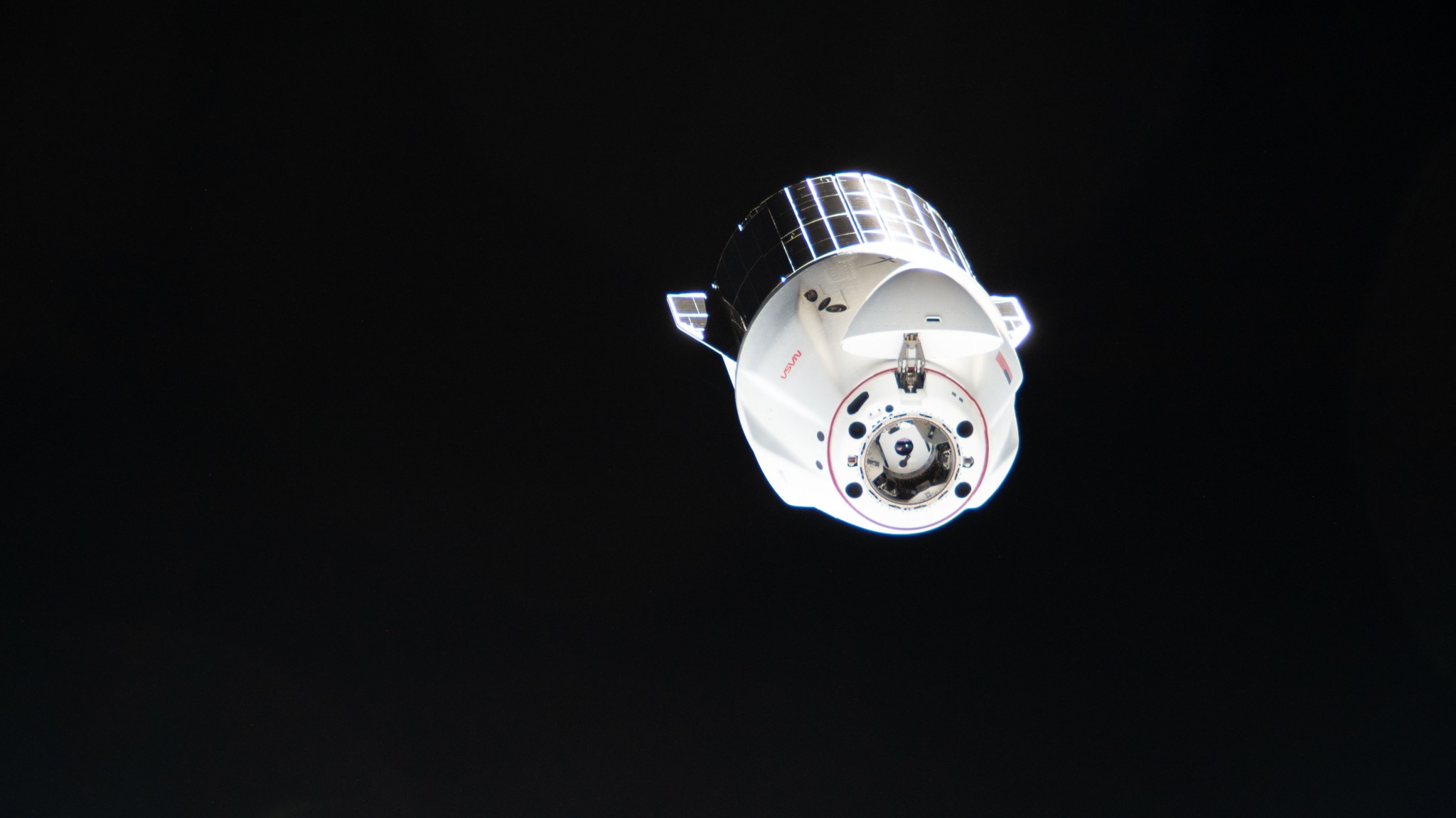
We talk a lot about the bleeding edge in crypto and AI, but sometimes you have to look at the physical world to understand what true operational scale looks like. NASA just announced the window for SpaceX’s 35th commercial resupply services mission. It is scheduled for a Tuesday morning liftoff from Florida, carrying the usual mix of snacks, scientific experiments, and heavy-duty hardware to the International Space Station.
The Routine of Impossible Feats
If you have been following the space sector for the last decade, you might find yourself yawning at this headline. That is exactly the point. For those of us building in the software and decentralized finance space, there is a massive lesson here about the shift from innovation to utility.
SpaceX is no longer just the scrappy startup trying to prove it can reach orbit. They have become the dependable logistics arm of the U.S. space program. This 35th mission is not about flashy PR; it is about keeping the lights on. Literally. Among the cargo are the final sets of Roll-Out Solar Arrays, or iROSA. These are designed to augment the station's existing power system, ensuring that the orbiting laboratory has enough juice to keep running complex experiments for years to come.
What This Means for the Builder Mindset
As a founder, I look at these milestones differently than a casual observer. We often get caught up in the "firsts"—the first time a protocol launches, the first time a model hits a certain benchmark. But the real wealth and impact are created in the "thirties.”
Building something that works once is a feat of engineering. Building a system that works thirty-five times, under the scrutiny of NASA and the harsh environment of space, is a feat of process. In crypto, we see far too many one-hit wonders. Protocols launch with massive TVL, experience a single point of failure, and disappear. The SpaceX model is the antithesis of the "move fast and break things" mantra when it comes to long-term infrastructure. They move fast, yes, but they have iterated to a point where the mission is now a predictable service.
The Logistics of Orbit
The cargo on this flight represents a diverse set of priorities. You have basic survival supplies, which are the boring but essential parts of any operation. Then you have the science investigations. These are the high-upside bets. Research performed in microgravity often leads to breakthroughs in materials science and medicine that we simply cannot replicate on Earth.
For builders in the AI space, there is a parallel here. You have your core infrastructure—your compute and your data pipelines. That is your resupply mission. Then you have your specialized agents and fine-tuned models. That is the science. If your resupply mission fails, your science stops. SpaceX has mastered the delivery mechanism so that the scientists can focus on the discovery. If you are building a platform, your goal should be to make the underlying tech so reliable it becomes invisible.
The Solar Factor
The inclusion of the final iROSA units is particularly interesting from a hardware perspective. The ISS is aging. Its original solar wings have degraded over time, as all hardware does. Instead of a multi-billion dollar replacement of the entire structure, NASA and SpaceX are using these roll-out arrays to boost power efficiency.
This is a masterclass in modular upgrades. Instead of throwing away the legacy system, they are augmenting it with modern tech. Founders often want to rip and replace everything when things get old or slow. The more efficient path is often building a layer on top that enhances the existing value. In the blockchain world, we see this with Layer 2 solutions. We aren't replacing the security of the base layer; we are augmenting its capacity.
Skepticism and Reality
Now, let’s add a dose of reality. While 35 missions is impressive, the reliance on a single private entity for this level of logistics creates a bottleneck. In the tech world, we call this vendor lock-in. NASA is currently heavily dependent on the SpaceX flight cadence. While it has saved taxpayers billions, it also highlights the lack of redundancy in the current ecosystem.
As builders, we should always be wary of single points of failure. Whether it is a cloud provider, a specific LLM API, or a single liquidity source, decentralization isn't just a buzzword—it is a risk management strategy. NASA is working on bringing other players into the mix, like Boeing and Sierra Space, but SpaceX is currently the only one consistently delivering the mail.
The Takeaway for Founders
The mission scheduled for October 13 isn't just another launch. It is a reminder that the goal of every ambitious project should be to reach a state of "boring" reliability. If your startup requires a miracle every Tuesday to survive, you don't have a business; you have a high-stakes hobby.
- Reliability is the ultimate feature: The 35th success is more valuable to a brand than the 1st.
- Modular upgrades win: Like the iROSA arrays, find ways to improve legacy systems without destroying them.
- Infrastructure enables Innovation: You cannot do the high-level science if you haven't mastered the logistics of the resupply.
Watch the launch if you can. Not for the fire and smoke, but for the precision. That is what we should all be aiming for in our own builds. We don't need more hype; we need more successful resupply missions.
The real test of a builder isn't the ability to launch; it is the ability to sustain.
Read the original at NASA Breaking News →