The High-Altitude View of a Ground-Level Crisis
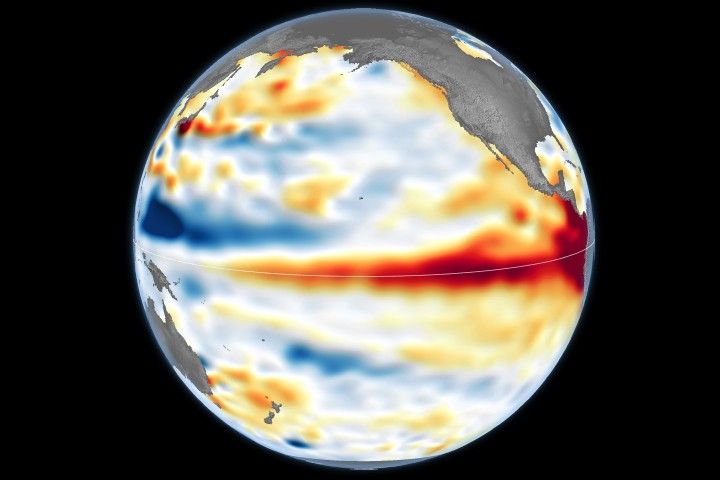
NASA just confirmed what the climate models have been whispering about for months: the 2026 El Niño isn't just another seasonal shift. It is a historic outlier. While the headlines focus on the sheer scale of the temperature anomalies in the equatorial Pacific, founders and builders in the tech and energy sectors need to look at the second-order effects. We are looking at a system more powerful than any single storm, tracked by a constellation of satellites that don't care about market sentiment.
For those of us building in AI and decentralized infrastructure, weather usually feels like something that happens outside the window while we stare at code. But this specific event is different. When NASA uses the word historic, they are talking about energy transfer on a global scale. This isn't just about rain in California or droughts in Australia; it is about the physical stability of the grid and the supply chains that feed our hardware cycles.
The Data Doesn't Lie
The core of this phenomenon is the warming of sea surface temperatures. NASA’s satellite data shows that the 2026 event is breaking records that have stood for decades. In the crypto and AI space, we talk a lot about 'black swan' events, but a massive El Niño is more like a 'gray rhino'—a massive, obvious threat charging right at us that we somehow choose to ignore until it hits.
We are seeing water temperatures in the central and eastern Pacific climb well above the two-degree Celsius threshold that usually defines a 'strong' event. This isn't just a number. It represents a massive redistribution of thermal energy. For a builder, this translates to increased cooling costs for data centers in specific regions and potential hydro-electric failures in others. If your infrastructure is localized, you are now exposed to a level of climate risk that hasn't been seen since the mid-20th century.
Why Builders Should Care
If you are running a mining operation, a node farm, or a localized AI training cluster, the next 12 to 18 months are going to be a test of your redundancy. The 2026 El Niño will disrupt the jet stream, which in turn reshuffles global precipitation patterns. We’ve seen this play out before, but never with a global economy so dependent on just-in-time logistics and fragile energy grids.
- Energy Volatility: Regions that rely on hydroelectric power are going to see massive fluctuations. If you're chasing cheap power, you might find your source drying up or becoming prohibitively expensive as local utilities prioritize residential cooling.
- Hardware Logistics: The shipping lanes in the Pacific are sensitive to extreme weather. The hardware you ordered for that new server rack might be sitting in a port longer than expected because of intensified storm activity.
- Operational Uptime: Heatwaves aren't just uncomfortable; they are equipment killers. Standard cooling solutions for data centers often fail when ambient temperatures hit these projected historic highs for extended periods.
The Skeptics Angle
I’m always skeptical when large government agencies release 'historic' warnings right when funding cycles are peaking, but the raw satellite telemetry from NASA is hard to argue with. This isn't a political narrative; it's physics. The ocean is holding a staggering amount of heat, and that heat has to go somewhere. It will eventually be released into the atmosphere, triggering a chain reaction of climatic events.
As founders, we often pride ourselves on being 'disruptors.' Well, the climate is about to disrupt us. The mistake many will make is assuming this is a 2027 problem. The lead-up to these events is where the most money is lost. Insurance premiums for physical infrastructure are already starting to reflect this risk, and if you haven't audited your disaster recovery plan for extreme heat or flood scenarios, you're already behind.
The Founder's Playbook for 2026
So, what do we actually do with this information? First, stop thinking about your cloud provider as a 'magic box.' Even the big three (AWS, Google, Azure) have physical locations that are susceptible to these patterns. Diversification across geographies isn't just a good idea for latency anymore; it's a survival strategy.
"In a world where physical reality is increasingly volatile, the builders who prioritize resilience over raw growth are the ones who will still be standing when the water recedes."
Second, look at your energy contracts. If you are on a variable rate in a region prone to El Niño-driven droughts or heatwaves, you need to lock in rates or find a way to hedge that risk. The cost of electricity is going to be the most volatile line item on your balance sheet over the next year.
Takeaway for the Realists
NASA's satellites are giving us a head start. Most people will treat this as a curiosity in the news cycle, but the smart money will be spent on fortifying the physical layer of the digital world. The 2026 El Niño is a reminder that no matter how much we automate or decentralize, we are still tied to the physical health of the planet. Build for the storm, not for the sunshine.
Read the original at NASA Breaking News →