Space Logistics and the Reality of Commercial Partnerships
NASA recently opened the gates for media coverage of the Northrop Grumman CRS-25 mission. On the surface, it sounds like another routine logistics run to the International Space Station. A Cygnus spacecraft will be packed with scientific tools and supplies, then launched into low Earth orbit. But if you look at the mechanics of this specific mission, you see a masterclass in modern hardware pivot and the erosion of old-school aerospace dominance.
For founders in the crypto or AI space, it might seem like a reach to look at a rocket launch for lessons. It isn't. The way NASA manages these Commercial Resupply Services (CRS) contracts is the ultimate template for decentralized infrastructure. They aren't building the trucks anymore; they are just paying for the delivery. This particular mission is slated for November, and it tells a story of pragmatism that every builder should internalize.
The Falcon and the Swan
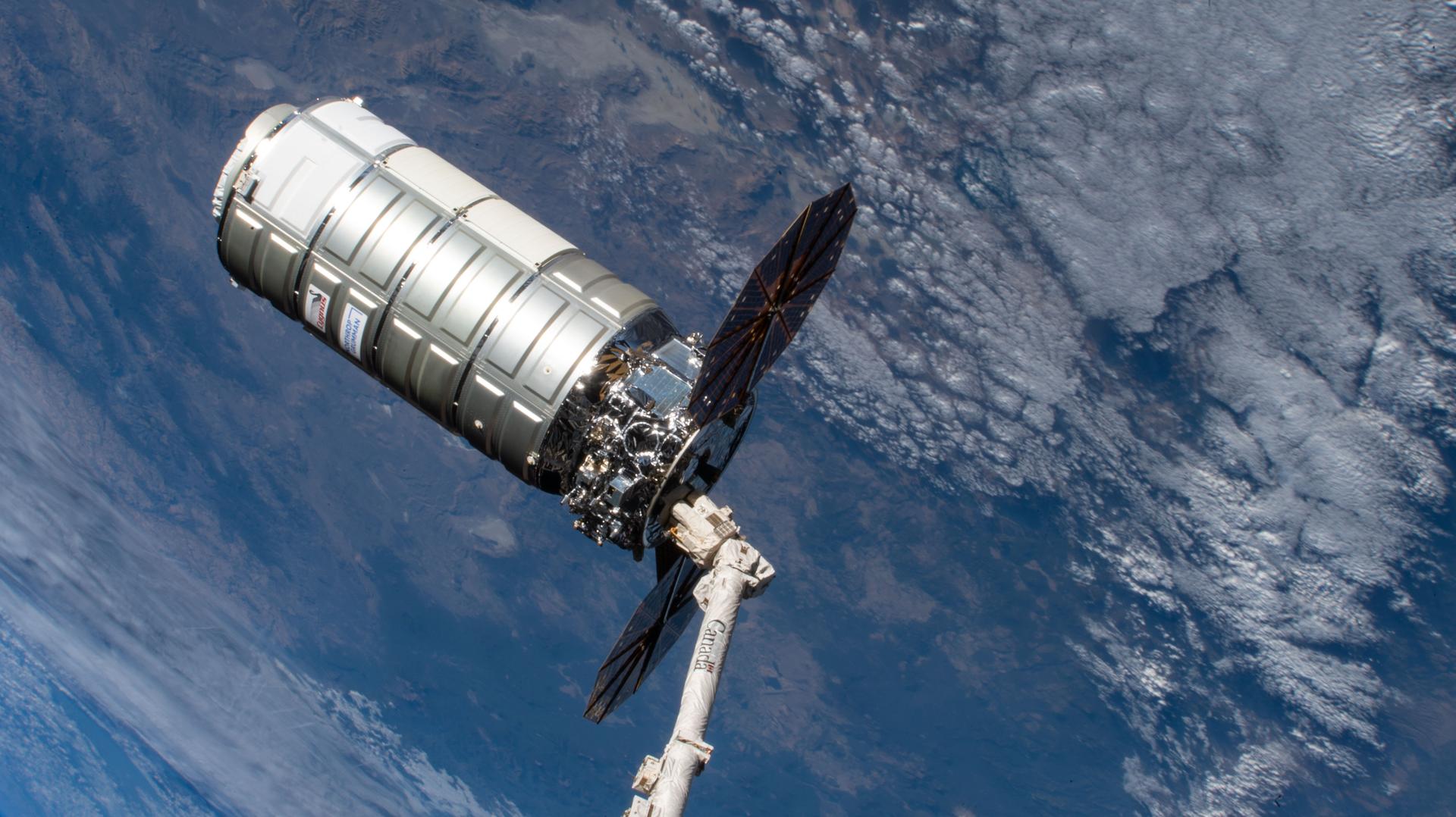
The headline buried in the logistics is the vehicle pairing. Northrop Grumman owns the Cygnus spacecraft, but they are launching it on a SpaceX Falcon 9. For those who don't follow the legacy aerospace world, this is like a major software firm being forced to run their proprietary code on a competitor's server because their own hardware stack is in transition. Northrop Grumman is moving away from the Antares 230+ series, which relied on Russian engines, toward a new American-made platform. In the interim, they are paying their biggest rival for a ride.
This is a lesson in interoperability. In the blockchain world, we talk about being chain-agnostic. In AI, we talk about model portability. Northrop Grumman didn't let their mission ground to a halt just because their primary launch vehicle was in a state of flux. They adapted their cargo ship to work with the Falcon 9. As a founder, your product should be a Cygnus: a valuable, mission-critical container that can survive even if your primary infrastructure provider disappears or changes their terms.
Science at Scale
The CRS-25 mission isn't just about sending up freeze-dried food. It is about maintaining an orbital laboratory that is increasingly becoming a testbed for edge computing and advanced materials. When NASA invites the media to these events, they are trying to signal that the station is still open for business. The science investigations being hauled up in November represent years of R&D from teams that have to pray their hardware survives the high-G environment of a launch.
For builders, the ISS represents the ultimate "edge" environment. If you think deploying a node in a remote region is hard, try doing it in microgravity where every gram of weight costs thousands of dollars. The hardware being sent up on this mission has to be redundant, efficient, and capable of operating with minimal human intervention. This is the same direction we are heading with autonomous AI agents and decentralized physical infrastructure (DePIN). We are moving toward systems that have to work in isolation, where the cost of failure is absolute.
The Hype Cycle vs. The Launch Cycle
One thing I appreciate about these NASA updates is the lack of fluff. The schedule is the schedule. The mission is defined by its cargo capacity and its docking window. In our world, we often get bogged down in the roadmap of the roadmap. We announce partnerships that are really just exploratory meetings. NASA and Northrop Grumman don't have that luxury. If the Cygnus doesn't arrive, the station runs low on essentials. The stakes are physical, not just a dip in a token price.
We need more of this builder-first honesty in the tech sector. We should be talking about throughput, reliability, and successful delivery rather than just the potential for future impact. The CRS-25 mission is a reminder that the most important work happens in the unglamorous phases: the testing of the docking adapters, the pressure checks of the hull, and the meticulous packing of the science racks.
Decentralizing the Final Frontier
We are witnessing the slow-motion sunset of the ISS as we know it, with plans to eventually transition to private space stations. NASA’s reliance on companies like Northrop Grumman and SpaceX is the first step toward a fully commercialized orbit. This is effectively the "outsourcing" of the state. It mirrors what we see in the digital world where decentralized protocols are starting to handle tasks once reserved for centralized banks or government authorities.
However, the skepticism comes in when you look at the concentration of power. While the CRS program is meant to foster competition, we are seeing a massive consolidation around a few players who can actually execute. If you are a founder building in a high-stakes industry, you have to ask yourself: am I building a platform that can actually compete, or am I just a passenger on someone else's rocket? Northrop Grumman is currently the latter, but they are using that time to build their next-generation launch capability.
Takeaway for Builders
The mission in November is a logistical milestone, but the strategy behind it is what matters. Don't be afraid to use a competitor's infrastructure to keep your product moving while you build your own. Stay focused on the payload—the actual value you provide—rather than the hype of the launch. Most importantly, remember that in any complex system, whether it's a space station or a global network, reliability is the only currency that actually keeps you in orbit.
The goal isn't just to launch; it's to deliver the cargo and survive the return. Everything else is just noise.
As the media gathers at Kennedy Space Center this November, the cameras will be on the fire and smoke of the Falcon 9. But the real story is the Cygnus sitting on top, proving that adaptability is the only way to survive in a rapidly changing environment. Build for the mission, not the headlines.
Read the original at NASA Breaking News →