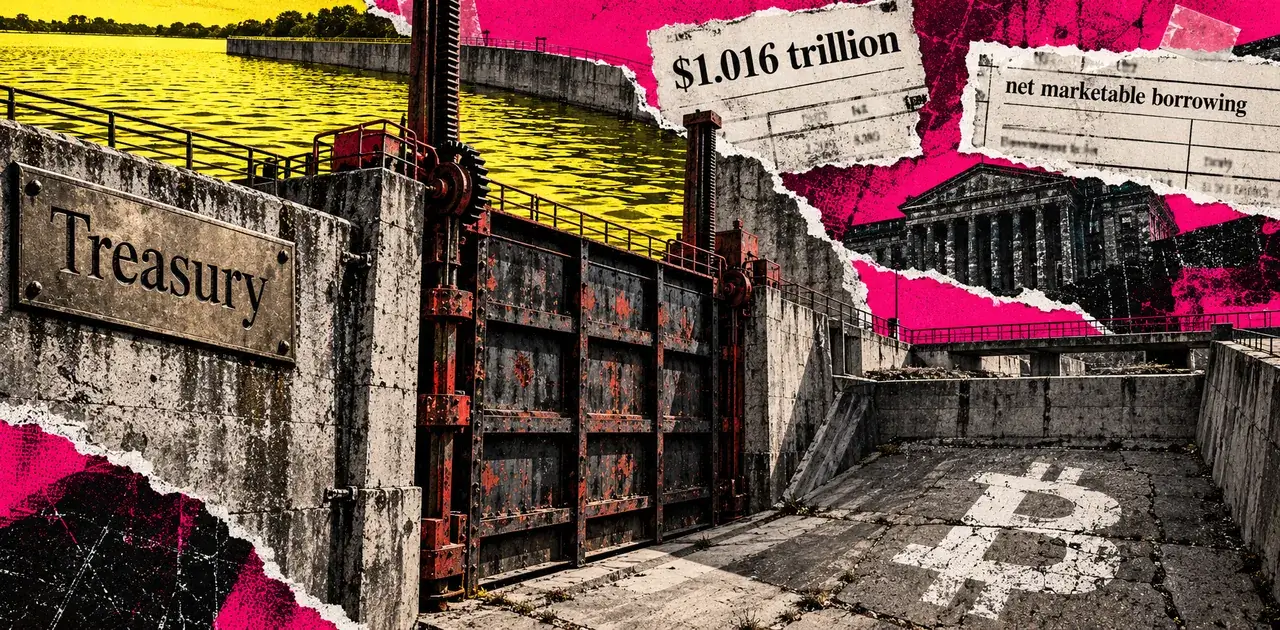
The Trillion-Dollar Buffer
The U.S. Treasury General Account is currently hovering around the $1 trillion mark. For those of us building in the trenches of crypto and decentralized finance, that is not just a big number on a balance sheet; it is a giant vacuum sucking liquidity out of the private markets. When the government hoards cash, that capital is essentially removed from the circulating supply that fuels risk assets like Bitcoin.
As we approach the latest quarterly refunding announcement, the tension is palpable. The Treasury has to decide how it will manage this massive reserve while simultaneously issuing new debt. This creates a push-and-pull dynamic. If the Treasury decides to draw down that cash balance to fund operations, it acts as a liquidity injection. If they keep the pile high and continue aggressive bond issuance, they are effectively competing with the private sector for every available dollar.
The Liquidity Trap for Builders
Why should a developer or a founder care about Treasury management? Because liquidity is the lifeblood of on-chain activity. When dollar liquidity tightens in the broader macro environment, we see it immediately in bridge volumes, DEX slippage, and the cost of capital for startups. We are currently facing a key test: can the market absorb the upcoming debt issuance without crashing the party for risk-on assets?
Bitcoin has historically been a barometer for global liquidity. It thrives when the dollar is flowing freely and struggles when the government tightens the tap. Right now, the tap is barely dripping. The $1 trillion sitting in the TGA represents potential energy, but until it starts moving back into the banking system, we are operating in a high-friction environment.
The Refunding Risk
The upcoming financing decisions from the Treasury will dictate the pace of the market for the rest of the year. If they pivot toward shorter-duration bills, it might alleviate some pressure on the long end of the curve. However, if they lean heavily into long-term coupons, they are going to demand a lot of cash from institutional investors. That is cash that won't be going into ETFs, venture rounds, or liquid tokens.
From a founder's perspective, this is the time to watch your burn. If the Treasury chooses a path that drains more liquidity, the "easy money" phase of the current cycle will hit a brick wall. We have seen this play out before where macro conditions override even the strongest technical fundamentals in the crypto space.
The Crowding Out Effect
There is a concept in economics called "crowding out." It happens when government spending and borrowing are so high that they leave no room for private investment. We are seeing a digital version of this. When the Treasury offers high yields on risk-free debt, the hurdle rate for crypto projects goes up. Why would an investor bridge funds to a new L2 for a 6% yield when they can get 5% from the US government with zero smart contract risk?
This is the hidden competitor for every builder. You aren't just competing with other protocols; you are competing with the Treasury’s need to fund the national deficit. This week's liquidity test will show us just how much appetite is left in the market to support both a hungry government and a growing crypto ecosystem.
What to Watch Next
- TGA Drawdown: Keep an eye on the total balance of the Treasury General Account. A significant drop usually correlates with a boost in market liquidity.
- Reverse Repo Facility: Watch if cash moves out of the Fed's overnight facility and back into the market. This can offset some of the Treasury's tightening.
- Stablecoin Flows: If the Treasury eases up, watch for an uptick in minting across major stablecoins as capital finds its way back into the ecosystem.
The Skeptical Takeaway
Everyone wants to talk about the "moon mission" based on the halving or institutional adoption. But the reality is much more boring and much more dangerous. The Treasury is the biggest whale in the room, and right now, they are holding their breath. If they decide to exhale, we might see a rally. If they keep holding, the market is going to feel the suffocation.
The biggest risk to your roadmap isn't a bug in your code; it is a liquidity crunch caused by a government that needs to borrow more than the market is willing to lend.
For those of us building, the strategy remains the same: build for resilience, not for hype. Don't assume the liquidity of yesterday will be there tomorrow. This week is a reminder that in the world of finance, the sovereign always gets paid first, and the rest of us are left fighting for the scraps.
Read the original at CryptoSlate →