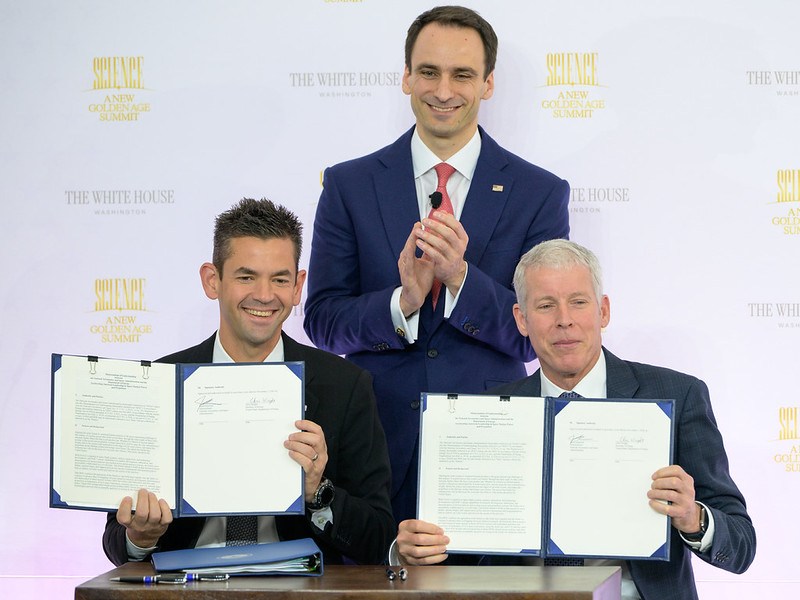
NASA and the Department of Energy just signaled a shift that most people in the tech space are ignoring because it sounds like science fiction. They are moving away from the solar-only mindset and leaning hard into nuclear power for deep space. If you are building in AI or crypto, you might think this doesn't touch your world. You would be wrong. This is the ultimate test case for autonomous energy systems and remote infrastructure management.
The End of the Solar Ceiling
For decades, we have treated space exploration like a weekend camping trip with a small battery pack. Solar power works when you are near the sun and sitting still, but it is fragile and inconsistent. If you want to run heavy compute, sustain long-term habitats, or move massive payloads beyond Mars, solar doesn't scale. The weight-to-energy ratio is a nightmare.
By formalizing this partnership between NASA and the DOE, the government is admitting that if we want to be a multi-planetary species, we have to embrace nuclear. This isn't the bulky, terrifying nuclear of the 1970s. We are talking about small modular reactors (SMRs) and radioisotope power systems that can run for decades without a human touching a wrench.
Why Founders Should Care
When the government invests in "hard tech" like space-based nuclear, the downstream effects usually land in the laps of private industry about five to ten years later. As a founder, you should be looking at the subsystems required to make this work. Nuclear power in space requires three things that are currently massive pain points in the tech world: autonomous monitoring, decentralized grid management, and extreme thermal efficiency.
If you are building AI agents to manage complex industrial systems, NASA just gave you a multi-billion dollar roadmap. These reactors cannot be managed by a guy in a control room in Houston with a three-second signal lag. They need local, edge-based AI that can predict failures before they happen and reroute power in real-time. That is a software problem, not a physics problem.
The Connection to Decentralized Compute
We are currently seeing a massive crunch in terrestrial data centers. Power is the bottleneck for every LLM and every blockchain network. The work being done by NASA and the DOE to shrink nuclear reactors and make them "plug-and-play" is the R&D path for the future of decentralized data centers. Imagine a world where a private company can drop a small nuclear unit in a remote area to power a massive GPU farm without ever touching the public grid.
This is the "sovereign energy" play. NASA is doing the heavy lifting on the safety standards and the material science. The builders who win in the next decade will be the ones who figure out how to commercialize these ruggedized energy systems for use back here on Earth.
The Skeptic's Corner
I am usually the first one to roll my eyes at government press releases about "new eras." We have heard about nuclear propulsion since the Gemini days. The difference now is the geopolitical pressure. Space is no longer a science project; it is a logistics race. The DOE isn't just joining for the PR; they are bringing the actual fuel supply chain and the engineering specs that have been locked away in national labs.
The risk, as always, is bureaucracy. NASA moves slow. The DOE moves slower. But the move toward commercial partnerships means they are looking for private companies to take these blueprints and actually build the hardware. They are moving from being the sole operator to being the primary customer.
The Technical Moat
For the builders in our audience, the moat here is "reliability in extreme environments." If you can build a sensor, a chip, or a software protocol that meets NASA’s nuclear safety standards, you have a product that is essentially indestructible in a civilian market. We are talking about hardware that survives radiation, vacuum, and decades of vibration.
Takeaway: Don't look at this as a story about rockets. Look at it as a massive, government-funded R&D project for long-range energy and autonomous systems. The "Nuclear NASA" era is the signal that the energy bottleneck is finally being addressed at the highest level. If you are building infrastructure for the next century, you need to be watching these specs closely. The future isn't solar-powered; it's fission-powered, and the software layer that manages it is still up for grabs.
Read the original at NASA Breaking News →