When you see a billion dollars move on a public ledger, people tend to freak out. It is a natural reaction. We have spent a decade being told that Bitcoin is the ultimate sovereign asset, yet here we are, watching the United States government shuffle around 12,267 BTC like it is just another Wednesday at the office. This is not just a market signal; it is a reminder of the strange, centralized shadow that government-held assets cast over our supposedly decentralized industry.
The Bitfinex Shadow
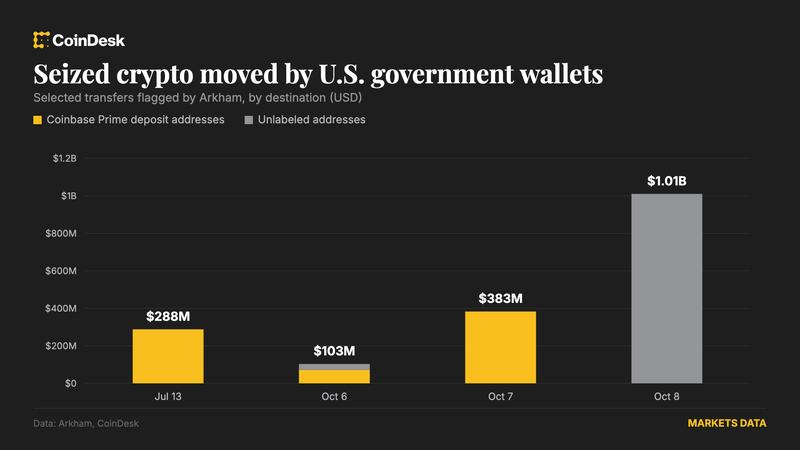
The origin story of this specific capital is well-known to anyone who has been in the trenches for more than a few years. These funds were recovered from the 2016 Bitfinex hack. For a long time, these coins were static, a massive dormant pile of evidence. But recently, the Department of Justice has been getting active. The latest move saw about $1 billion worth of Bitcoin shift from known government wallets into unlabeled ones.
As a builder, you have to look past the price action. Whether the government sells or holds doesn't change the code you are writing today. What matters is the reality of the supply overhang. When a single entity—especially one that doesn't care about your portfolio—holds this much weight, they become a permanent factor in the ecosystem's volatility. It is a bug in the current market structure, not a feature.
Moving Without Selling
The data from Arkham shows that these coins did not go to an exchange. Usually, when the government is ready to dump, we see the assets land at Coinbase Prime. We saw that happen just a day prior with a $383 million transfer. This billion-dollar move was different. It looks like an internal reorganization or a move to a new custodial setup.
This distinction is important. The market reacts to the possibility of a sale, but builders should react to the process. The fact that we can track this in real-time is a win for transparency, but the lack of communication from the agencies involved creates a vacuum that rumors fill. In a founder's world, uncertainty is the enemy. When the largest holder of an asset operates behind a curtain of administrative silence, it makes long-term planning for crypto-native businesses that much harder.
The Irony of Government Custody
There is a deep irony in the U.S. government becoming one of the world's largest Bitcoin whales. We built this tech to move away from centralized control, yet the legacy system has managed to aggregate massive amounts of it through law enforcement actions. They aren't miners; they are confiscators. This creates a weird dynamic where the very entity that often regulates the industry also has the power to crash its price by clicking a button.
For those of us building tools in the space, this should serve as a wake-up call regarding privacy and self-custody. If the government can seize and move $1 billion with this much ease, it highlights the vulnerability of centralized points of failure. If you are building an exchange or a custodial service, you are essentially building a future government wallet if your security or compliance isn't bulletproof.
What Builders Should Watch
Don't get distracted by the Twitter threads predicting a market crash. Instead, focus on these three things:
- Infrastructure Resilience: How does your project handle sudden liquidity crunches? If the government decided to sell all 12,000 BTC tomorrow, would your protocol survive the slippage?
- Transparency Tools: There is a growing market for better on-chain forensics. People want to know what the government is doing before it happens. Building better alerting systems for these specific wallets is a viable niche.
- Regulatory Precedent: The way these funds are handled—whether they are auctioned off or sold via OTC desks—sets the stage for how digital assets are treated as forfeited property moving forward.
The Founder's Perspective
I have spent a lot of time looking at how legacy systems interact with new tech. Usually, the legacy system tries to ignore it until it can't, then it tries to control it. We are in the control phase. The government moving these funds into unlabeled wallets is a play for operational security on their part, but it creates operational headaches for everyone else.
We shouldn't be surprised that the DOJ is getting better at managing their digital assets. They have had years to hire the right people and set up the right infrastructure. What we should be doing is asking why the market is still so sensitive to these moves. The reliance on centralized exchanges for government liquidations is a bottleneck that we, as builders, need to solve.
The fact that a single wallet movement can cause a global stir shows how early we still are. Mature markets don't blink when a billion dollars moves; crypto stares until its eyes bleed.
If you are building a dApp or a new L2, this news shouldn't change your roadmap. But it should change your risk assessment. We are operating in a landscape where one of our biggest peers is a government that may or may not understand the long-term implications of their market moves. They are playing a different game than we are. We are building for the next century; they are managing a balance sheet for the next fiscal year.
Final Takeaway
The government isn't selling—yet. But they are getting their ducks in a row. The move to unlabeled wallets suggests a more sophisticated approach to asset management. For builders, the lesson is clear: transparency is a double-edged sword. While we can see the move, we can't see the intent. Your job is to build systems that are robust enough to not care about the intent of a single whale, even if that whale is the U.S. Treasury.
Keep your head down. Keep building. The billion-dollar moves are just noise in the long-term signal of what we are creating. The goal isn't to track the government's wallet; the goal is to build a system where the government's wallet is just another node in a massive, resilient network.
Read the original at CoinDesk →