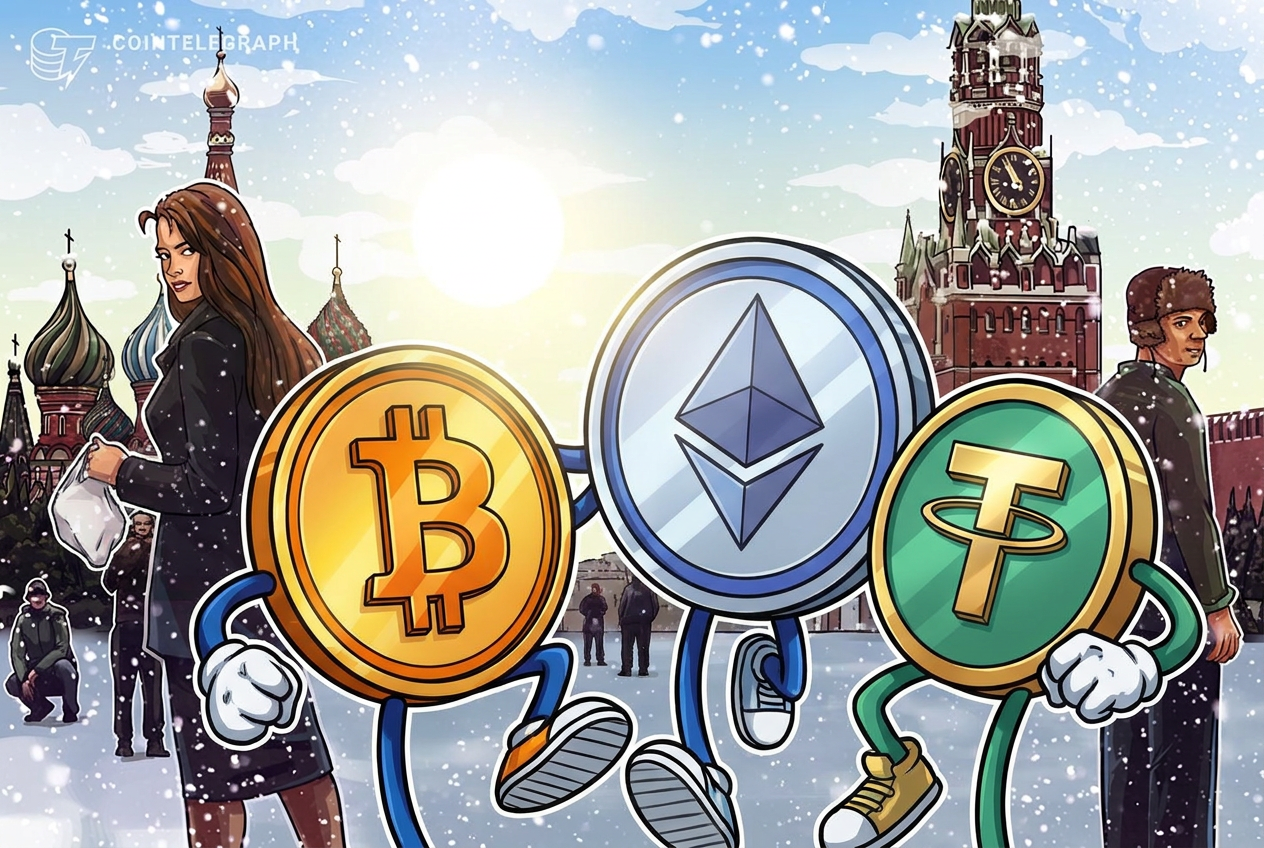
The Kremlin’s Crypto Pivot
Russia has spent years flirting with a total ban on digital assets. The central bank hated it, the government feared capital flight, and the regulatory framework was a mess of contradictions. But geopolitical reality has a way of forcing a hand. With the Moscow Exchange (MOEX) set to launch trading for Bitcoin, Ether, and USDT this December, we are seeing the formalization of a new financial rail driven by necessity rather than an ideological shift toward decentralization.
This isn't a grassroots movement. This is a state-sanctioned infrastructure play. By integrating these assets into the country's primary trading floor, Russia is attempting to solve two problems: domestic demand that has existed in the shadows for years, and the massive friction in international settlements caused by sanctions.
The Qualified Investor Wall
For founders and builders looking at this as a massive new market, it is important to look at the fine print. The Russian government isn't just handing out private keys to every citizen. The rollout under the country's new legislation includes strict purchase limits for non-qualified investors. If you aren't a sophisticated trader or high-net-worth individual, your ability to buy into this new ecosystem will be capped annually.
This creates a tiered system. The elite and the institutional players get to use these assets for settlement and wealth preservation, while the average person is kept on a short leash. From a builder's perspective, this means the 'Russian crypto boom' might look more like a walled garden than a wide-open frontier. You are building for a market that is heavily mediated by the state's gatekeepers.
Stablecoins as the Real MVP
While Bitcoin and Ether get the headlines, the inclusion of USDT (Tether) is the most telling part of this launch. In the West, regulators often treat USDT with extreme suspicion, viewing it as a systemic risk. In Russia, it’s being treated as a lifeline. Stablecoins are the grease in the gears of global trade when you’ve been cut off from the SWIFT banking system.
By listing USDT on the Moscow Exchange, the government is effectively legitimizing a dollar-pegged asset to bypass dollar-based banking restrictions. It is a pragmatic, if not slightly ironic, move. Builders should take note: the demand for stable, predictable value transfer in high-friction environments is the only real 'killer app' that matters in the current geopolitical climate.
What This Means for the Global Ecosystem
When a major national exchange adopts crypto, it usually signals a move toward legitimacy. However, Russia’s adoption comes with baggage. We are likely to see an increase in 'tainted' coins—assets that have touched Russian exchanges and are subsequently flagged by Western compliance tools like Chainalysis. This creates a fragmented liquidity pool. A Bitcoin bought on MOEX might not have the same value or utility as a Bitcoin bought on a regulated U.S. exchange once it tries to cross borders.
For developers working on cross-chain protocols or privacy layers, this is the ultimate stress test. How do you maintain a global, permissionless network when major nation-states are building their own siloed versions of that same network? The friction between these two worlds is where the next decade of blockchain development will happen.
The Infrastructure Play
The MOEX launch is a reminder that the 'exchange' model isn't dying; it's just being co-opted. For years, the narrative was that crypto would make central exchanges obsolete. Instead, we are seeing those very institutions become the primary on-ramps for state-led adoption. The Moscow Exchange has the technology, the custody solutions, and the regulatory blessing to dominate the domestic market.
If you are a founder building in the decentralized exchange (DEX) space, your competition isn't just Uniswap anymore. Your competition is the literal state infrastructure of large nations who realize they can no longer ignore the technology. They aren't going to embrace your DAO; they are going to fork your ideas and put a government seal on them.
A Skeptical Takeaway
I’ve seen plenty of 'bullish' news cycles, but this one feels different. It’s not a sign of a new bull run driven by innovation. It’s a sign of a fragmented world where crypto is being used as a tool for survival. The Moscow Exchange entering the fray is a massive validation of the technology's resilience, but it’s also a warning that the dream of a borderless, unified financial system is further away than we think.
The takeaway for builders is simple: the era of 'global' crypto is splitting into regional blocs. If you’re building products, you need to decide which side of the wall you’re on, or if you’re building the tools to bridge the gap. The December launch in Moscow is just the first domino in a much larger, much more complicated game of financial chess.
Read the original at Cointelegraph →