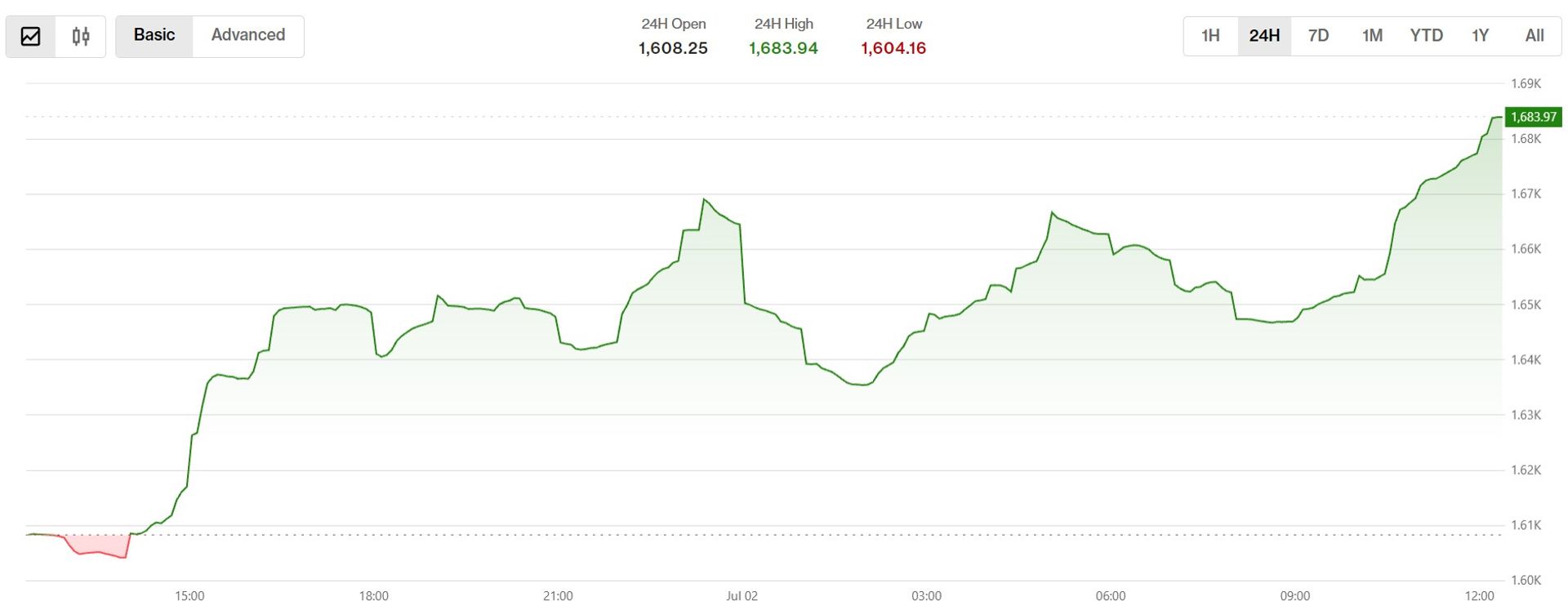
We are watching a live experiment in corporate survival. Metaplanet, a Tokyo-listed firm that used to focus on hotels and real estate, has essentially shed its old skin to become a Bitcoin vehicle. Their latest quarterly update shows they added 2,823 BTC to their war chest, bringing their total holdings past the 43,000 mark. But it is not just the total coin count that matters here; it is the aggressive shift in how they view corporate treasury management in a world where the Japanese yen is feeling heavy pressure.
The MicroStrategy of Asia
For a long time, Michael Saylor was the only one crazy enough to bet the entire company on a single digital asset. Now, the copycat trade is becoming a legitimate strategy for firms stuck in stagnant markets. Metaplanet is not trying to hide it. They are following the playbook to the letter: issue debt, use capital raises, and funnel every spare cent into Bitcoin. During the second quarter, this aggressive buying allowed them to bring their average acquisition cost down to roughly $106,500 per BTC. For those tracking the math, that is still above current spot prices, but in the world of long-term corporate stacking, the entry price is often secondary to the total volume accumulated.
For builders, there is a lesson here about pivot speed. Metaplanet was a struggling legacy business. By rebranding as a Bitcoin-first company, they have completely changed their cost of capital and their investor base. They aren't being judged on hotel occupancy anymore; they are being judged on their BTC-per-share growth.
Income Generation vs. HODLing
What makes the Metaplanet story slightly different from most corporate treasury plays is their active approach. They reported roughly $10.9 million in revenue specifically from what they call an income generation strategy. In plain terms, they aren't just sitting on the keys. They are likely using sophisticated yield strategies or options selling to generate cash flow from the volatility of their holdings. This is a nuanced move. It shows they understand that just holding an asset isn't enough when you have operational overhead and debt to service.
This is where the founder perspective gets skeptical. Generating income from Bitcoin usually involves counterparty risk or smart contract risk. If you are a builder looking to manage a startup treasury, you have to ask if the extra yield is worth the potential for a catastrophic loss. Metaplanet seems to think so, primarily because their traditional business lines aren't providing the growth they need to satisfy public market investors.
The Macro Trade Behind the Curtain
You cannot talk about Metaplanet without talking about the Japanese yen. The yen has been volatile, to put it mildly, and Japanese interest rates have been a point of global anxiety for a year. For a Japanese company, holding cash in a depreciating fiat currency is its own kind of risk. Buying Bitcoin is less of a speculative moon-shot for them and more of a hedge against their own local currency's weakness.
We are seeing the normalization of the "Bitcoin Standard" at the mid-cap corporate level. It is no longer just the mega-caps like Tesla or the pioneers like MicroStrategy. It is reaching firms that are using Bitcoin as a lifeline to escape the gravitational pull of failing local economies. For founders in the AI and Web3 space, this provides a blueprint for how to handle a balance sheet, but it also serves as a warning. When your primary product becomes your treasury management, you are no longer a tech company—you are a hedge fund with a software or real estate side-hustle.
What This Means for the Ecosystem
The accumulation of 43,000 BTC by a single entity in Japan matters because it locks up supply and creates a new regional powerhouse. As more companies do this, the liquidity profile of Bitcoin changes. We are moving away from a market dominated by retail traders on leverage and toward a market dominated by corporate entities with ten-year time horizons. That usually leads to lower volatility over time, though we aren't there yet.
If you are building in the crypto space, look at the infrastructure Metaplanet needs. They need custody, they need reporting tools for public markets, and they need legitimate ways to generate income without losing the underlying asset. There is a massive gap in the market for enterprise-grade tools that help companies do exactly what Metaplanet is doing without the need for a Ph.D. in finance.
The pivot from a legacy business to a Bitcoin treasury play is a move of desperation that looks like genius during a bull run. The real test is how these firms handle the inevitable drawdown.
The Founder's Takeaway
Metaplanet's strategy is bold, but it is also a signal of the times. The takeaway for builders is clear: the wall between "traditional finance" and "crypto" has successfully collapsed at the corporate level. If you are starting a company today, you need to think about your treasury from day one. You don't have to go full Metaplanet and buy 43,000 coins, but you do need to understand that cash is no longer a safe neutral position.
However, don't get distracted by the headline numbers. A $10.9 million revenue stream on a massive BTC position is good, but it comes with risks that most startups aren't equipped to handle. Stick to building your core product and use these corporate giants as a barometer for institutional sentiment. They are the ones providing the floor for the market, which gives you the stability to actually build something that matters.
Read the original at Cointelegraph →