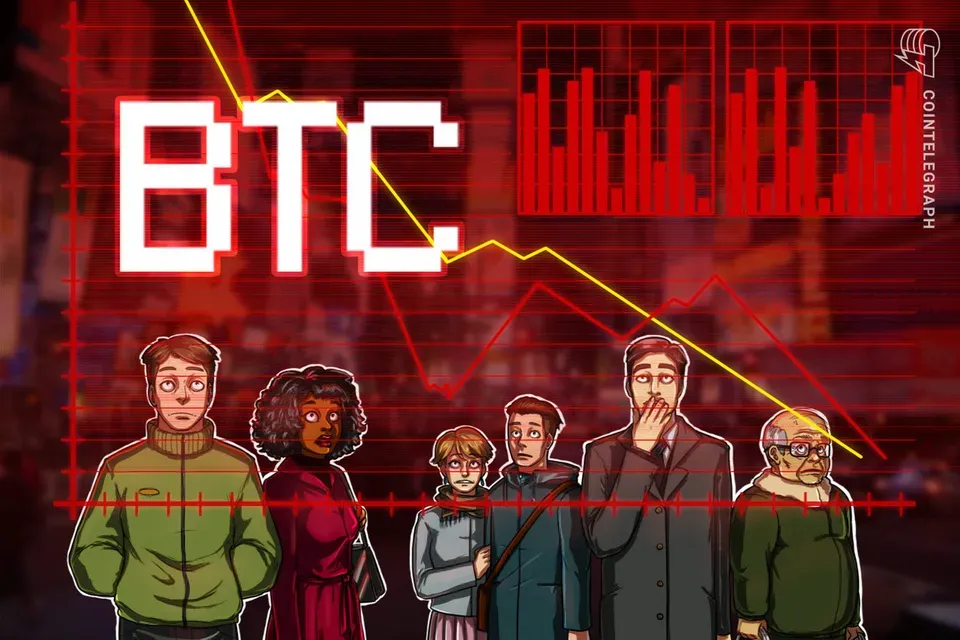
We are watching the largest transition in the history of digital infrastructure. It is not subtle, and it is not just about market cycles. When a company like MARA—formerly Marathon Digital—moves $81.1 million worth of Bitcoin to an entity like Galaxy Digital, the industry starts whispering about liquidations. But if you look at the board seats and the balance sheets, the story is not about selling out. It is about moving house.
The Great Hashrate Pivot
For years, the Bitcoin mining playbook was simple: stack sats, upgrade machines, and HODL. MARA was the poster child for this strategy. At one point in early 2024, their treasury held nearly 54,000 BTC. Fast forward to late summer, and that number has dipped closer to 35,000 BTC. The recent transfer to Galaxy is just the latest line item in a massive reallocation of capital.
Why is this happening? Because the margins in pure-play Bitcoin mining are getting squeezed by the halving and rising energy costs, while the demand for high-performance computing (HPC) and AI training is exploding. MARA is not just a miner anymore; they are trying to become a power and compute company. Moving eighty million dollars is not a panic sell. It is a down payment on a new identity.
Building for the AI Subsidy
From a founder’s perspective, this move validates a thesis many of us have discussed: the AI boom is effectively subsidizing the next generation of energy infrastructure. Bitcoin miners are the only entities with the land, the power permits, and the cooling tech ready to go for the GPU clusters that AI firms are desperate to lease.
For builders in the space, this shift creates a weird paradox. We are seeing a decentralization of the hash rate as these big players divert resources to LLM training. If you are building tools for the mining industry, your customer is no longer just looking for the lowest cost per terahash. They are looking for ways to flip a switch and toggle between SHA-256 mining and specialized AI workloads. Flexibility is the new efficiency.
Why Galaxy Digital?
The choice of Galaxy Digital as the recipient of this transfer is telling. In this ecosystem, Galaxy acts as the bridge between the old-school institutional world and the new-school crypto treasury. Whether this is a collateralized loan to fund GPU purchases or a structured sell-off to keep the lights on during a pivot, it shows that MARA is leveraging its primary asset to survive a structural change in the market.
It is important to be skeptical of the hype, though. Turning a Bitcoin mine into an AI data center is not as easy as swapping a box. The latency requirements, the uptime guarantees, and the networking stacks are completely different. MARA is betting that they can make that jump. If they fail, they are just a company that sold their Bitcoin at the wrong time. If they succeed, they become the backbone of the next industrial revolution.
The Builder Takeaway
If you are building in Web3 or AI right now, the signal here is clear: capital is flowing toward physical moats. Software is great, but the people who control the power and the silicon are the ones calling the shots. MARA is willing to shed its reputation as a Bitcoin maximalist treasury to secure its spot as a compute provider. That is a massive trade-off.
We should expect to see more of this. The treasury drawdown from 53,822 BTC in February to roughly 35,577 BTC in August represents a significant change in philosophy. It suggests that even the biggest believers in Bitcoin’s price appreciation realize that sitting on stagnant assets is not enough to compete with the sheer scale of the AI infrastructure race.
The era of the pure-play public miner is ending. We are entering the era of the diversified energy arbitrageur.
For those of us on the ground, this means there is a gap to fill. As the giants move toward AI, the niche for specialized, decentralized mining tools opens up. But more importantly, it shows that the 'AI vs Crypto' debate is over. They are merging at the infrastructure layer, and eighty million dollars moving across the ledger is just the sound of the gears shifting.
Reality Check
Let’s be honest: moving this much capital to a third party usually precedes a sale or a major financing event. While the company has not confirmed a liquidation, you do not move that much Bitcoin to a desk like Galaxy just to let it sit there. They are looking for liquidity. They need cash to buy H100s, to upgrade transformers, and to pay the massive electricity bills that come with scaling AI operations.
As a founder, I look at this and see a company that is being forced to innovate. They are cannibalizing their past to build their future. It is a risky move, and one that skeptical investors will watch closely. If the AI bubble pops before their data centers are online, they will have sold their Bitcoin for nothing. But if the demand for compute stays high, MARA will look like geniuses for getting out of the HODL trap early.
Final Thoughts for the Ecosystem
Don't get distracted by the dollar amount. Look at the trendline. The drawdown of the treasury is a deliberate strategy, not an accident. We are witnessing the re-tooling of the American digital economy in real-time. Whether you are building dApps or training models, your underlying infrastructure is being fought over by miners who are tired of waiting for the next bull run and want to start charging for compute today.
Read the original at CoinDesk →