The Liquidity Illusion in Corporate Bitcoin Financing
Building in public is hard, but building a multi-billion dollar treasury on top of a volatile asset like Bitcoin is a different level of stress. We have been watching Strategy for years now, mostly because they represent the extreme end of the corporate Bitcoin adoption curve. But a new report from Keyrock sheds light on something that founders and treasurers need to pay close attention to: the mechanics of their STRC market.
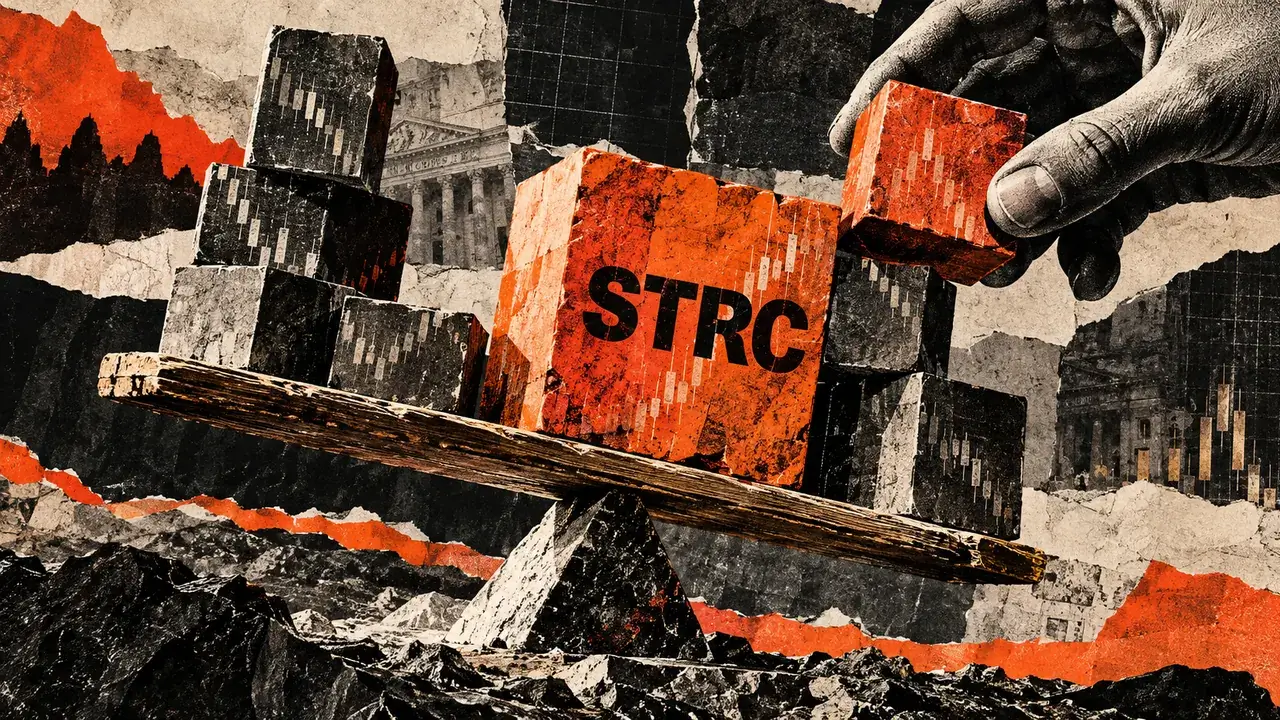
STRC is effectively a variable-rate preferred stock, a financial instrument Strategy uses to fuel its relentless Bitcoin accumulation. On the surface, the numbers look impressive. We are seeing daily volumes hitting the $150 million mark. For a specialized crypto-financing instrument, that kind of liquidity is usually a sign of deep institutional interest. However, the data suggests this isn't just organic market demand. It is a feedback loop powered by the company's own balance sheet.
The 20 Percent Rule
According to the research, Strategy has been aggressively executing a $1.45 billion preferred-share buyback program. During almost every week in September, these repurchases accounted for more than 20% of the total weekly trading volume for STRC. Think about that for a second. One out of every five dollars moving through that market was the company buying its own paper.
For a founder, this is a double-edged sword. On one hand, buybacks are a classic way to signal confidence and return value to shareholders. On the other hand, when a single entity becomes the primary liquidity provider for its own debt or equity instruments, the price discovery mechanism starts to get murky. If Strategy stops buying, does the market collapse? Or is there enough external demand to catch the falling knife?
Why Builders Should Care About Synthetic Liquidity
We often talk about "liquidity" as if it is a binary state—you either have it or you don't. But as anyone who has launched a token or a specialized financial product knows, the quality of that liquidity matters more than the quantity. When a significant portion of your volume is internal or circular, you are essentially subsidizing your own market presence.
This isn't necessarily a scam or even a bad strategy, but it is a dependency. For those of us building in the AI and crypto space, the lesson here is about sustainability. If you are building a protocol or a company that relies on treasury-backed incentives to keep the wheels turning, you have to ask yourself what happens when the treasury runs dry or the strategy shifts.
The Risks of High-Stakes Treasury Management
Strategy is playing a high-beta game. By using STRC to fund Bitcoin purchases, they are effectively leveraged on the price of BTC. When the market is up, the buybacks look like genius moves. They are reducing their liabilities while their underlying assets appreciate. It creates a flywheel effect that pumps the stock and the tokenized instruments simultaneously.
However, the Keyrock report highlights a hidden fragility. If Bitcoin takes a prolonged downturn, the ability to fund these buybacks might diminish. If the buybacks stop, the 20% chunk of daily volume disappears. In a thin market, that kind of drop-off doesn't just lead to a 20% price drop; it can trigger a liquidity crunch where the spread widens so far that institutional investors can't exit without massive slippage.
The Founder's Perspective: Transparency Over Hype
What I find most interesting here is the lack of noise around this dependency until the data was pulled. In the crypto world, we are used to seeing wash trading and bot-driven volume. In the corporate world, we call it a "buyback program." The result is often the same: a chart that looks healthier than the underlying organic demand would suggest.
If you are a founder looking to issue your own debt or tokenized equity, you need to be honest about where your volume is coming from. Relying on your own buybacks to maintain market health is a tactical move, not a long-term solution. You eventually need the market to take the reins. Strategy has successfully moved billions, but they are still the primary driver of their own momentum.
The Takeaway for the Rest of Us
The main takeaway here isn't that Strategy is doing something wrong—everything they are doing is disclosed and legal. The takeaway is that we cannot take volume at face value. Whether you are looking at an AI token on a DEX or a preferred share on a regulated exchange, you have to look for the hidden dependencies.
If 20% of the activity is coming from the issuer, the market isn't as deep as it looks. For builders, the goal should be to build products that attract disinterested third-party capital. You want people buying your stuff because they want the exposure, not because you are paying to keep the lights on in the order book. Strategy is currently the largest player in its own game, and while that works in a bull market, it creates a massive single point of failure that every observer needs to track.
Keep your eyes on the Bitcoin price, but keep your other eye on Strategy's cash flow. If they can't afford to buy themselves back, the STRC market is going to get very quiet, very fast.
Read the original at CryptoSlate →