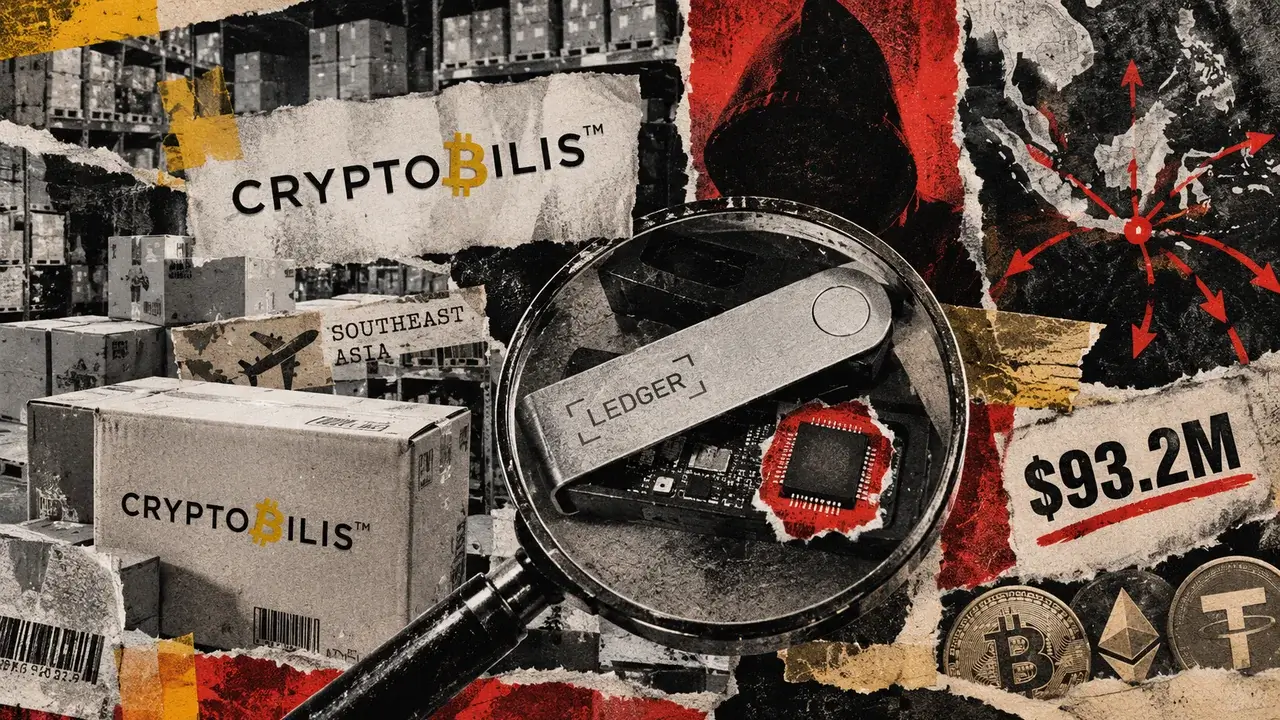
Hardware wallets are supposed to be the final line of defense. The logic is simple: keep the keys off the internet, and you eliminate the remote attack surface. But a recent confirmation from Ledger regarding a physical hardware implant has reminded us that the supply chain is just as dangerous as a phishing link.
We are looking at a situation where a customer received a device that looked like a Ledger, felt like a Ledger, and even passed the official software authenticity check, yet contained a hidden component designed to siphon funds. Independent investigators are now linking this breach to a series of thefts totaling over $93 million. This isn't just a minor bug; it is a fundamental breakdown of the trust we place in the physical security of crypto infrastructure.
The Supply Chain is the New Exploit
For years, the industry focus has been on smart contract audits and securing front-ends. We spent all our time worrying about code, but this incident shows that the physical hardware is just as vulnerable. According to the investigation, the compromised device came through an authorized reseller, CryptoBilis, based in Southeast Asia. This means the attacker managed to intercept the hardware between the factory and the end user.
The most alarming part for me is that the device passed Ledger’s own software verification. When you set up a Ledger, the Live app performs a check to ensure the secure element is genuine. In this case, the attacker didn't replace the chip; they added a secondary implant that worked alongside it. The official software saw a genuine chip and gave the green light, while the hidden implant sat quietly, waiting to capture seed phrases or bypass signing protections.
Why This Matters for Builders
If you are building in the crypto space, you probably tell your users to buy a hardware wallet. It is the standard advice. But this incident forces us to change how we talk about security. We have to stop assuming that hardware is a magic bullet. For founders, this is a lesson in defense-in-depth.
If a user's funds are drained because their hardware was compromised, they won't blame the reseller; they will lose faith in the entire ecosystem you are trying to build. We need to start considering multi-signature setups and social recovery as the baseline for anything more than pocket money. Relying on a single piece of plastic from a third party is no longer enough for high-value accounts.
The Illusion of Authenticity
Ledger’s response highlights a specific gap: their authenticity check only verifies the Secure Element chip. It doesn't perform a full physical scan of the circuit board. It is like checking a car's engine number to prove it isn't stolen, while ignoring the GPS tracker hidden under the seat. The engine is real, but the car is still compromised.
This creates a false sense of security. Users think they are safe because the software says "Your device is genuine." That green checkmark is a powerful psychological tool, but now we know it doesn't cover the full scope of potential physical tampering. For those of us building tools, we have to be honest with our users: no single check is absolute.
- Authorized doesn't mean untouchable: Resellers are a weak link. Even if they have the official stamp of approval, their warehouses and shipping routes are targets.
- Verification gaps: Software checks can be bypassed if the hardware is modified to coexist with the original components.
- The scale of loss: $93 million is not a small figure. This indicates an organized, large-scale operation that likely spanned months or years.
A Founder’s Perspective on Trust
I have always been a bit skeptical of the 'black box' nature of some hardware wallets. If you can't see the code or verify the hardware layout yourself, you are trusting a brand name. Ledger has built a massive brand, but incidents like this demonstrate that even the biggest players can have blind spots in their logistics.
As founders, we should look toward open-source hardware designs where possible. When the community can verify the PCB layouts and compare them to the device in their hand, the barrier for attackers goes up. Proprietary hardware relies on 'security through obscurity,' and history shows that obscurity eventually fails.
Moving Forward
The investigation into the $93 million theft is widening, and we will likely see more reports of tampered devices surface. Ledger is now in damage control mode, but the genie is out of the bottle. The industry needs to move toward more robust multisig solutions that don't rely on the physical integrity of a single device.
We also need to demand more from hardware manufacturers. A simple software check isn't enough anymore. We need physical seals that are actually difficult to replicate and better end-to-end tracking of devices. Until then, the burden of security remains on the user and the builders who guide them.
The takeaway here is simple: hardware is not a shortcut for security. If your project involves high-value assets, you need to assume every single point of failure—including the physical device in your hand—is potentially compromised.
Don't just trust the green checkmark. Build systems that assume the user's hardware might be lying to them. That is the only way to protect against an adversary that is willing to spend the time and money to physically intercept the supply chain.
Read the original at CryptoSlate →