If you have been building in the Web3 space for more than five minutes, you know the drill. You find a payment processor that works, you integrate their API, and you get back to the actual work of building your product. But a recent update from the UK’s Office of Financial Sanctions Implementation (OFSI) just threw a massive wrench into that comfort zone. It turns out that switching brands doesn't always mean you've switched risks.
The Illusion of Choice
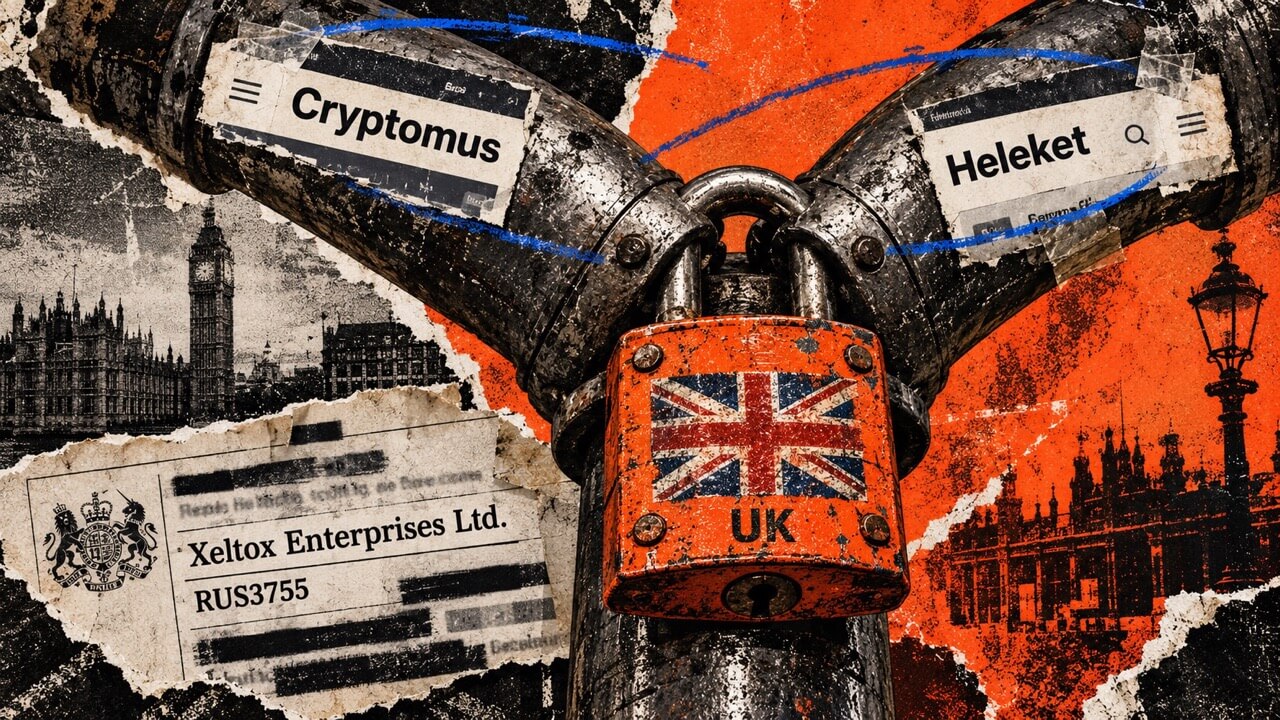
For a long time, merchants looking for alternatives to mainstream processors might have looked at Cryptomus and Heleket as two separate doors to the same room. According to recent regulatory notices, that room is managed by Xeltox Ltd. The UK government officially linked these brands under a single sanctions umbrella on October 8. This isn't just a boring compliance update; it’s a warning shot for founders who think they can pivot their way out of regulatory heat by simply swapping one logo for another.
When we talk about building resilient systems, we usually focus on uptime or latency. We rarely talk about the structural integrity of our settlement layers. If your business depends on a payment rail that gets blacklisted, your entire operation stops. It doesn't matter how good your code is if your customers' money can't move.
The Settlement Trap
The core issue here isn't just about brand names. It’s about the underlying architecture of crypto payments. Many of these third-party processors act as veneers. They provide the dashboard, the documentation, and the support staff, but the actual clearing of assets often happens through a centralized node or a shared treasury. If that treasury is tied to a sanctioned entity like Xeltox, the legal baggage follows every transaction, regardless of which front-end you use.
For builders, this highlights a dangerous lack of transparency in the "Crypto-as-a-Service" market. We often treat these services as black boxes. We send crypto in, we get fiat or stablecoins out, and we don't ask many questions about what happens in the middle. The OFSI notice is a reminder that the middle is exactly where the risk lives. If you migrated from Cryptomus to Heleket thinking you were diversifying your risk, you were effectively just moving your furniture from one room to another in a house that was already being foreclosed on.
Founder Perspective: The Cost of Convenience
I get it. Using a centralized payment gateway is easier than building your own non-custodial settlement engine. It’s faster to market. But as a founder, you have to weigh that convenience against the existential risk of a sudden shutdown. When a processor is hit with sanctions, it’s not just their bank accounts that get frozen—it’s yours, too. Or at least, the funds you have sitting in their custody.
We are entering an era where "knowing your customer" (KYC) isn't enough. You now have to "know your provider" (KYP) with the same level of intensity. You need to know who owns the rails, where the liquidity is sourced, and whether the company is just a shell for an entity that's already on a government watchlist. The UK's move to name both Cryptomus and Heleket explicitly under Xeltox shows that regulators are getting much better at piercing the corporate veil.
Building for the Long Haul
What does this mean for your roadmap? It means it is time to audit your dependencies. If you are using a payment provider, you need to ask for a clear breakdown of their corporate structure. If they won't give it to you, that’s your first red flag. Transparency is a feature, not a bug.
Beyond that, consider building redundancy into your payment stack. Relying on a single gateway is a single point of failure. The goal should be to create a system where you can switch providers—truly switch them—without having to rewrite your entire checkout flow. This requires a level of abstraction in your code that many startups skip in the rush to launch. Don't skip it.
Why This Matters for the Industry
Every time a major crypto brand gets tagged in a sanctions list, it gives critics more fuel to say the industry is just a haven for money laundering. But for those of us actually building, it’s a sign of a maturing market. The "wild west" days are ending, and the infrastructure is being forced to clean up. The providers who survive will be the ones who are transparent about their operations and proactive about their compliance.
The move by the UK highlights a broader trend: regulators are no longer fooled by rebranding. They are following the money trails and the ownership structures. For builders, this means the days of hiding behind a sea of shells are over. You have to be intentional about who you partner with.
The Takeaway
Don't assume that a different brand name means a different risk profile. Before you commit to a payment partner, do the due diligence that the regulators are already doing. If you are using Cryptomus or Heleket, the UK has made their stance very clear: they are the same entity in the eyes of the law. As a founder, your job is to protect your business from collateral damage. That starts with knowing exactly whose rails you are standing on.
- Audit your payment providers for shared parent companies.
- Build abstraction layers into your payment logic to allow for quick migration.
- Prioritize transparency over ease of integration when choosing a financial partner.
The stakes are higher than they’ve ever been. It’s time to start acting like it.
Read the original at CryptoSlate →