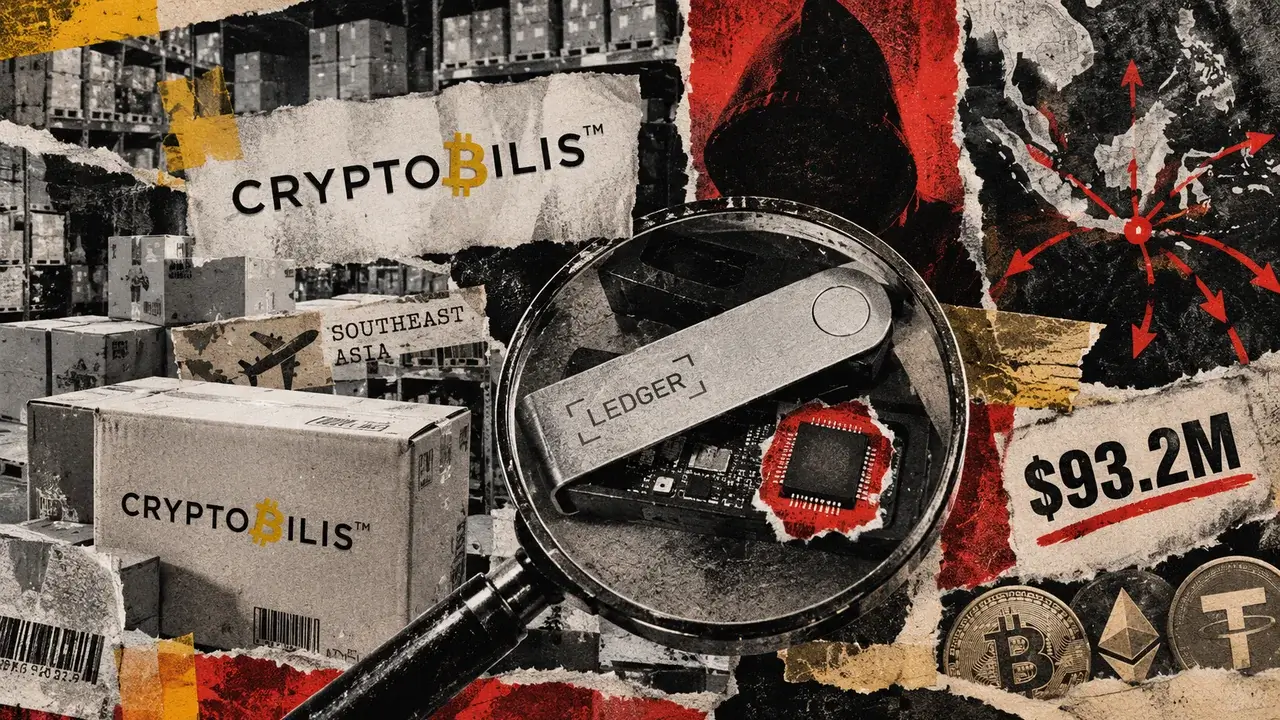
Hardware wallets have long been sold as the ultimate fortress in crypto. The pitch is simple: keep your keys off the internet, and you eliminate the risk of remote hacks. But a recent security breach involving Ledger and its Southeast Asian reseller, CryptoBilis, serves as a cold reminder that the biggest threat isn't always a clever piece of code or a phishing link. Sometimes, the vulnerability is a physical chip soldered onto a circuit board before the device even reaches your mailbox.
The Physical Attack Vector
Ledger recently confirmed that at least one device sold through CryptoBilis contained an unauthorized hardware implant. This isn't a software bug or a firmware vulnerability that can be patched with a quick update. We are talking about physical tampering designed to exfiltrate seed phrases or manipulate transactions at the hardware level. While Ledger maintains that their internal systems and manufacturing lines remain secure, the presence of a modified device in the wild changes the calculus for everyone in the ecosystem.
For years, the industry has focused on the software supply chain. We audit smart contracts, we check open-source repositories for malicious dependencies, and we stress-test APIs. But hardware is the foundation those layers sit on. If the foundation is compromised at the point of distribution, the rest of the security stack becomes irrelevant. The scary part for builders is that this type of attack requires zero interaction with the victim's digital life until the moment the funds vanish.
Resellers Are the Weak Link
The issue here highlights a massive gap in how we distribute security tools. Most users don't buy directly from the manufacturer. They look for local shipping, lower costs, or faster delivery times through third-party resellers. CryptoBilis is a significant player in the Southeast Asian market, and the fact that a malicious device made it through their inventory and into a customer's hands suggests a failure in the custody chain between the factory and the front door.
As a founder, I look at this and see a massive trust deficit. We tell our users to take responsibility for their own security, to be their own bank. But if the very tools we recommend are being intercepted and modified, we are setting them up for failure. This incident isn't just Ledger's problem; it is a problem for any project that relies on hardware-based security as their primary defense mechanism.
What This Means for Builders
If you are building in the crypto space, you need to stop assuming hardware is a magic bullet. We have spent a decade telling users to get a cold wallet and forget about it. That advice is now incomplete. We need to start thinking about defense-in-depth that assumes even the hardware could be compromised.
- Multi-signature is no longer optional: Relying on a single hardware device is a single point of failure. Teams and high-net-worth individuals need to move toward multi-sig setups that involve devices from different manufacturers and different distribution channels.
- Verification at the edge: Projects should be building tools that help users verify the integrity of their hardware. If the device doesn't match the expected cryptographic fingerprint at the point of initialization, the software should flag it immediately.
- Education over simplicity: We have a tendency to simplify crypto for the mass market, but simplicity often masks risk. We need to be honest with users about the risks of the supply chain.
The Skeptical Take on Supply Chain Security
Let's be real: most people are not going to open their Ledger with a screwdriver and a microscope to check for extra chips. Even if they did, the majority wouldn't know what they were looking at. The attackers know this. They aren't going after the elite developers who compile their own firmware; they are going after the retail users who trust a reputable brand and a local seller.
This breach at CryptoBilis is likely not an isolated incident. If one device was found, it’s reasonable to assume others were targeted. The sophistication required to implant hardware suggests a coordinated effort, not a random act of vandalism. It points to a growing trend where attackers are moving upstream, targeting the points of greatest friction where security is often taken for granted.
Looking Ahead
We are entering an era where physical security is just as critical as digital security. For founders, this means vetting your partners and resellers with the same intensity you vet your code. For users, it means being paranoid about where your hardware comes from. If you didn't buy it directly from the source, you should treat it as compromised until proven otherwise.
Self-custody is only as strong as the weakest link in the supply chain. If the hardware is tainted, the sovereignty it provides is an illusion.
The industry needs to move toward a more transparent manufacturing and shipping process. We need tamper-evident packaging that actually works and cryptographic verification that bridges the gap between the physical and the digital. Until then, the burden remains on the user to stay vigilant, and on the builders to create systems that can survive a compromise at the lowest level of the stack.
The Takeaway
The Ledger-CryptoBilis incident is a wake-up call for the hardware industry. It proves that the perimeter of a secure device doesn't end at the chip; it extends all the way to the warehouse and the delivery truck. If you’re building the future of finance, don’t just trust the box. Trust the math, verify the hardware, and always assume someone is trying to get their hands on the keys before you do.
Read the original at CoinDesk →