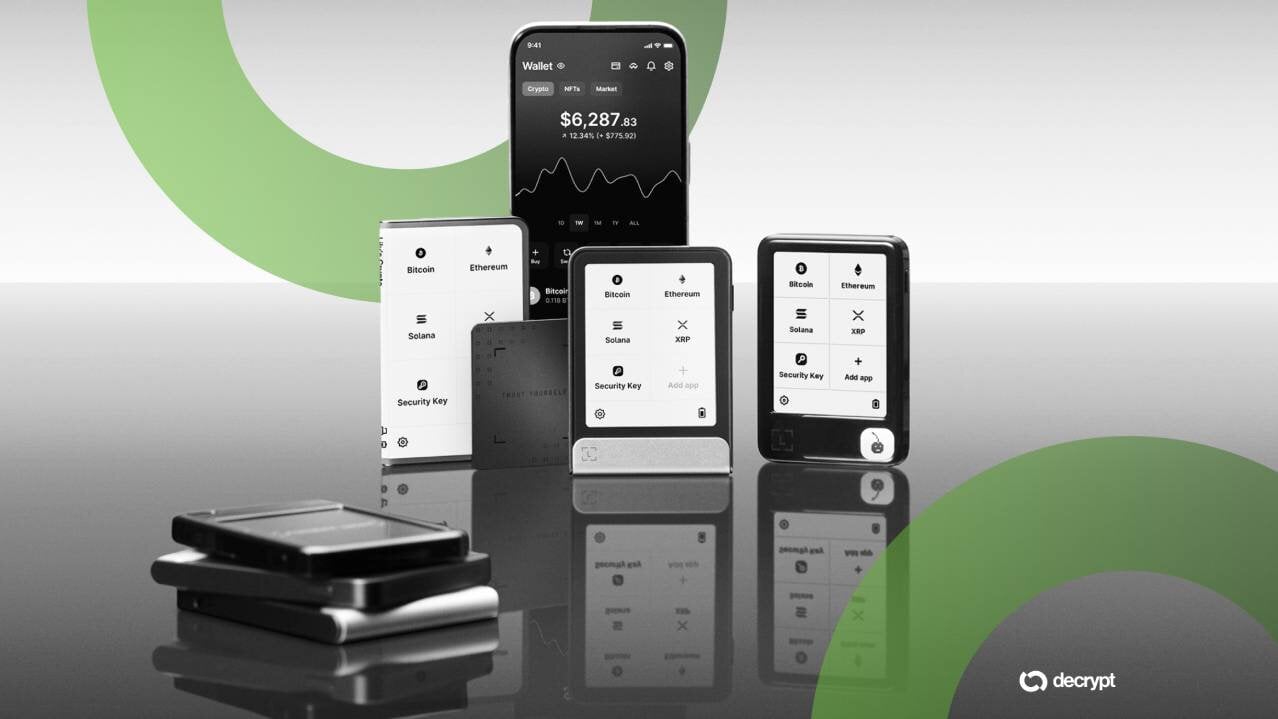
Security in the crypto space is usually a game of layers. We tell people to get their assets off exchanges, move them to cold storage, and keep their keys offline. But the recent news surrounding Ledger and a massive $87 million drain reminds us that even when the technology works, the supply chain remains a massive, gaping hole.
For the uninitiated, Ledger has been doing damage control after reports surfaced of users losing life-changing amounts of capital. The common thread? Every confirmed case so far leads back to a single source: a third-party reseller based in Southeast Asia called CryptoBilis. Ledger is adamant that their internal systems are fine and that if you bought directly from them, you aren't at risk. But for the builders and founders watching this, the 'how' is much more important than the 'who'.
The Supply Chain Problem
As a founder, you have to look at the attack vector here. We spend millions on smart contract audits and penetration testing for our frontends, but we often ignore the physical logistics of the hardware our users rely on. If a reseller is compromised, or worse, if they are malicious, the 'Secure Element' inside a hardware wallet doesn't mean much.
The working theory here isn't a software exploit. It's a classic hardware interception or a pre-configured seed phrase scam. When a user buys a device from a non-official source to save on shipping or bypass regional restrictions, they are trusting every hands-off point from the factory to their doorstep. In the case of CryptoBilis, that trust resulted in a total wipeout for dozens of victims.
Ledger has stated that CryptoBilis has stopped selling their hardware. That's a reactive fix for a systemic problem. If your security model relies on a reseller being 'honest,' you don't have a security model; you have a hope-based marketing strategy.
The Cost of Convenience
We often talk about UX being the barrier to mass adoption. We want crypto to be as easy as Venmo. But the irony is that the more we try to make the purchase and setup process 'convenient' through localized resellers and third-party distributors, the more we dilute the core value proposition of cold storage.
For builders, this is a lesson in ecosystem responsibility. If you are building a dApp or a protocol, you probably recommend certain hardware wallets to your users. Are you also educating them on the procurement process? Most founders aren't. We just drop a link to a 'Supported Wallets' page and call it a day. This incident shows that our responsibility extends to the physical acquisition of the tools our users use to interact with our code.
Skepticism as a Feature
I’ve always been a bit skeptical of the 'authorized reseller' model in crypto. In any other industry, it makes sense. If you buy a Sony TV from a local electronics shop, the risk is minimal. If the TV is a dud, you return it. In crypto, if the 'TV' is a dud, your entire net worth is gone in a single block confirmation. There are no returns on a drained seed phrase.
Ledger’s defense is that their direct sales are unaffected. That’s likely true. Their devices have attestation checks that are supposed to verify the firmware hasn't been tampered with. However, a sophisticated physical attack—like a modified box containing a pre-generated recovery sheet—doesn't require touching the firmware at all. It preys on the user's lack of technical knowledge.
What Builders Should Take Away
- Supply Chain Transparency: If you are building hardware or physical products in the Web3 space, your security audit needs to include your distribution centers.
- User Education: We need to stop assuming users know the basics. A simple warning on your frontend saying 'Never use a pre-generated seed phrase' could save millions.
- The Single Point of Failure: This $87 million loss didn't happen because of a bug in the code. It happened because of a failure in a human-managed distribution network.
Reframing the Hardware Narrative
This shouldn't be seen as just a 'Ledger problem.' It’s a hardware category problem. Whether you use Trezor, Keystone, or BitBox, the same vulnerability exists if you aren't buying from the source. The industry has spent years telling people 'don't trust, verify,' but verifying the physical integrity of a microchip and its packaging is beyond the skill set of 99% of users.
We are currently seeing a push toward MPC (Multi-Party Computation) and account abstraction as alternatives to traditional hardware wallets. Incidents like this will only accelerate that shift. If I can't trust the box that arrives in the mail, I’m going to look for a solution that doesn't rely on a postal service or a reseller in another country.
The Bottom Line
Ledger is doing what they have to do to protect their brand, but the damage to the 'hardware wallet' aura is real. For the people who lost $87 million, the distinction between a 'Ledger hack' and a 'reseller compromise' is academic. Their money is gone.
For those of us building the next iteration of this industry, the takeaway is clear: Security is only as strong as the weakest link in the logistics chain. If you aren't controlling the delivery, you aren't controlling the security. Stop trusting the middleman, and tell your users to do the same. Buy direct, or don't buy at all.
Read the original at Decrypt →