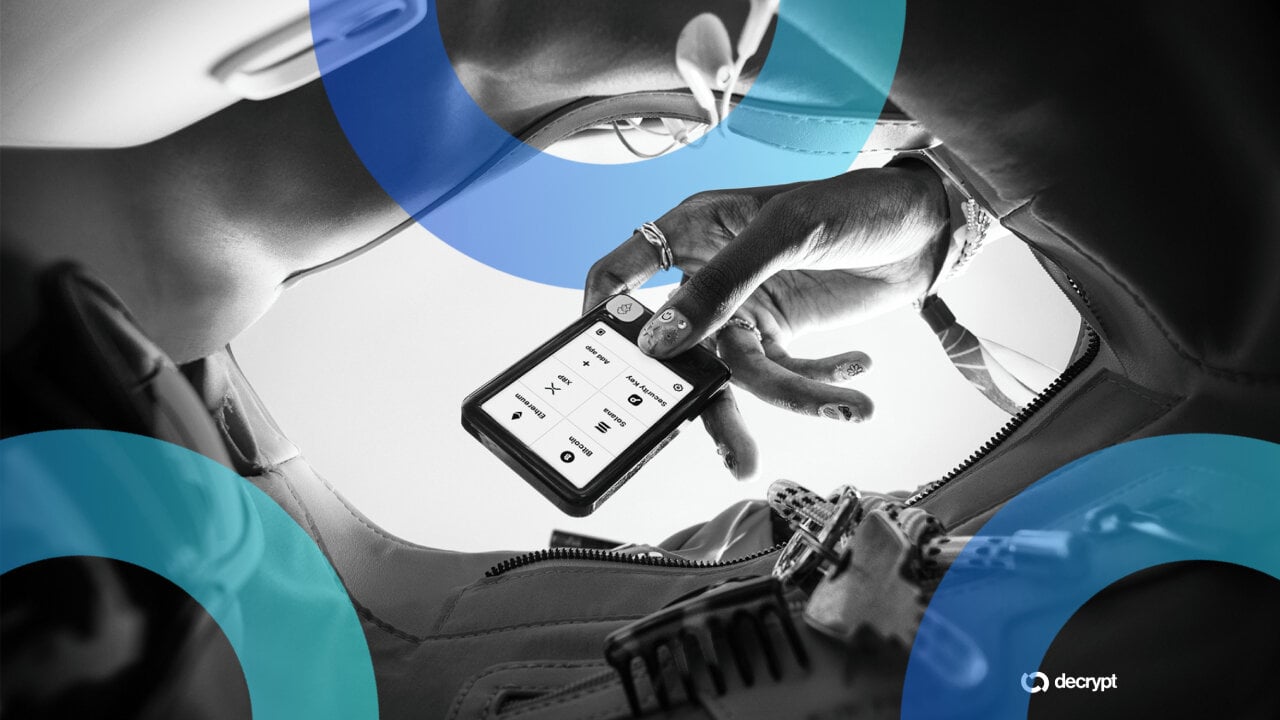
Security in the crypto world is often a game of theater. We buy the heavy metal cards, we memorize the 24 words, and we store our hardware wallets in fireproof safes. But the recent news involving Ledger and one of its third-party resellers, CryptoBilis, serves as a brutal reminder that the most sophisticated encryption in the world can be bypassed by a simple human error: trust.
The Supply Chain Vulnerability
Ledger is currently investigating claims that roughly $87 million in user funds have been drained from wallets purchased through CryptoBilis. While Ledger has asked the reseller to halt operations and is urging recent buyers not to initialize their devices, the damage is largely done. For builders and founders, this isn't just a story about a theft; it's a story about supply chain integrity.
When you build a product that relies on hardware-level security, you are essentially promising the user that the bridge between the physical world and the digital world is untampered. The moment a device leaves the factory, that promise begins to erode. If a reseller or a middleman gains access to the packaging, the security seals, or the internal firmware, the device is no longer a vault. It is a bugging device.
How $87 Million Disappears
On-chain investigators have been tracking the movement of these funds, and the numbers are staggering. The pattern suggests that these weren't sophisticated zero-day exploits on Ledger’s proprietary chips. Instead, it looks like a classic seed phrase compromise. In many reseller scams, the devices are pre-configured, or the recovery sheets are already filled out with a "default" seed. Users who don't know better initialize the device using the provided words, and the attacker simply waits for the liquidity to hit the address before sweeping it clean.
This is the "Founder's Paradox." You want your product to be easy to use so you can scale, but making it easy often means removing the friction that keeps people safe. By allowing third-party resellers to handle the distribution of these devices, Ledger expanded its reach but simultaneously expanded its attack surface. For a company that markets itself on the premise of "uncompromising security," a supply chain breach of this magnitude is a catastrophic brand failure.
The Builder Perspective: Distribution vs. Security
If you are building in the AI or Web3 space, you likely face the same pressure to grow. You want your software in every marketplace and your hardware in every retail outlet. But every time you add a node to your distribution network, you lose a degree of control over the user experience and, more importantly, the user's safety.
For those of us building tools that handle value, we have to ask: is the extra revenue from a reseller worth the risk of a total trust collapse? Ledger is now in the position of having to tell its customers to stop using the product they just paid for. That is a nightmare scenario for any founder. It suggests that the "official partner" badge doesn't carry the weight we thought it did.
Verification is Not a Luxury
We often talk about "Don't Trust, Verify" in the context of blockchain code, but we rarely apply it to the physical objects we use to interact with that code. Ledger does have genuine check features in its software, but even these can be spoofed by sophisticated actors who can modify the hardware to report a false positive.
The takeaway for developers is that security must be holistic. You cannot secure the software while ignoring the logistics. If you are building a dApp that requires a specific hardware signature, are you building in checks to ensure that hardware hasn't been compromised at the retail level? Probably not. We assume the hardware is a black box of truth. This $87 million loss proves it isn't.
The Skeptic's View on Recovery
Let’s be honest about the recovery of these funds. Once $87 million hits the mixers or the cross-chain bridges, it is gone. Ledger and investigators can track the addresses all they want, but the nature of decentralized finance means there is no "undo" button. The users who bought from CryptoBilis and saw their balances hit zero are likely never seeing that money again.
This creates a massive liability issue. Does the responsibility lie with the reseller who may have been compromised? Does it lie with Ledger for vetting that reseller? Or does it lie with the user for not buying directly from the source? In the legal world, these questions take years to answer. In the crypto world, the market moves on, but the reputation of the hardware wallet as the "ultimate" security solution takes a massive hit.
What You Should Do Today
If you are a founder or a high-net-worth individual using these devices, the advice is simple but annoying: only buy directly from the manufacturer. If you bought from a reseller, even one that was listed as an official partner last week, you should consider that device compromised. Generate a new seed on a fresh, direct-from-factory device and move your assets immediately.
For the builders, take this as a lesson in ecosystem management. Your partners represent you. If their security is lax, your security is lax. You cannot outsource your primary value proposition—in this case, safety—and expect to maintain your brand integrity when things go wrong.
Final Reality Check
Hardware wallets are still the best way to store large amounts of crypto, but they are not magic. They are physical tools subject to physical tampering. The $87 million lost here wasn't a failure of cryptography; it was a failure of commerce. As we move closer to integrating AI into our private keys and automated trading, the stakes for this kind of supply chain security are only going to get higher. We need to stop treating hardware as a solved problem and start treating it as the weakest link in the chain.
Read the original at Decrypt →