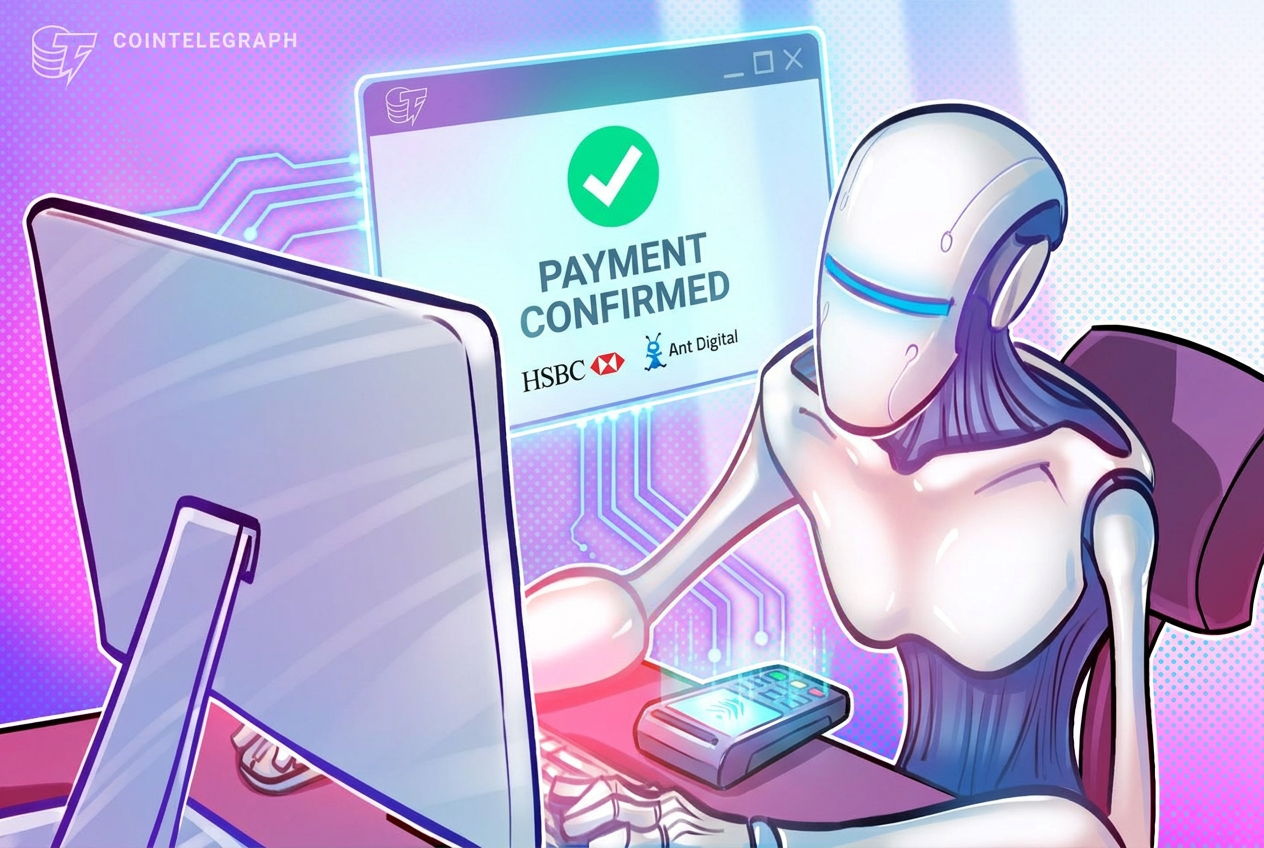
We have been talking about the agentic economy for a while now, but mostly in the context of LLMs writing code or organizing schedules. The missing piece has always been the wallet. If an AI can think but can't pay, it is just a sophisticated chatbot. The recent pilot between HSBC and Ant Digital suggests the plumbing for autonomous finance is finally being installed.
This technical trial focused on a specific, high-friction problem: how AI agents can discover services, negotiate terms, and execute micropayments without a human clicking a confirmation button every five seconds. By using tokenized deposits, they have managed to move value in real-time with automated risk checks. This isn't just another crypto experiment; it is a legacy banking giant acknowledging that the future of liquidity is programmable.
The Programmable Liquidity Problem
For founders, the biggest hurdle in building autonomous systems has always been the banking layer. Standard ACH transfers or even wire transfers are too slow and too expensive for the machine-to-machine world. If an AI agent needs to buy five cents worth of compute power or access a specific dataset, you cannot have a three-day settlement window or a thirty-cent transaction fee. The math doesn't work.
Tokenized deposits change the fundamental nature of the bank account. Instead of a static entry in a database that updates once a day, the money becomes a smart contract. In this trial, HSBC allowed these agents to settle transactions instantly. This means the risk is managed at the code level. The bank isn't just holding the money; it is providing the infrastructure for the money to move itself based on pre-set logic.
Why Tokenized Deposits Over Stablecoins?
You might ask why we need this if we already have USDC or Tether. From a builder's perspective, the answer is usually regulatory path-of-least-resistance. While builders love permissionless rails, the massive enterprise world is terrified of them. HSBC is providing a middle ground. By tokenizing deposits, they are keeping the money within the regulated banking perimeter while giving it the utility of a blockchain asset.
For those of us building in AI, this is a signal that the exit liquidity for our agents is becoming real. If an agent can hold a balance that is recognized by a major global bank, the friction between the digital agent economy and the physical fiat economy starts to evaporate. We are moving toward a world where your AI doesn't just manage your budget—it earns its own keep and pays its own bills.
The Shift to Micropayments
The trial specifically highlighted micropayments. This is where the real innovation happens. Currently, the internet is built on subscriptions because transaction costs are too high for anything else. We pay $20 a month for tools we might only use twice. In an agent-driven world, that model dies. Agents will pay for exactly what they consume, down to the millisecond of GPU time or the individual API call.
Ant Digital’s involvement here is key. They have been deep in the trenches of digital infrastructure for years, and their focus on service discovery for agents is the part people are overlooking. It is one thing to have a wallet; it is another thing for an agent to know where to spend the money. The trial showed that agents could independently find a service and execute the transaction. This is the definition of an autonomous workflow.
Risk Management at Machine Speed
One of the biggest skeptics' points regarding AI payments is security. If an agent goes rogue, does it drain the bank account? HSBC addressed this by integrating real-time risk checks into the tokenization layer. This isn't just a simple spending limit. It is an automated compliance check that happens as the transaction is triggered.
For founders, this is the blueprint for how to build trust with users. You don't ask for full access to a credit card; you provide a tokenized sub-account with hardcoded logic. The agent can spend, but only within the guardrails defined by the smart contract. This reduces the surface area for fraud and makes the idea of "autonomous finance" a lot less scary for the average person.
What Builders Should Watch
If you are building in the AI space, you need to stop thinking about your product as a tool for humans and start thinking about it as a node in a network of agents. The HSBC and Ant Digital trial proves that the financial institutions are preparing for this shift. The infrastructure is moving from "human-authorized" to "logic-authorized."
- Integration over Interface: Your next big feature shouldn't be a better dashboard; it should be a better API that accepts programmable payments.
- Legacy Compatibility: Don't ignore the banks. While decentralized finance is the dream, the bridge to mass adoption is likely going to look a lot like tokenized deposits.
- Granular Billing: Start thinking about how your business model survives if the subscription era ends. If an agent can pay you $0.001 for a single task, are you ready to receive it?
The skepticism here is warranted—we have seen a thousand pilots that go nowhere. But this one feels different because it solves a specific technical bottleneck for AI. We don't need more whitepapers on the philosophy of AI; we need more pipes that move money without human intervention. This trial is a small but significant step toward that reality.
The takeaway for founders is clear: The machine-to-machine economy isn't a future concept; the banking rails are being laid right now. If your platform isn't ready to handle automated, sub-cent settlement, you're building for a world that is quickly disappearing.
We are watching a convergence. AI provides the intelligence, and tokenized deposits provide the agency. When those two things truly lock together, the speed of business won't be limited by how fast a human can sign a check or approve a wire. It will be limited only by the speed of the code.
Read the original at Cointelegraph →