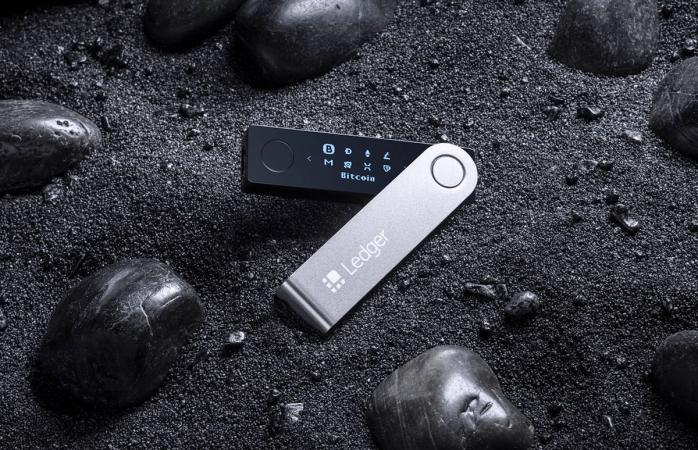
We have reached a point in the industry where even the gold standard of safety feels a little bit tarnished. Ledger, the company that basically pioneered the hardware wallet movement, is currently staring down an $86 million hole. The reports aren't coming from a software bug or a phishing link this time; they are coming from the physical supply chain itself. Specifically, a batch of devices sold through a reseller in Southeast Asia.
For those of us building in this space, this isn't just another headline about a hack. It is a fundamental lesson in the fragility of trust. When we tell users to get their assets off exchanges and onto cold storage, we are making a promise: this is the final line of defense. When that line breaks because of a middleman, the whole value proposition of self-custody starts to look shaky to the average person.
The Supply Chain Vulnerability
The details currently circulating suggest that these weren't standard software exploits. Instead, we are looking at potential hardware tampering. The stolen funds, spanning across Bitcoin, Ethereum, and Tron networks, were drained from addresses that were supposed to be generated in a private, offline environment. If the device itself is compromised before it even hits the customer's mailbox, the math doesn't matter. The private keys were never private to begin with.
Ledger is investigating, but the damage to their reputation is already unfolding on social media. The problem with being a market leader is that you are the primary target. But more importantly, you are the single point of failure for the public's perception of security. If you can't trust a Ledger bought from a certified reseller, who can you trust?
The Founder's Perspective on Scaling Trust
As builders, we often focus on our own code. We audit our smart contracts, we pentest our web apps, and we check our permissions. But how many of us are looking at our distribution channels? This incident highlights a massive blind spot in the crypto ecosystem: the physical bridge. If your product relies on a physical component, your security is only as strong as the person packing the box.
I have always been a bit skeptical of the 'reseller' model for high-stakes security hardware. In an effort to scale globally and hit different markets, companies often hand over their logistics to third parties. That is a massive surface area for attack. For an $86 million payday, a sophisticated bad actor doesn't need to hack a blockchain; they just need to get a job at a warehouse or intercept a shipment.
Reframing Self-Custody
We need to stop talking about self-custody as if it is a magic wand that solves all risk. It doesn't. It just changes the nature of the risk. We are moving from 'risk of exchange insolvency' to 'risk of supply chain compromise.' For the user, the result is the same: the balance goes to zero.
If you are building products that interact with hardware wallets, you need to start thinking about how to verify the integrity of the device through software. Can your application detect if a seed phrase was pre-generated? Can you provide tools that help users verify their hardware is genuine without needing a degree in computer engineering? These are the features that will actually matter in the next cycle.
The Southeast Asian Market Context
It is worth noting that this particular issue is localized to a Southeast Asian reseller. This is a region with massive crypto adoption but also varying levels of regulatory oversight on electronics distribution. As founders, if you are targeting these markets, you cannot assume that the standard logistics models you use in the US or Europe will hold up. Localized threats require localized security solutions.
Ledger will likely survive this, but the $86 million lost by users won't just reappear. This is a permanent scar on the community. It serves as a reminder that in the world of crypto, 'don't trust, verify' applies to the hardware in your hand just as much as the code on the screen.
What This Means for Builders
- Verify the Source: If your project recommends hardware, be explicit about buying directly from the manufacturer. No shortcuts.
- Audit Your Partners: If you use third-party distributors or resellers for any part of your stack, they are now part of your security perimeter.
- User Education: We have to move past 'buy a wallet' and start teaching 'how to verify a wallet.' The industry hasn't done enough here.
The reality is that as AI and automated attacks get better, these low-tech, physical attacks are going to become more common because they are easier to execute and harder to trace. The supply chain is the new frontline. If you aren't thinking about how your product gets from your hands to the user's hands, you aren't really thinking about security.
We are watching a shift in the threat landscape in real-time. The $86 million is just the price tag for the lesson. Whether or not we actually learn from it is up to us.
Read the original at CoinDesk →