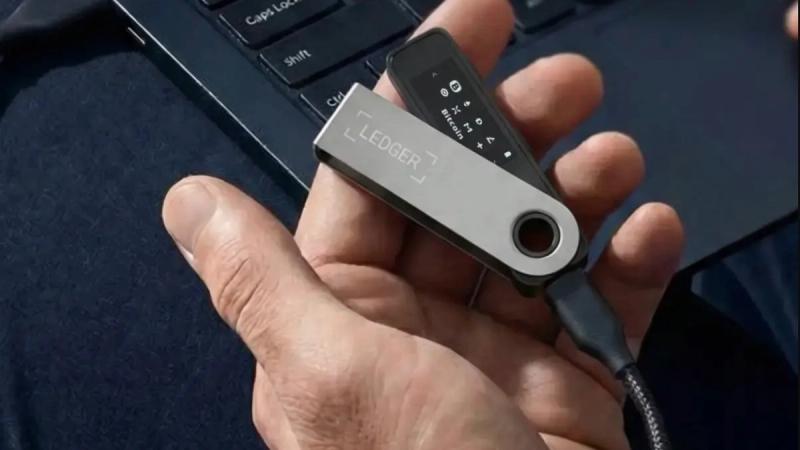
Security in the crypto world is often treated as a binary state. You either have your keys on a piece of hardware, or you are reckless. But the ongoing fallout from the CryptoBilis incident proves that the most secure chip in the world doesn't matter if the box it comes in was compromised before it reached your doorstep.
The Supply Chain is the New Private Key
For those who missed the headlines, Ledger is currently playing damage control. Reports have surfaced tracing up to $93 million in lost funds back to devices sold by CryptoBilis, a prominent third-party reseller in Southeast Asia. Ledger has been quick to point out that the issue is isolated to this specific vendor, and that $10 million has already been frozen. But for a company that sells the promise of absolute sovereignty, 'limited cases' is a phrase that doesn't hold much water.
As builders, we spend a lot of time obsessing over code audits and smart contract logic. We forget that the average user interacts with the physical world long before they touch a blockchain. If the physical distribution layer is broken, the entire security model collapses. This isn't just a Ledger problem; it is a supply chain problem that every hardware manufacturer in the space has to answer for.
The Authorized Reseller Trap
Ledger’s defense centers on the fact that these devices were sold by an authorized reseller, not Ledger themselves. From a legal and technical standpoint, they are correct. The devices were likely tampered with or the seed phrases were compromised through social engineering or pre-configured setups provided by the vendor. However, from a founder's perspective, this is a distinction without a difference.
When a user sees the 'Authorized Reseller' badge on a website, they are extending their trust in the parent brand to that third party. If that third party fails, the parent brand owns that failure. By outsourcing distribution to scale faster, Ledger traded a degree of control for market share. Now, that trade-off is costing users nearly $100 million. For those of us building platforms, this is a reminder that you are only as secure as the weakest link in your partner network.
The Illusion of Cold Storage
We tell users to get their money off exchanges and onto cold storage to 'be their own bank.' But being your own bank requires a level of operational security that most people simply aren't equipped for. The CryptoBilis situation highlights that even 'cold' storage has a heat signature if the hardware isn't pristine.
The skepticism here shouldn't be directed at the technology itself—Ledger’s SEBOL operating system and Secure Element chips are still industry leaders. The skepticism should be directed at the delivery mechanism. If a reseller can intercept the customer journey and compromise the setup process, the tech is irrelevant. We need to stop treating hardware wallets as a set-it-and-forget-it solution and start treating them as part of a broader, more complex security lifecycle.
What This Means for Builders
If you are building in the wallet space or developing dApps that require high-security signatures, you need to take three things away from this mess.
- Verify the source, not just the signature. We need better ways to verify the physical integrity of devices. QR-code based attestation and cryptographic handshakes between the device and the official app are a start, but they aren't foolproof if the user is guided through a fake setup by a malicious reseller.
- Education over Automation. We keep trying to make crypto 'easy' by abstracting away the scary parts. But the scary parts are where the security lives. If we don't teach users how to verify their own hardware, we are just leading them to a different kind of slaughter.
- Liability is the next frontier. As $93 million disappears, the question of who is responsible will move from Twitter threads to courtrooms. If you have a partner program or an API integration, you need to be very clear about where your responsibility ends and theirs begins. Ledger is finding out the hard way that 'it wasn't us' is a poor PR strategy.
The Trust Deficit
The crypto industry is currently suffering from a massive trust deficit. Every time a major player like Ledger has a headline involving millions of missing dollars, it reinforces the narrative that this space is the Wild West. For those of us trying to build legitimate infrastructure, these incidents are setbacks that take years to recover from.
Ledger’s response has been technically accurate but emotionally tone-deaf. Freezing $10 million is a win, but it leaves $83 million unaccounted for. For the founders and developers watching this, the lesson is simple: don't outsource your core value proposition. If your value is security, you must own every centimeter of the path to the customer.
Looking Ahead
We are going to see a shift toward more direct-to-consumer models for hardware, or perhaps a move toward multi-sig solutions that don't rely on a single physical device. The era of blindly trusting a 'sealed' box from a third party is over. We need to build systems that assume the hardware might be compromised from day one.
Ledger will likely survive this, but their reputation as the gold standard has been dented. For the rest of us, it’s a wake-up call to look at our own supply chains—whether they are physical hardware or software dependencies—and ask: who else has their hands on this before it reaches my user?
The most secure chip in the world is useless if the user is handed a compromised key by a trusted middleman.
Security isn't a product you buy; it's a process you maintain. The moment we forget that is the moment the attackers win. Ledger is learning that the hard way, and the cost of the lesson is $93 million.
Read the original at CoinDesk →