The Yield Mirage on Flare
Building in the XRP ecosystem has always felt a bit like homesteading on a very expensive, very secure, but mostly empty plot of land. We have the assets, and we certainly have the community, but the utility has historically lagged behind the market cap. Kinetic, a primary lending protocol on the Flare Network, recently released snapshot data for its XRP-linked market that serves as a sobering reality check for anyone building in the DeFi space right now.
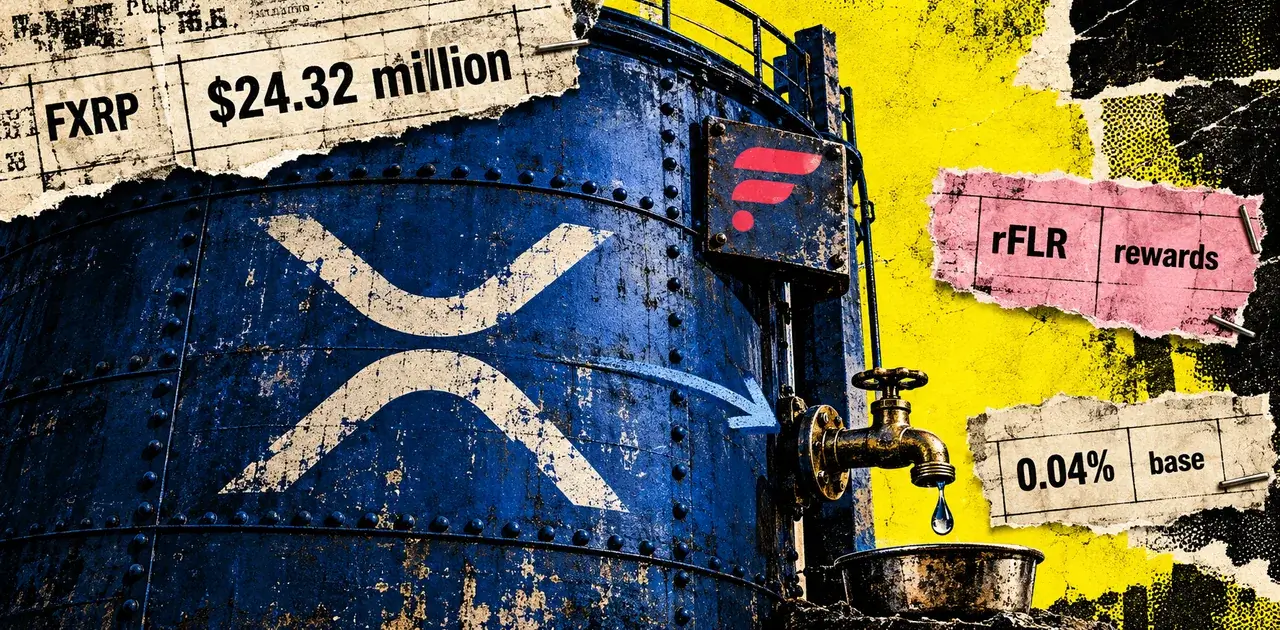
The numbers are simple: Kinetic manages a $24 million XRP-linked market. On the surface, that sounds like a win for Flare. But when you peel back the layers of incentives and rewards, the organic demand for borrowing FXRP—the bridged version of XRP—sat at a base rate of just 0.04%. That is not a typo. Before the protocol-native rewards kicked in, the actual market-driven interest for these loans was effectively zero.
Collateral vs. Consumption
As a founder, you have to look at where the capital is actually sitting. The snapshot from early November shows a massive imbalance. People are more than happy to park their XRP as collateral. They want to hold the asset, and they want to put it to work to earn a yield. This is the 'supply' side of the equation, and it is healthy. However, the 'demand' side—the people actually taking out loans against that collateral—is where the friction lies.
When you see a 0.04% base rate, it tells you that nobody is borrowing the asset to actually use it for something else. In a functional lending market, people borrow assets to arbitrage, to leverage, or to fund operations. On Flare, it seems most participants are simply there to harvest the incentives provided by the protocol and the network's 'F-Asset' system. They aren't borrowing; they are just camping.
The Incentive Trap
We see this play out across almost every new L1 or L2 launch. To get TVL (Total Value Locked), protocols offer massive rewards. In Kinetic's case, the 'all-in' yield looks much more attractive than 0.04% once you factor in the distribution of Flare-based tokens. But this creates a synthetic economy. For builders, this is a dangerous metric to rely on.
If you are building an app that relies on Kinetic's liquidity, you have to ask yourself: what happens when the rewards stop? If the organic borrowing demand doesn't move north of 1% or 2%, the liquidity will evaporate the moment the subsidies dry up. It is the crypto equivalent of a startup burning VC cash to subsidize customer acquisition costs. It looks like growth, but it might just be a slow-motion exit for the yield farmers.
Why Borrowing Matters for Builders
Why should we care if the borrow rate is low? Because high borrow rates signify high utility. If people are willing to pay 5% to borrow FXRP, it means they have found a way to make 10% with that capital elsewhere in the ecosystem. It indicates a thriving secondary market of trading, hedging, and building.
The 0.04% rate suggests that the Flare ecosystem currently lacks 'sinks'—places where capital can go to be productive. We have the 'vaults' (lending protocols), but we don't have the 'engines' (high-utility dApps). If you're a founder looking at this data, the opportunity isn't in building another lending protocol. The opportunity is in building the thing that people want to borrow XRP for.
The Bridge Problem
We also have to talk about FXRP itself. Bridged assets carry a layer of smart contract risk that native assets don't. For a long-term XRP holder, moving their tokens onto Flare to earn a subsidized yield involves a calculation: is the 5-10% reward worth the risk of a bridge exploit or a protocol bug? When the organic demand is this low, it suggests that the market is still skeptical of the risk-to-reward ratio.
Kinetic's transparency here is actually a good thing. They aren't hiding behind 'fuzzy' yield numbers that conflate organic growth with token emissions. By separating the base rate from the rewards, they are giving us a clear look at the health of the Flare DeFi ecosystem. It’s not a pretty picture yet, but at least the lens is clear.
Takeaway for the Founder Perspective
The takeaway for builders is that TVL is a vanity metric, especially in the XRP/Flare ecosystem. A $24 million market cap for a lending pool looks great on a pitch deck, but a 0.04% base borrow rate tells the real story: the ecosystem is still in its 'subsidy phase.'
If you are building in this space, focus on creating demand. The world doesn't need more ways to lend XRP; it needs reasons to use it. Until we see those base rates rise, we are just moving tokens from one pocket to another while the protocol pays us for the privilege. That’s a fine way to bootstrap, but it’s a terrible way to build a permanent financial system. Watch the base rates, not the rewards. That’s where the truth lives.
Read the original at CryptoSlate →