The Institutional Dip-Buying Playbook
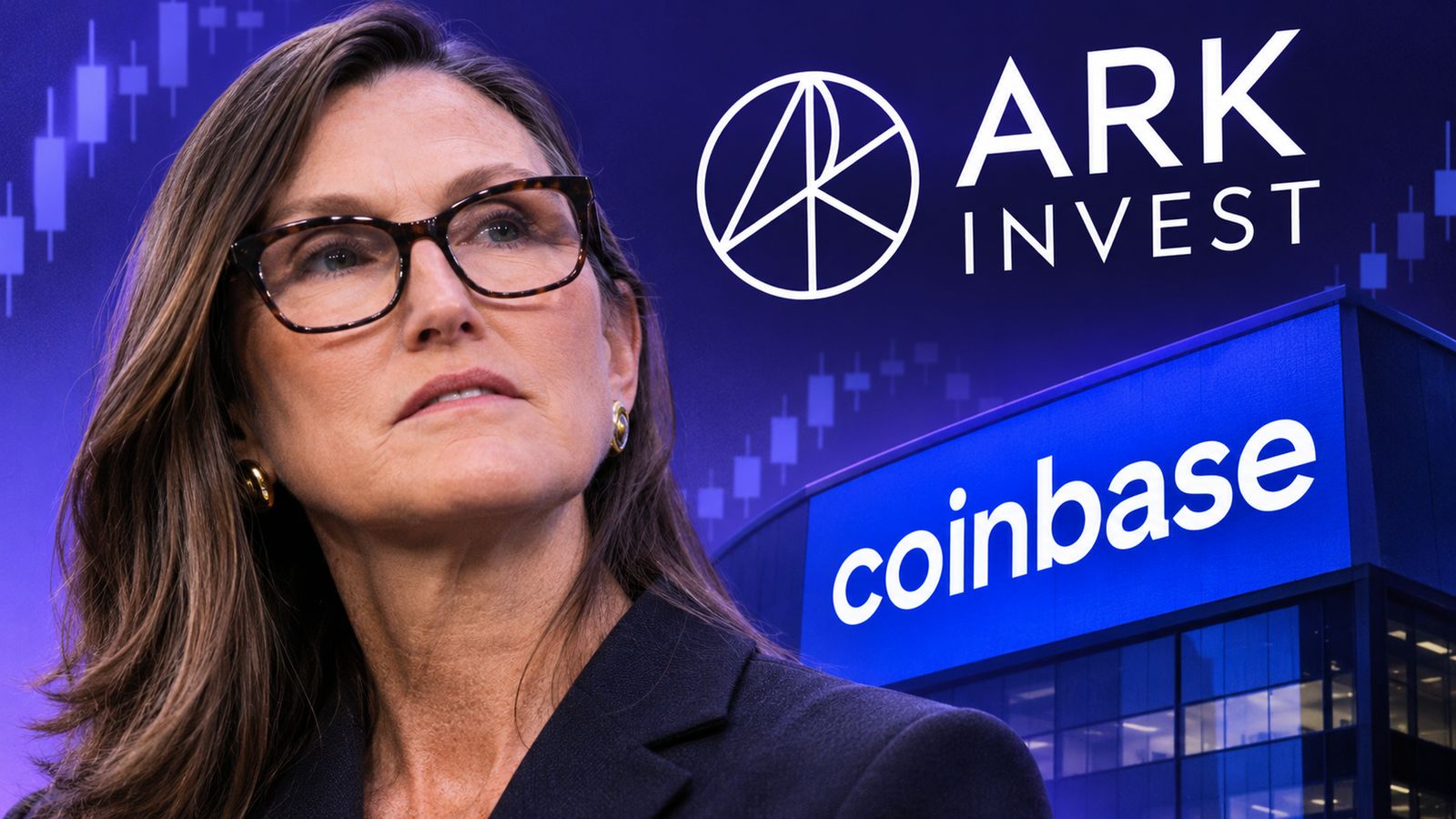
When the market catches a cold, most people start looking for the exit. But for those building the rails of the next financial system, a downturn is just a pricing correction on long-term infrastructure. Cathie Wood and Ark Invest recently reminded us of this by dropping a collective $6.6 million into the trio of Coinbase, Circle, and Robinhood. It is a moves that feels less like a speculative gamble and more like a tactical accumulation of the gatekeepers.
As a founder, I look at these moves differently than a retail trader would. I am not looking at the daily candle; I am looking at who owns the entry points. Coinbase is the fiat-to-crypto bridge for the US. Circle is the issuer of the most transparent stablecoin we have. Robinhood is where the next generation of retail investors actually lives. By buying all three while the prices are suppressed, Ark is effectively betting on the persistence of the interface layer.
The Math of the Move
The breakdown of the purchase is telling. Ark moved $3.4 million into Coinbase. This is their anchor. Despite regulatory headwinds and the constant noise from the SEC, Coinbase remains the only publicly traded US exchange with this level of institutional trust. For builders, this means Coinbase is still the North Star for compliance-first scaling.
Then you have the $2.6 million into Circle. This is perhaps the most interesting piece of the puzzle. Circle is the plumbing. If you are building an AI agent that needs to settle value, or a cross-border payment app, you are likely using USDC. By increasing their stake here, Ark is betting that the dollarization of the blockchain is not just a trend, but the permanent state of play.
Finally, the $645,820 into Robinhood. It is a smaller slice, but it represents the attention economy. Robinhood has successfully pivoted from being just a meme-stock app to a legitimate crypto contender. They have the UX that we, as builders, are all trying to emulate. They make complex financial interactions feel like checking a weather app. That distribution is worth gold when the market eventually turns back to greed.
Building Through the Skepticism
I have always been a bit skeptical of the hyper-optimism you see on crypto Twitter. But I am not skeptical of the utility. The reason these stocks traded lower recently is usually tied to macro fears or temporary liquidity crunches. It is rarely because the underlying technology stopped working. In fact, during these dips, the volume on these platforms often proves how necessary they are.
For those of us in the trenches building AI and crypto tools, this buy-in from Ark serves as a signal. It tells us that the capital is still there, even if it is being more selective. It suggests that the "middlemen" we often try to disrupt are actually the ones providing the stability needed for the whole ecosystem to survive. You can't have a decentralized revolution without a centralized on-ramp for the 99% of the world that doesn't know how to manage a seed phrase.
What This Means for Founders
- Infrastructure is King: Notice that Ark didn't buy a basket of volatile altcoins. They bought the companies that facilitate the trade. Focus your build on utility and rails, not just tokens.
- The Compliance Moat: Coinbase and Circle are heavily regulated. In this environment, that is a feature, not a bug. If you are building, consider how your regulatory posture looks to an institutional investor.
- User Experience Wins: Robinhood’s inclusion proves that even if your backend is revolutionary, your frontend needs to be simple. Distribution follows the path of least resistance.
The Long Game
It is easy to be a critic when a fund like Ark experiences volatility. People love to point at the drawdowns. But if you look at the fundamental thesis—that finance is being rewritten in code—this $6.6 million spend is just a maintenance cost for staying in the game. They are buying the companies that will benefit most from the inevitable convergence of AI and automated finance.
Imagine an AI agent in 2026. It needs to hold value (USDC via Circle), it needs to trade that value (Coinbase), and it needs to report that value to a human-readable interface (Robinhood). Ark is just buying the full stack of that future. As builders, our job is to create the apps that run on these rails. We should be less worried about the stock price of Coinbase today and more worried about whether our products are compatible with the ecosystem these giants are forming.
The market reflects price, but the builders reflect value. When the two diverge, that is where the opportunity lives.
We are currently in a phase where the noise is loud and the signals are faint. But a multi-million dollar buy across the three most significant pillars of the US crypto economy is a very loud signal. It tells us that the smart money isn't waiting for the top; they are building their positions at the floor. If you are a founder, take note. The rails are being reinforced. Now is the time to build something worth running on them.
Read the original at The Block →