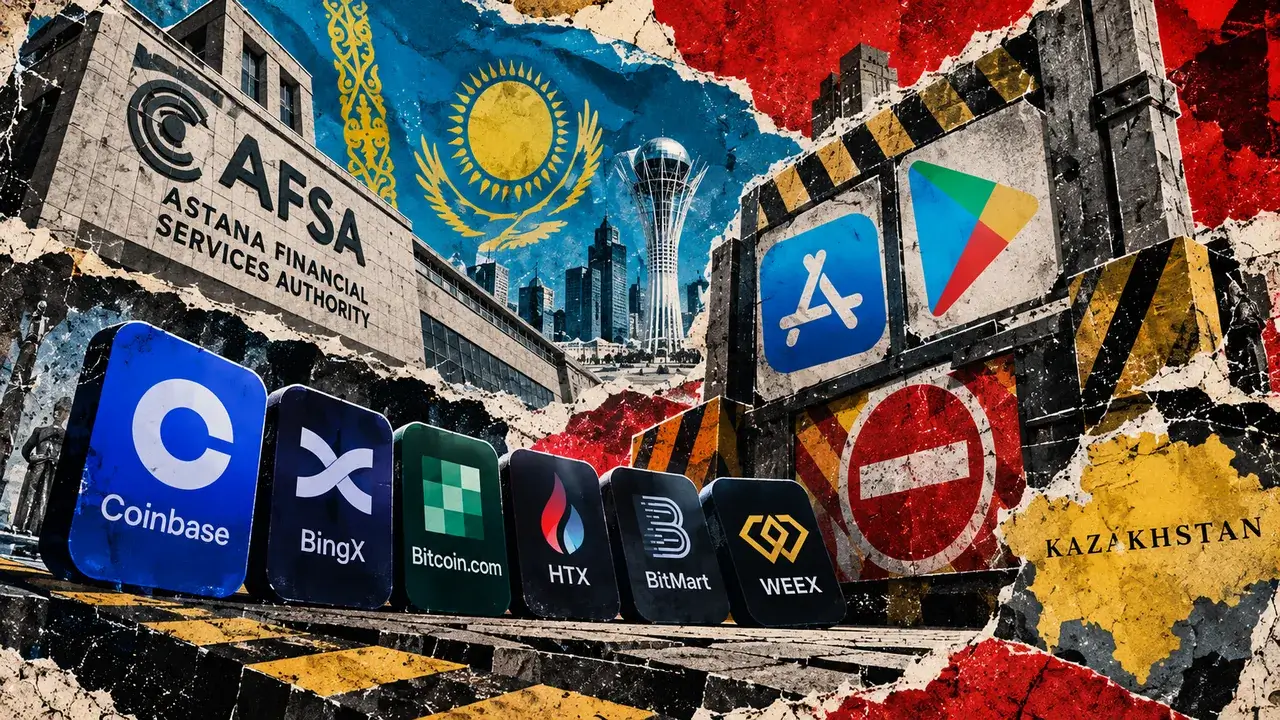
Kazakhstan used to be the promised land for crypto. When China kicked the miners out, they flocked to the Kazakh steppes for the cheap power and the hands-off vibe. But the honeymoon is officially over. The government is now moving to block mobile access to six major global exchanges, including heavy hitters that most of us use daily.
The Wall Around the AIFC
The core of the issue stems from the Astana International Financial Centre (AIFC). This is a special economic zone designed to attract tech investment, and it has its own set of rules. The Kazakh authorities have realized that having a special zone doesn't work if citizens can just bypass it using an app store on their phone. If an exchange isn't licensed specifically within the AIFC, the government now considers it unauthorized.
Orders were reportedly issued to Apple and Google back in September. The goal was simple: delist the apps for Kazakh users. While the full implementation is still rolling out and varies by carrier, the intent is clear. They aren't just banning the activity; they are attacking the distribution layer. For a mobile-first generation, if it isn't in the app store, it basically doesn't exist.
The Founder Perspective: The Localization Trap
For those of us building in this space, this is a loud wake-up call regarding geographical risk. We often talk about decentralization as if it makes us immune to border politics, but the rails we rely on—specifically the App Store and Play Store—are very much centralized and very much compliant with local court orders.
If you are building an exchange or a fintech product, you have to ask yourself: are you prepared to play the licensing game in every mid-sized economy? Kazakhstan isn't a massive market, but it is a symbolic one. It represents the shift from the Wild West era of crypto to the Sovereign Silo era. Governments are no longer content with just taxing your gains; they want to control the gateway.
Why Regulatory Arbitrage is Dying
A few years ago, you could base your operations in a friendly jurisdiction and serve the world. That arbitrage is dying. We are seeing a pattern where governments demand a local presence, local servers, and a local license. This is expensive for startups. It creates a moat for the giants who can afford the legal fees, while smaller, more innovative builders get squeezed out of these markets.
The irony here is that Kazakhstan benefited immensely from the influx of crypto capital. Now, they are tightening the screws, likely to protect their own domestic, regulated platforms. It is classic protectionism dressed up as consumer safety.
The Infrastructure Risk
The most concerning part of this story isn't the ban itself—it is how it is being executed. By going through Apple and Google, the government bypasses the need to block IP addresses, which is easily defeated by a VPN. When a platform is removed from the app store, you lose the ability to push updates, fix security vulnerabilities, and keep users engaged. It is a soft kill for any business model.
As builders, we need to think harder about progressive web apps (PWAs) and censorship-resistant distribution. If your entire business can be shut down because a regulator in a country you have never visited sends an email to Cupertino, you don't really own your business.
What This Means for the Future
Expect more of this. Kazakhstan is a bellwether. Other nations that were previously "crypto-friendly" are realizing they can have their cake and eat it too: they can keep the mining tax revenue while forcing the trading volume into state-sanctioned, highly monitored local exchanges.
For the average user in Almaty or Astana, this is a headache. For the global founder, it is a strategic pivot point. You either go through the front door of the AIFC and pay the price of admission, or you accept that your user base in these regions will slowly wither away as the apps become harder to access and update.
The Takeaway
The era of the borderless exchange is hitting a wall. If you are building, you need to diversify your distribution and stop assuming the app stores will always be your friend. The Kazakh situation proves that mobile access is a privilege granted by the state, not a right. Build accordingly.
Read the original at CryptoSlate →