Nature’s Legacy Architecture
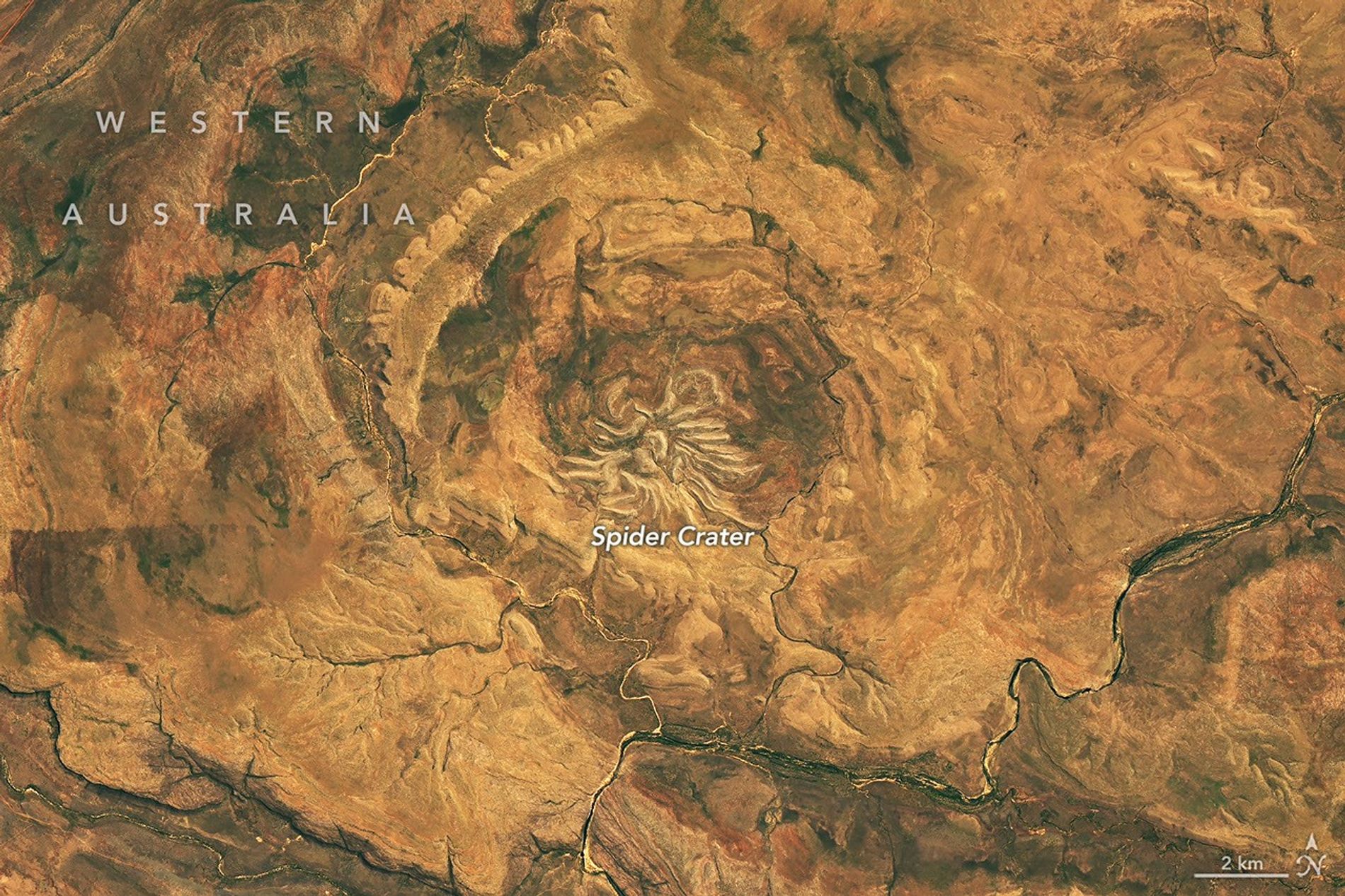
When you look at the Mount Ada impact structure in Western Australia, it doesn't look like your typical crater. Most people expect a clean bowl, a perfect circle carved out of the earth. Instead, this site—better known as the Spider Crater—looks like a massive arachnid crawling across the Kimberley region. It is a mess of radiating ridges and distorted sandstone that defies the simple mental model we have for how things break.
For those of us building in the crypto and AI space, there is a lesson here about legacy systems and high-impact events. We often think of innovation as a clean break from the past, but the reality is always more geological. When a massive force hits a complex environment, the result isn't a clean slate. It is a distorted, leggy, and often unrecognizable version of what was there before.
The Physics of Impact
Geologists estimate this impact happened somewhere between 600 and 900 million years ago. That is a timeframe so vast it makes the entire history of computing look like a rounding error. But the mechanics are what interest me. The "legs" of the spider are actually the result of differential erosion. The impact compressed the sandstone, making parts of it harder and more resistant to the elements than the surrounding rock.
Over millions of years, the soft stuff washed away, leaving behind these reinforced ridges. This is exactly what happens when a disruptive technology hits a mature industry. The initial impact is violent and chaotic, but the long-term result is a new structure defined by what was strong enough to survive the pressure. In our world, the "impact" might be a new consensus algorithm or a massive LLM release. The "legs" are the business models that were compressed and hardened by that pressure, outlasting everything else.
Why We Miss the Obvious
What is fascinating about the Spider Crater is how long it took us to realize what it actually was. For a long time, it was just another weird rock formation in the Outback. It wasn't until scientists looked closer at the "shatter cones"—rare geological features that only form under the extreme pressure of a meteorite impact or a nuclear blast—that the truth came out. The evidence was internal, not external.
I see founders making this mistake every day. They look at the surface of a market and see chaos or "weird shapes," missing the fact that a massive impact has already occurred. They wait for the dust to settle before they start building, not realizing that the settling dust is exactly where the new foundation is being formed. By the time the structure is obvious to everyone, the opportunity to build on the hardened ridges is gone.
Building for the Long Tail
In the crypto space, we talk a lot about "lindy"—the idea that the longer something has survived, the longer it is likely to survive. The Spider Crater is the ultimate lindy. It has survived half a billion years of wind, rain, and tectonic shifts because the impact changed its fundamental molecular structure. It didn't just survive; it became harder.
As a founder, you shouldn't be building for the soft sand. You should be looking for the points of maximum pressure. Where are the industries being squeezed the hardest by AI? Where is the friction in global finance the most intense? That is where the compression is happening. That is where you find the material that will still be standing when the hype cycle washes the rest of the market away.
The Skeptic’s View on Disruption
We use the word "disruption" so much it has lost its meaning. We treat it like a marketing term, but the Spider Crater reminds us that real disruption is a physical, painful process of transformation. It isn't a pivot; it is a permanent alteration of the landscape. Most startups aren't impacts; they are just pebbles hitting a pond. They make a splash, some ripples, and then the water goes back to exactly how it was before.
To create something with "legs," you need enough velocity to change the composition of the market you are entering. You need to be the meteorite, not the pebble. This requires a level of focus and force that most founders are unwilling to apply because it usually means breaking things that people have spent decades building.
Practical Takeaways for Builders
- Look for shatter cones: Don't just look at market trends. Look for the internal signs of extreme pressure—burnout, legal battles, and massive capital shifts. These are the indicators of a real impact.
- Build on the ridges: Don't try to fill in the gaps where the soft sand used to be. Find the hardened structures left behind by previous innovations and build on top of them.
- Embrace the erosion: Time will strip away the fluff. If your business model relies on a temporary subsidy or a passing fad, you are the soft rock. You want to be the compressed sandstone.
The Australian Outback is full of things that look like other things, but the Spider Crater is unique because its shape is a direct record of a catastrophic event. It is a visual representation of power and time. As we navigate the current intersections of decentralized tech and machine intelligence, we are living through a similar impact period.
The landscape of the internet is being rewritten. The ridges are forming. The only question is whether you are going to be part of the new structure or part of the sediment that gets washed away. Stop looking for the perfect circle. Start looking for the legs. They are the only things that will be here in a million years.
Read the original at NASA Breaking News →