The Invisible Infrastructure of the Sky
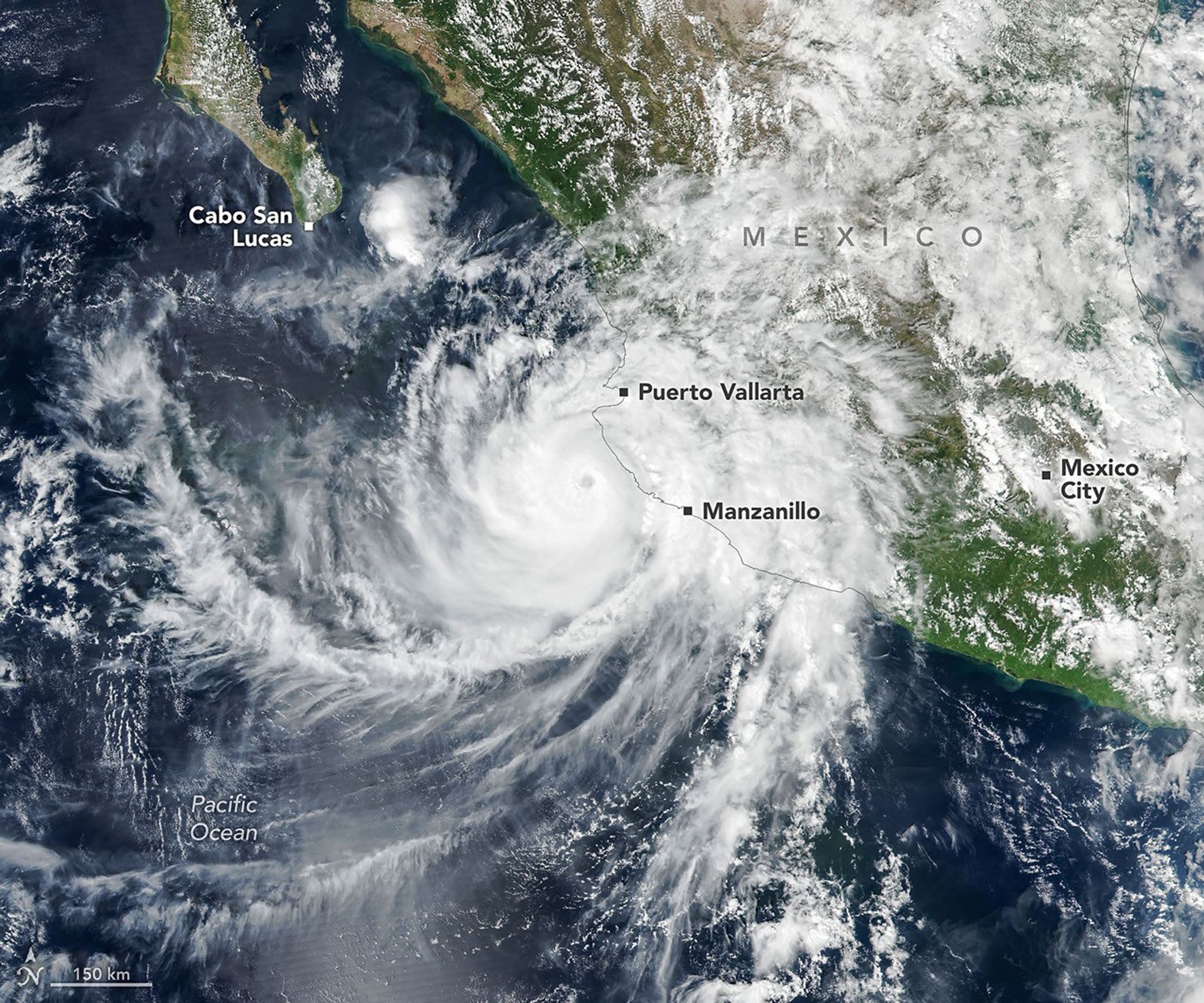
When most people look at a hurricane, they see the immediate destruction: flooding, wind damage, and the human cost of a storm surge. But for those of us focused on the intersection of physical infrastructure and data, there is a secondary story playing out in the upper atmosphere. Hurricane Simon, while remaining largely offshore near the Mexican coast, has provided a masterclass in atmospheric mechanics that most observers missed.
The storm produced intense gravity waves—rippling patterns in the air that extend far beyond the clouds we see on a standard radar map. For a builder in the crypto-AI space, this isn't just a weather event. It is a massive, untapped data stream that illustrates the limitations of our current centralized monitoring systems. We are watching a high-fidelity physical event being captured by low-fidelity sensing tools.
The Signal in the Storm
The atmospheric ripples created by Simon were not just aesthetic anomalies. They are a form of kinetic feedback. When a storm of this magnitude churns, it pushes air upward, creating waves that travel through the atmosphere like ripples on a pond. These ripples carry information about the storm's intensity, direction, and long-term impact on global weather patterns.
Currently, we rely on massive, government-funded satellites to track these events. These systems are incredible, but they are closed loops. The data is siloed, the processing is centralized, and the lag time between observation and actionable intelligence can be critical. If you are building a decentralized physical infrastructure network (DePIN), Simon is a validation of your thesis. We need more nodes, more sensors, and more diverse data points to capture these invisible signals in real time.
Why Builders Should Care About Gravity Waves
You might wonder why an AI founder or a crypto developer should care about ripples in the sky off the coast of Mexico. The answer lies in the scarcity of high-quality environmental data. As we move toward more complex AI models that predict climate change or supply chain disruptions, the quality of the input determines the survival of the output.
Centralized agencies provide a baseline, but they don't provide the granularity needed for localized decision-making. Imagine a network of decentralized weather stations, incentivized by a tokenized layer, feeding real-time atmospheric pressure data into an AI model. That model wouldn't just see a hurricane; it would see the gravity waves, the pressure shifts, and the micro-changes that signal where the next flood will hit before it happens.
The Skeptic's Perspective
I am naturally skeptical of anything that sounds too much like a utopian solution. The reality is that building hardware-based networks is difficult. It is much easier to write code than it is to deploy thousands of physical sensors in the path of a hurricane. However, the current model of relying solely on a handful of satellites is a single point of failure. Hurricane Simon reminds us that there is a wealth of data literally passing over our heads that we are simply not equipped to process at scale.
The current state of weather tech is much like the early days of the internet: we have the backbone, but we lack the last-mile connectivity. We can see the storm, but we can't feel the ripples. For builders, the opportunity isn't in competing with NASA; it's in augmenting the data layers that NASA cannot reach.
Founding a New Environmental Layer
If you are looking for a place to build, look at the gaps in our current perception. We have mastered the visual—we can take high-resolution photos of a storm from space. What we haven't mastered is the invisible. We haven't built the infrastructure to monitor the subtle shifts in the atmosphere that precede global shifts in climate.
We need to stop thinking about "crypto" as just finance and start thinking about it as a coordination layer for physical reality. Using blockchain to verify the integrity of atmospheric data, and AI to parse the noise from the signal, is the next frontier for founders who are tired of building another yield aggregator or an LLM wrapper.
The Hard Road Ahead
Building for the physical world is brutal. Sensors break, batteries die, and the environment is inherently hostile to electronics. But the data generated by events like Hurricane Simon is priceless. Those ripples in the upper atmosphere are a signature of the planet's health, and right now, we are barely reading the headline.
The takeaway for builders is simple: the most valuable data sets of the next decade won't come from a web scraper. They will come from the physical world. Whether it's tracking hurricanes or monitoring soil health, the future belongs to those who can bridge the gap between the invisible ripples in our atmosphere and the digital ledgers on our screens.
Key Takeaways for Founders
- Vertical Integration: Don't just build the software; think about the sensor layer. The more you control the data source, the more valuable your AI becomes.
- Resilience Over Hype: Decentralized networks offer a resilience that centralized satellites cannot match. Market your build as a solution to data fragility.
- Look for the Invisible: The best opportunities are often the things everyone else ignores, like the gravity waves in the wake of a storm.
Read the original at NASA Breaking News →