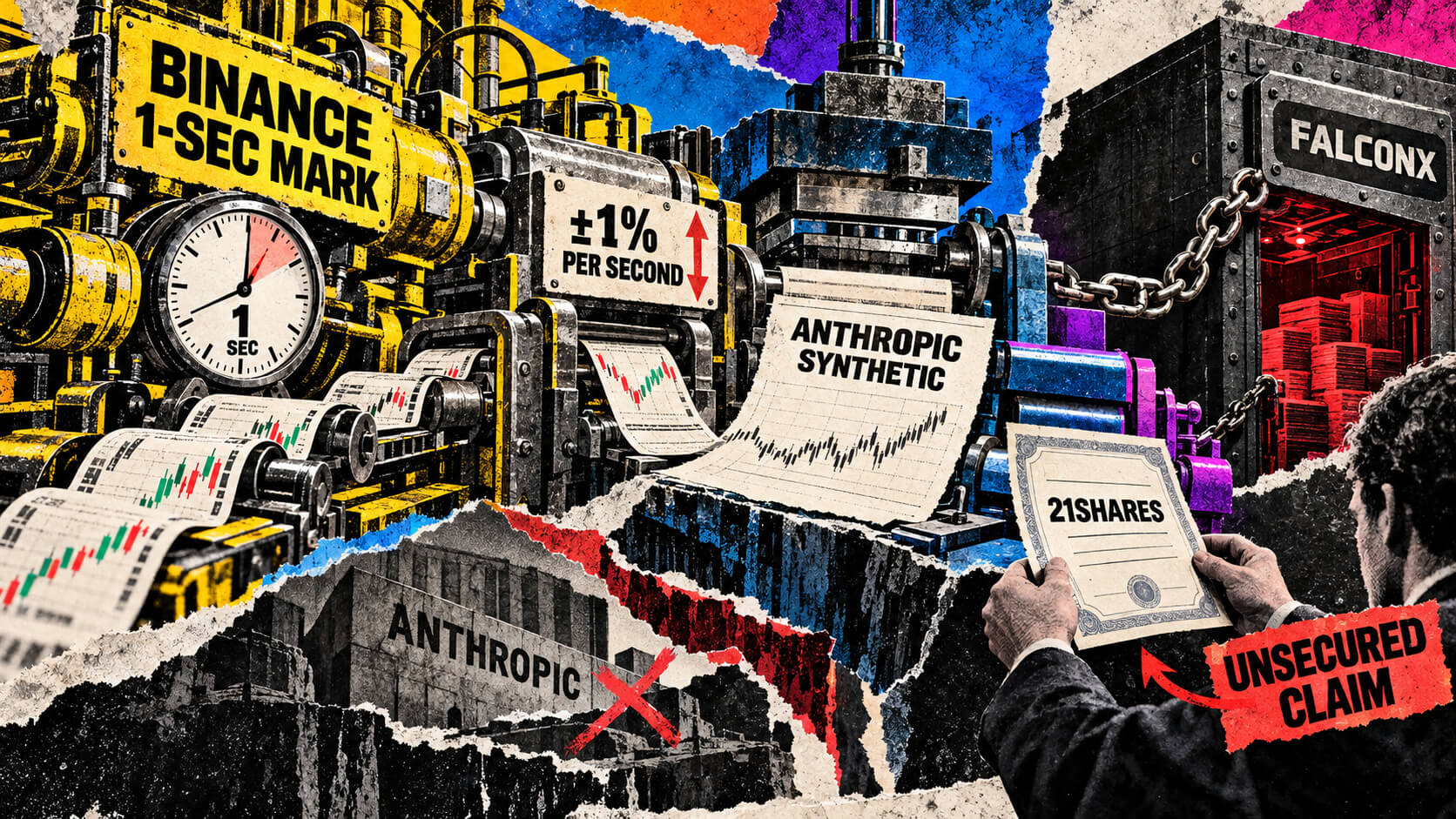
Liquidation is the ghost that haunts every high-leverage trader, but for the platforms hosting them, it is a mechanical nightmare. When prices move too fast, the systems designed to protect the house often end up burning it down. Binance recently signaled a shift in how they handle Anthropic mark-per-second calculations, a move that sounds like back-end housekeeping but actually exposes the fragile plumbing of modern crypto infrastructure.
The War on Price Noise
In the world of perpetuals, the mark price is the only number that matters. It is not the last price traded on the ticker; it is a calculated value designed to prevent market manipulation. If someone fat-fingers a trade on a thin order book, the mark price stays steady so everyone else doesn't get liquidated by a three-second wick. But these calculations have a lag problem.
Shunyet Jan at Binance has been vocal about the mechanics here. The goal is to smooth out the volatility. By updating mark prices at a per-second cadence, the exchange is trying to create a buffer against the 'noise' of the market. For builders, this is a lesson in state management. You cannot simply pipe in a raw data feed and call it a day. You have to build a logic layer that understands the difference between a real market trend and a temporary liquidity gap.
Why Builders Should Care
If you are building a DeFi protocol or a trading bot, you are at the mercy of these centralized exchange (CEX) mechanics. When a giant like Binance changes their marking frequency, they change the risk profile of every asset on their books. If the marking is too slow, the exchange takes on massive bad debt. If it is too fast, users get wiped out by micro-volatility that doesn't exist on other platforms.
We talk a lot about 'code is law' in this industry, but in reality, 'math is the warden.' The way these formulas are weighted dictates the survival of capital. Founders entering the space often underestimate the complexity of price oracles and marking engines. They focus on the UI or the tokenomics, forgetting that if the underlying pricing engine is twitchy, the whole project is a ticking time bomb.
The 21Shares Contrast
While Binance is tightening its internal mechanics, we are seeing different structures emerge in the institutional world. Take the recent 21Shares certificate updates. They have introduced terms that limit recourse to the issuer and involve affiliated note terms. This is a very different kind of protection than a per-second mark price update. It is a legal shield rather than a technical one.
As a founder, you have to decide which side of the fence you are building on. Are you building a system that relies on technical precision and real-time data integrity, or are you building a financial product wrapped in legal safeguards? The industry is currently split down the middle. Binance represents the former—trying to solve volatility through engineering. The ETP and certificate issuers represent the latter—solving it through disclosure and structured terms.
The Hidden Cost of 'Simple' Fees
There is a lesson here about transparency in costs. The 21Shares update highlights that their 1% fee isn't the whole story. There are affiliated costs and note terms that add layers of friction. This is exactly what we see in crypto-native building. A protocol might claim low gas fees, but the slippage or the liquidation penalties are where the real costs live.
Founders need to be honest about these 'hidden' mechanics. If your platform has a 10% liquidation penalty, that is a feature, not a footnote. If your mark price uses a 5-minute moving average, your users need to know that their collateral might not protect them in a flash crash. Honesty in infrastructure is the best way to build long-term trust, which is the only currency that actually matters in a bear market.
Infrastructure is the New Narrative
We are moving out of the era where 'being on the blockchain' was enough. The new cycle is about the robustness of the pipes. When Binance tweaks their marking engine, they are acknowledging that the old way of doing things isn't scalable for the next hundred million users. High-frequency updates are no longer a luxury; they are a requirement for survival.
I am skeptical of any project that doesn't have a clear, documented strategy for handling price outliers. If your answer is 'we use Chainlink,' that is a start, but it isn't a strategy. You need to understand how those prices are aggregated, what the latency is, and what happens when the primary source goes dark. Binance is showing us that even the biggest players are constantly refining these basics.
Takeaway for the Founder
Stop looking at liquidations as a user problem and start looking at them as a system design problem. Every time a user is unfairly liquidated due to a price wick, your platform loses credibility. The shift toward per-second marking and more granular price data is the standard. If you aren't building with that level of precision in mind, you are building for a market that no longer exists.
The complexity of these instruments—whether they are Binance perps or 21Shares certificates—is increasing. Your job is to simplify that complexity for the user without sacrificing the technical rigor required to keep their money safe. It is a balancing act, and right now, the balance is shifting toward more frequent updates and more transparent risk disclosures.
Read the original at CryptoSlate →