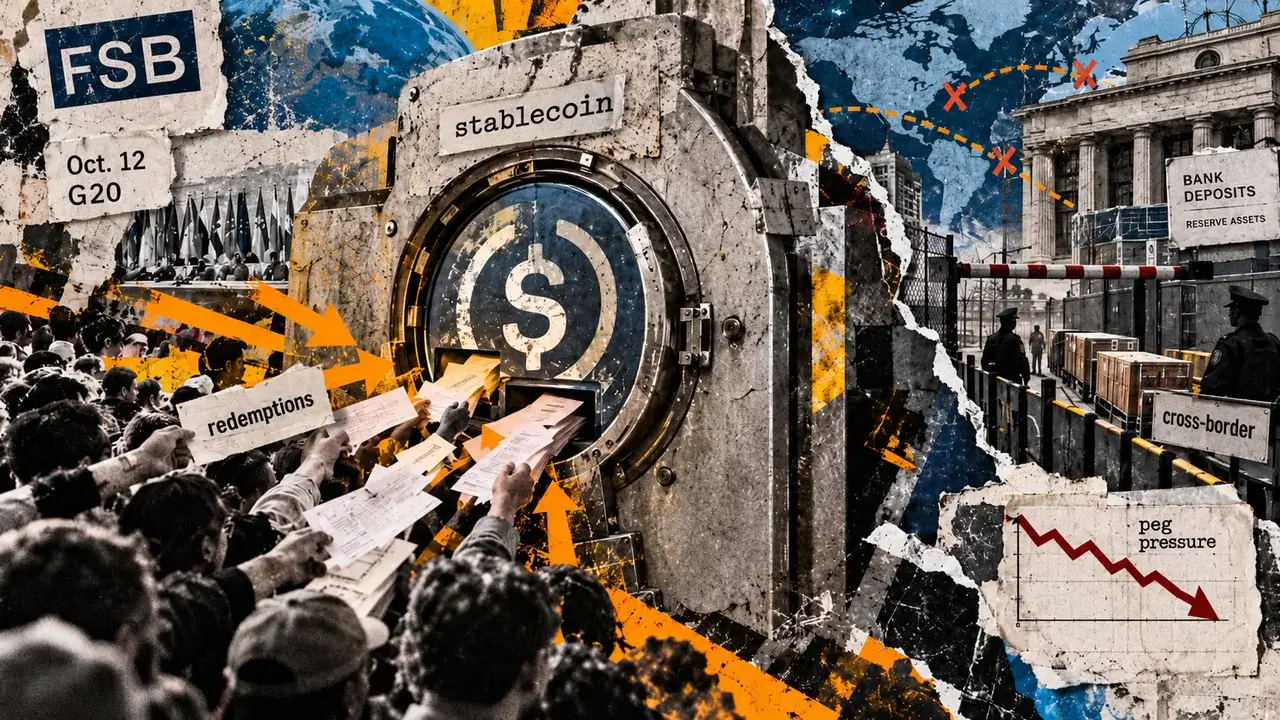
We have spent years arguing about whether stablecoins are actually backed by anything. The industry has obsessed over treasury bills, commercial paper, and the transparency of offshore reserves. But according to a new report from the Financial Stability Board, we might be solving for the wrong variable.
The Liquidity Illusion
The global watchdog recently flagged a risk that most founders are ignoring: even if a stablecoin is one-hundred percent backed by liquid assets, it can still collapse during a crisis. The issue isn't a lack of money; it's the plumbing that moves that money during a panic.
For anyone building in this space, the warning is clear. We have focused so much on the 'what' of reserves that we forgot about the 'where' and 'how.' If a stablecoin issuer operates across multiple jurisdictions with separate reserve pots, a spike in redemption demand at one specific entry point can trigger a death spiral before the assets can be moved to cover it.
The Cross-Border Friction Problem
When markets get ugly, people don't just want their money back; they want it back immediately. The FSB points out that many stablecoin issuers are fragmented. They have different entities handling different markets, often with legal walls between them.
Imagine a scenario where a massive amount of selling happens on a European exchange, but the bulk of the high-quality liquid assets are sitting in a U.S. custody account. Moving those assets isn't instant. You have time zone differences, regulatory checks, and bank settlement delays. In the crypto world, five minutes is an eternity. A two-day delay to bridge liquidity across borders is basically an admission of insolvency in the eyes of the market.
- Redemption Concentration: If redemptions hit one entity harder than others, that entity runs dry even if the parent company is technically solvent.
- Operational Lag: The time it takes to liquidate treasuries and move fiat into the hands of users is a massive vulnerability.
- Market Perception: Once a stablecoin dips below its peg due to a temporary liquidity mismatch, the fear becomes self-fulfilling.
What This Means for Builders
If you are building a DeFi protocol or a payment gateway that relies on these assets, you need to look past the audit reports. A monthly PDF saying the money is there is no longer the gold standard for safety. We need to start looking at the operational resilience of the issuers.
Founders should be asking how these issuers handle 'stressed' redemptions. If their reserves are siloed behind geographic or legal barriers, that stablecoin is a riskier collateral type than a centralized issuer with a unified, transparent liquidity pool. The FSB’s warning suggests that the $300 billion market is sitting on a foundation of fragmented pipes that aren't ready for a real flood.
The Founder's Perspective
I’ve seen plenty of projects fail not because they were scams, but because they were poorly engineered for the worst-case scenario. The stablecoin market has grown so fast that the infrastructure supporting it is still largely reactive. We are seeing a mismatch between the 24/7 nature of crypto and the 9-to-5 nature of the legacy banking systems that hold the reserves.
As a builder, your job is to hedge against these systemic failures. Don't put your protocol's entire treasury into a single stablecoin just because it has a big market cap. Diversification isn't just about the assets themselves; it's about the jurisdictional diversity of the issuers. If one issuer gets caught in a liquidity bottleneck in one country, you don't want your entire project to go down with them.
The industry has spent so long trying to prove it has the cash, it forgot to ensure it can actually move it when the doors start closing.
The Skeptical Takeaway
Regulators are often late to the party, but they are usually right about where the structural cracks are. The FSB isn't saying stablecoins are a fraud; they are saying they are fragile. The 'bank run' of the future won't necessarily be caused by a lack of funds, but by a lack of speed. In a world of instant transactions, being 'good for the money' tomorrow is the same as being broke today.
For those of us in the trenches building the next wave of AI-driven finance or cross-border payment tools, this is a call to demand better infrastructure. We need real-time proof of liquidity, not just proof of reserves. We need to see how these issuers plan to bridge their own internal silos when the next market crash happens. If they can't explain the plumbing, don't trust the water.
Read the original at CryptoSlate →