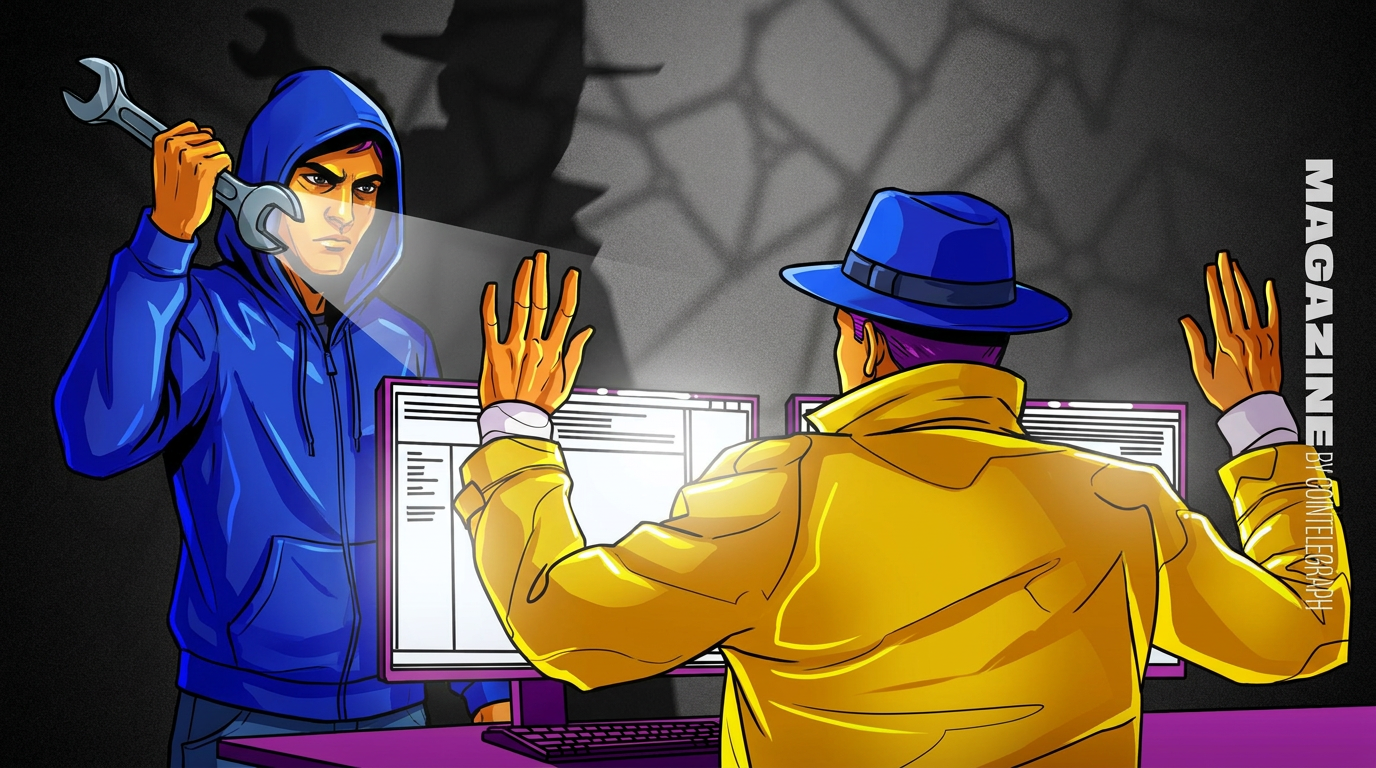
I have spent years telling founders that their biggest vulnerability isn't their code—it is their front door. We spend millions on audits, multi-sigs, and zero-knowledge proofs, but we often forget that a $50 wrench can bypass the most sophisticated encryption in the world. New data coming out of France confirms my worst fears. In just a seven-month period, French authorities recorded 90 incidents of violent crypto-related crime, ranging from extortion and kidnapping to home invasions.
This is not just a statistical anomaly. France has become a global hotspot for what I call 'physical layer' attacks. If you are building in this space, you need to understand why this is happening and why your hardware wallet won't save you if you are careless with your social profile.
The Breakdown of the Numbers
Ninety attacks in seven months averages out to a violent incident every couple of days. We are not talking about phishing emails or drained MetaMask wallets here. We are talking about people being followed home, held at gunpoint, and forced to transfer their assets while their families are threatened. The sheer volume of these cases suggests a level of organization among local criminal syndicates that the industry hasn't seen elsewhere at this scale.
While the United States and other European hubs see their fair share of cybercrime, the French situation is uniquely physical. The reports indicate a pattern: attackers are targeting individuals who have made their wealth public, either through social media posturing or by participating in local meetups without proper operational security. It is a grim reminder that in a world of public ledgers, privacy is not just a feature—it is a survival mechanism.
Why France is a Hotspot
There are several theories as to why France has taken the lead in this disturbing trend. First, there is a high density of early adopters. France has a strong developer culture and a long history of interest in cryptography. However, there is also a significant socioeconomic divide that fuels targeted theft. Criminals have realized that stealing a car or robbing a bank is high-risk and low-reward compared to forcing a tech founder to unlock a phone.
Furthermore, the legal system is playing catch-up. Extortion is a crime everywhere, but proving a forced blockchain transaction is notoriously difficult for traditional police forces. The anonymity of the destination wallets makes recovery nearly impossible, giving attackers a level of confidence they wouldn't have with traditional wire transfers.
The Founder's Dilemma
As a founder, you are stuck in a catch-22. To grow your project, you often need to be the face of it. You speak at conferences, you post on X, and you build a personal brand to gain the trust of investors and users. But every time you step on a stage, you are essentially painting a target on your back. The more successful your project becomes, the higher the bounty on your head.
I have seen founders walk around Paris or Lisbon with luxury watches while talking loudly about their latest seed round. It is reckless. We have transitioned into an era where your digital net worth is often public knowledge, but your physical security remains stuck in the pre-crypto era. If you are a builder, you need to treat your location and your daily habits as part of your tech stack.
What Builders Can Do Now
- Practice Radical Privacy: Stop posting photos that identify your home, your office, or your frequent hangouts. Even a view from a window can be used to geolocate you in minutes.
- Separate Your Assets: Never carry your primary wealth on a mobile device. Use a burner phone for daily transactions and keep the majority of your assets in a multi-sig that requires geographically distributed signers.
- Duress Passwords: Many hardware wallets offer a '25th word' or a duress PIN. Use it. It allows you to open a decoy account with a small amount of funds, potentially satisfying an attacker while keeping your main holdings hidden.
- Shut Up: The most effective security measure is silence. If people don't know you have it, they can't take it from you.
The Regulatory Blowback
Beyond the personal danger, these 90 attacks are going to trigger a massive regulatory response. When citizens are being kidnapped over digital assets, governments don't just sit back. They use it as justification for invasive KYC laws and the banning of self-custody wallets. The narrative will quickly shift from 'protecting investors' to 'preventing violent crime,' and that is a much harder argument for our industry to win.
We are already seeing French authorities push for tighter controls. If the industry cannot find a way to secure its members without government intervention, we are going to lose the very decentralization we are fighting for. The irony is that the more we push for mass adoption, the more we expose the general public to these risks before they are ready to handle them.
The Takeaway
The situation in France is a wake-up call for the entire global crypto community. We have spent so much time worrying about hackers in North Korea that we forgot about the criminal in the hallway. Physical security is now a mandatory part of the crypto founder's toolkit. If you are operating in high-risk areas, you need to rethink your public footprint immediately.
The most secure wallet in the world is useless if the person holding it is compromised. Security is a lifestyle, not a software update.
We need to stop celebrating 'crypto wealth' in a way that invites violence. Building in public is great for transparency, but living in public is a liability. Take the French data as a warning: the transition to a digital economy is going to be a lot more violent than the whitepapers promised.
Read the original at Cointelegraph →