The Cost of Centralization
We just witnessed one of the most significant stress tests in the history of digital finance. Following a massive security breach at Binance, the FBI has officially attributed the attack to state-sponsored actors from North Korea. While the technical details are still surfacing, the immediate aftermath was a masterclass in market psychology and liquidity management.
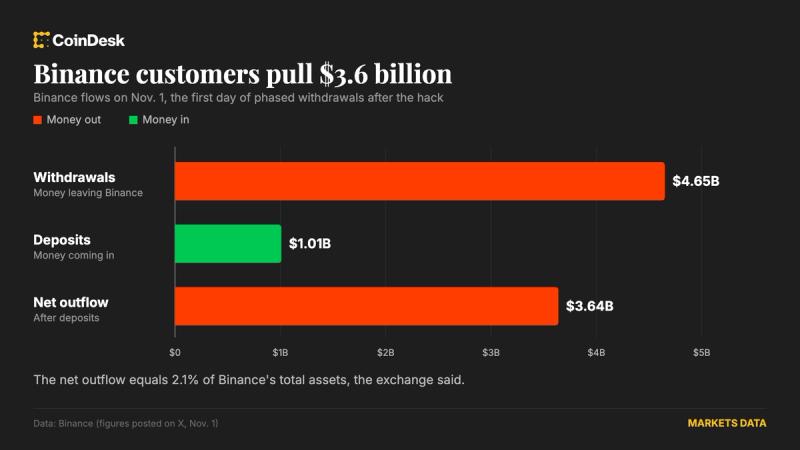
As soon as the exchange reopened withdrawals, the floodgates opened. In less than ten hours, over $3.6 billion left the platform. For most traditional banks, a two percent sudden drop in total assets would trigger a regulatory heart attack. In crypto, it is just Tuesday. But we should not let the industry's desensitization to big numbers mask the gravity of what is happening here.
The Attribution Game
The FBI's involvement and subsequent blaming of North Korea adds a layer of geopolitical tension to an already messy situation. For builders in the space, this is a reminder that you are not just fighting script kiddies or lone hackers. If you are building anything that touches significant capital, you are playing against nation-state resources. These teams have the time, the funding, and the mandate to find the smallest crack in your infrastructure.
State-sponsored groups do not always look for the complex zero-day exploit. Often, they look for the human element. Whether it is social engineering, a compromised developer device, or a slightly mismanaged multisig, the entry point is usually mundane. The scale of this hack suggests a deep, persistent presence within the system, not a quick smash-and-grab.
The Billions in the Room
The $3.64 billion outflow represents roughly 2.1% of Binance's total assets. While the exchange claims this is business as usual, we have to look at the velocity. When users see a headline involving the FBI and North Korea, the first instinct is to pull funds to a cold wallet. This is the rational move. In a post-FTX world, "trust us" is no longer a viable security protocol.
For those of us building the next generation of financial tools, this outflow is a signal. It tells us that despite the convenience of centralized exchanges, the market still harbors a deep-seated fear of total loss. The fact that the exchange was able to process these withdrawals without collapsing is a win for their liquidity management, but a loss for the narrative that centralized platforms are the safest place for retail capital.
What This Means for Founders
If you are a founder, you need to look at this event through two lenses: security and user sovereignty. The first lens is obvious. If a titan like Binance can be penetrated by state actors, your startup is vulnerable. You cannot outspend a nation-state on security, but you can minimize your attack surface. This means moving toward non-custodial solutions whenever possible.
The second lens is about user behavior. We are seeing a massive shift in how people react to bad news. The speed at which billions can move is terrifying if you are a centralized custodian. For developers, this is an opportunity to build better self-custody tools that do not feel like a chore to use. The hurdle for moving off an exchange needs to be lower.
The industry has spent years trying to make crypto feel like a bank. Events like this remind us exactly why we wanted to get away from banks in the first place.
The Infrastructure Reality Check
We need to stop pretending that centralized exchanges are the endgame. They are on-ramps. When the on-ramp gets blocked or compromised, the entire ecosystem feels the friction. The FBI's report is a wake-up call that the stakes have shifted from individual theft to national security concerns. This brings more heat, more regulation, and more scrutiny on every developer in the space.
Builders should be focusing on resilience. If your project relies on the stability of a single centralized entity, you have a single point of failure. The North Korean involvement suggests that these attacks will only become more sophisticated. We are moving into an era where "secure enough" is no longer a metric.
A Turning Point for Trust
This event marks a turning point. We have a confirmed state-sponsored attack on the world's largest exchange, followed by a multibillion-dollar exit of capital. The exchange is still standing, which is a testament to its scale, but the aura of invincibility is gone. The market is proving that it will move fast when the red flags go up.
For those of us in the trenches, the takeaway is clear: stop building dependencies on centralized trust. The next cycle of growth won't be driven by who has the most assets under management, but by who can provide the most security with the least amount of centralized control. The North Koreans proved they can get inside the walls. It is time to start building outside of them.
Final Takeaway
The immediate survival of the exchange is less important than the long-term shift in user sentiment. When billions move in hours, the market is telling you that self-custody is no longer a niche preference—it is a survival strategy. If you are building in this space, your priority should be giving users the keys before someone else takes them.
Read the original at Decrypt →