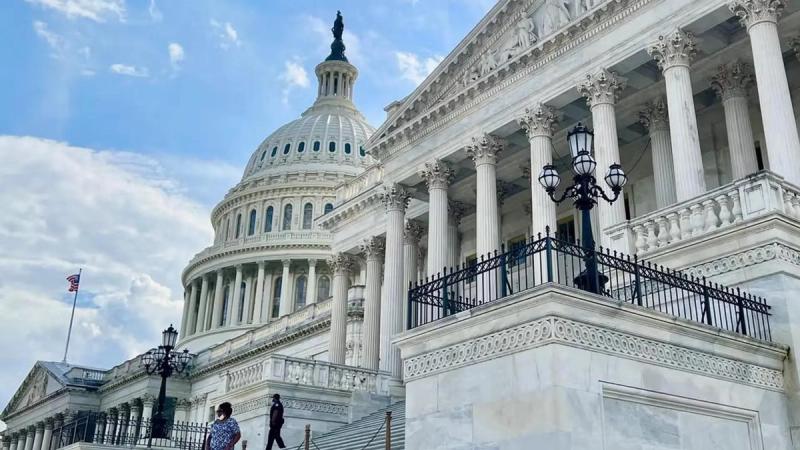
The High Court and the Crystal Ball
The prediction market industry is currently caught in a legal limbo that would make any founder lose sleep. We are seeing a massive pile-up of amicus briefs, rule proposals, and interim filings all pointing toward one destination: the U.S. Supreme Court. For those of us building in the trenches of crypto and decentralized finance, this isn't just another regulatory headline. It is a fundamental question of whether the math we build is considered speech, commerce, or a regulated vice.
Prediction markets have existed in a gray area for years. They allow users to trade on the outcome of future events—ranging from election results to the price of eggs. The Commodity Futures Trading Commission (CFTC) views these as illegal gambling contracts that fall outside the public interest. Builders, however, view them as the most efficient truth-machines ever invented. Now, the highest court in the land is being asked to settle the dispute.
The Argument for Information Over Betting
If you listen to the regulators, they will tell you that prediction markets are just sportsbooks with a suit and tie. They argue that betting on an election or a policy outcome provides no economic utility and threatens the integrity of democratic processes. But from a founder’s perspective, this is a narrow and frankly outdated way to look at data. When people put money on the line, the noise disappears and the signal gets louder. That signal is valuable for businesses, researchers, and anyone trying to hedge against future uncertainty.
The push for SCOTUS to take this up stems from a series of lower court battles where the CFTC has tried to flex its muscles. We’ve seen platforms like Kalshi and others fight tooth and nail for the right to exist. The legal argument increasingly centers on whether the CFTC actually has the statutory authority to ban these markets globally, or if they are overstepping the bounds set by Congress decades ago. For builders, the outcome will define the limits of what kind of financial instruments can be decentralized and offered to the public.
The Amicus Avalanche
What is interesting right now is the sheer volume of outside parties weighing in. We are seeing a flood of amicus briefs—documents filed by people not directly involved in the case but who have a strong interest in the outcome. These briefs aren't just coming from crypto enthusiasts. We’re seeing academics, economists, and tech giants arguing that prediction markets are essential for modern data analysis.
This pressure is building because the current regulatory framework is inconsistent. You have states allowing certain types of betting while the federal government tries to shut down others. For a startup founder, this inconsistency is a death sentence. You cannot build a five-year roadmap on a foundation of shifting sand. We need a definitive ruling, and the Supreme Court is the only entity left that can provide a final answer that won't be overturned by a change in administration every four years.
What This Means for the Builders
If you are building in this space, you need to understand that this isn't just about "gambling." It is about the classification of digital contracts. If SCOTUS rules against the markets, it sets a precedent that the government can preemptively ban any financial technology they deem "contrary to the public interest," a term so broad you could drive a truck through it.
On the flip side, a win for prediction markets would be a massive green light for the entire ecosystem. It would validate the idea that software-based markets are a form of protected activity. It would signify that as long as the math is transparent and the participants are willing, the government shouldn't be in the business of deciding which truths are allowed to be traded.
- Regulatory Clarity: A Supreme Court ruling would finally replace the CFTC’s discretionary enforcement with a clear legal standard.
- Capital Inflow: Institutional investors are sitting on the sidelines because of the legal risk. A favorable ruling would likely trigger a massive wave of funding for prediction-based startups.
- Innovation Beyond Betting: We could see these markets used for corporate supply chains, insurance hedging, and real-time economic forecasting if the legal cloud is lifted.
The Skeptic’s Corner
I’ve seen plenty of "sure things" in the crypto world get crushed by the reality of the American legal system. While the momentum feels like it's shifting toward the prediction markets, the Supreme Court is notoriously unpredictable. They might choose not to hear the case at all, which would leave the industry in the same frustrating stalemate it has been in for years.
Furthermore, even a "win" might come with heavy strings attached. We could see a ruling that protects the markets but mandates heavy KYC/AML requirements that effectively kill the "decentralized" aspect of these platforms. Founders should be careful what they wish for. A seat at the table often comes with a bill you didn't expect to pay.
The real tension here is between a government that wants to control the narrative and a technology that wants to price the truth.
The Takeaway
The move toward the Supreme Court is a sign that the industry has grown too large to be ignored or bullied into submission by mid-level regulators. For founders, the strategy remains the same: build for the long term but keep your legal counsel close. We are looking at a potential watershed moment that will decide if the US remains a viable place to build next-generation financial tools or if the innovation will continue to flee to more friendly jurisdictions.
Expect more noise, more filings, and more delays. But for the first time in a long time, it feels like we are actually heading toward a resolution rather than just spinning our wheels in a regulatory vacuum.
Read the original at CoinDesk →