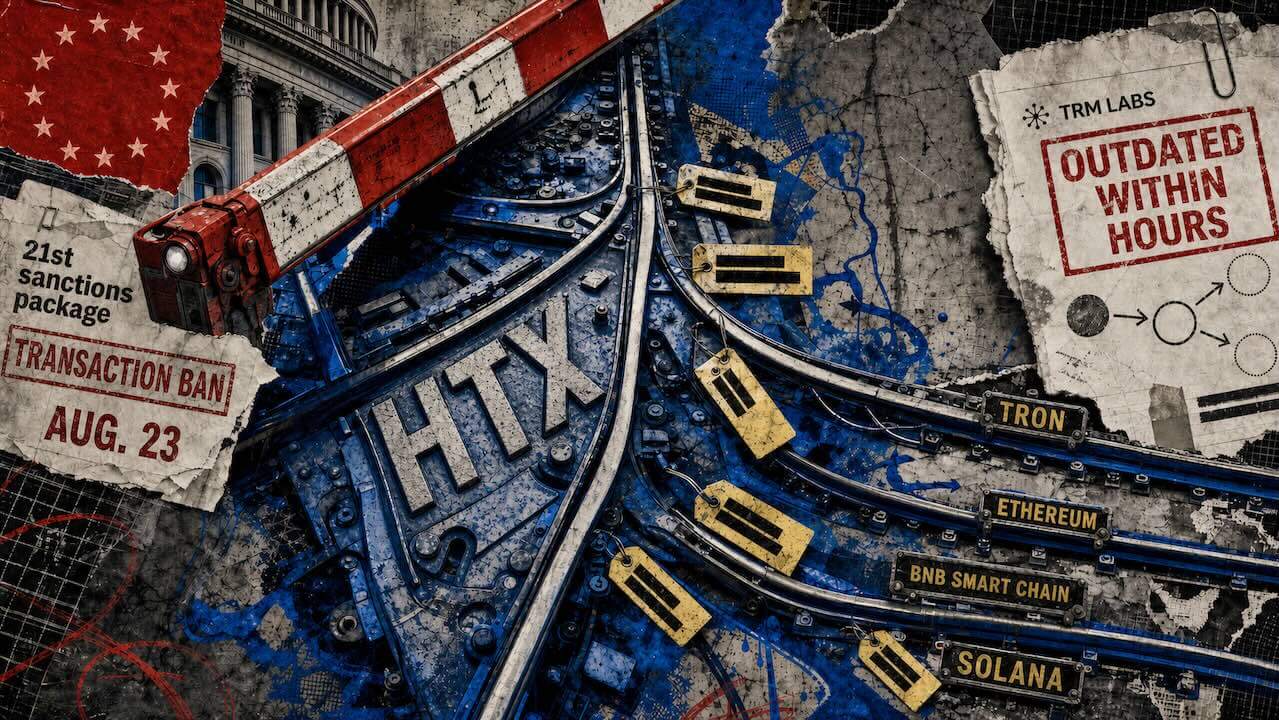
We have reached the point in the cycle where the 'unregulated' dream of early crypto meets the cold reality of geopolitical warfare. The European Union just updated its sanctions list, and the name at the top of the pile should be familiar to anyone who's been around for a few years: HTX. Formerly known as Huobi, the exchange is now officially persona non grata in the Eurozone regarding any dealings related to Russia.
Starting August 23, the EU has barred transactions with HTX and a handful of other platforms, including EXMO, Rapira, and BitPapa. The reason is simple, at least on paper: the EU believes these platforms are acting as conduits for subverting the financial restrictions placed on Russia. For a founder or a builder in this space, this isn't just a news headline about a major exchange; it is a signal that the 'gray area' is shrinking faster than most people realize.
The End of the Neutral Middle Ground
For a long time, the crypto industry operated under the assumption that if you weren't based in a specific jurisdiction, their rules didn't apply to you. HTX has hopped between countries for years, rebranding and restructuring to stay one step ahead of total regulatory capture. But the EU's latest move shows that physical headquarters matter less than the flow of institutional money. If you want to interact with the European financial system, you can no longer facilitate trade for sanctioned entities. Period.
This puts exchanges in a bind. On one hand, they have a massive user base that values anonymity and censorship resistance. On the other hand, being blacklisted by the EU is a death sentence for any hopes of legitimate institutional growth. For HTX, this isn't just about losing a few customers; it is about the increased friction for every partner, market maker, and liquidity provider that has any footprint in Europe.
Why Builders Should Care
If you are building a DeFi protocol or a cross-border payment app, you might think this doesn't affect you. You would be wrong. The compliance tools being developed to enforce these sanctions are eventually going to be baked into the base layers of the tools we use. When the EU flags an exchange like HTX, they aren't just telling banks to stop transfers; they are setting a standard for what 'risky' behavior looks like.
As a founder, you need to be asking yourself three things right now:
- Counterparty Risk: Does your protocol rely on liquidity that originates from these blacklisted platforms?
- Jurisdictional Drift: If you are targeting a global audience, how are you handling the fact that the definition of 'legal' is now geographically fragmented?
- The Transparency Trap: We tout the transparency of the blockchain, but that same transparency is exactly what the EU is using to map out these sanction-evasion routes.
The Real Cost of Compliance
The irony here is that the very thing that makes crypto attractive—its borderless nature—is what makes it a primary target during geopolitical tension. The EU is essentially forcing a choice: you either build platforms that are fully transparent and compliant with Western sanctions, or you accept that you will be relegated to the 'shadow' economy.
I have spoken to plenty of founders who believe they can just code their way around this. They think that as long as the smart contract is decentralized, they are safe. But the gateway is where the friction lives. Whether it is a fiat on-ramp or a UI hosted on a centralized server, the regulators are finding the pressure points. Adding HTX to a sanctions list is a loud way of saying that the era of 'don't ask, don't tell' in crypto volume is over.
The List is Growing
It is not just HTX. Names like EXMO and WhiteBird are also on this list. These aren't just random companies; they are the plumbing for specific regional markets. When you tear out the plumbing, the whole house starts to leak. For developers, this means the 'addressable market' for a truly global app is getting smaller, or at least more complicated to manage. You now need a legal budget that rivals your engineering budget just to ensure you aren't accidentally facilitating a transaction for a flagged entity.
The goal here isn't just to stop Russia; it is to set a precedent that crypto is not a get-out-of-jail-free card for international policy.
A Founder’s Perspective
My take is pretty simple: stop ignoring the regulatory cloud because you think the technology is superior. The tech is superior, but the people who control the money supply don't care about your elegant consensus mechanism. They care about control. If you are building in this space, you need to build with the assumption that every major exchange will eventually be forced to choose between the West and the rest.
We are moving toward a bifurcated crypto market. One side will be heavily regulated, KYC-compliant, and 'safe' for institutional capital. The other will be the wild west—higher risk, higher rewards, and a constant target for government shut-downs. HTX being added to this list is just one more brick in the wall separating those two worlds.
The Takeaway
The EU’s move against HTX and others starting August 23 marks a definitive shift. For builders, the lesson is clear: don't build your product's core utility on the assumption of permanent regulatory neutrality. The 'neutral' middle ground is disappearing. If your project touches the European market, you need to audit your exposure to these blacklisted entities immediately. Compliance isn't a feature anymore; it is the foundation, whether we like it or not.
Read the original at The Block →