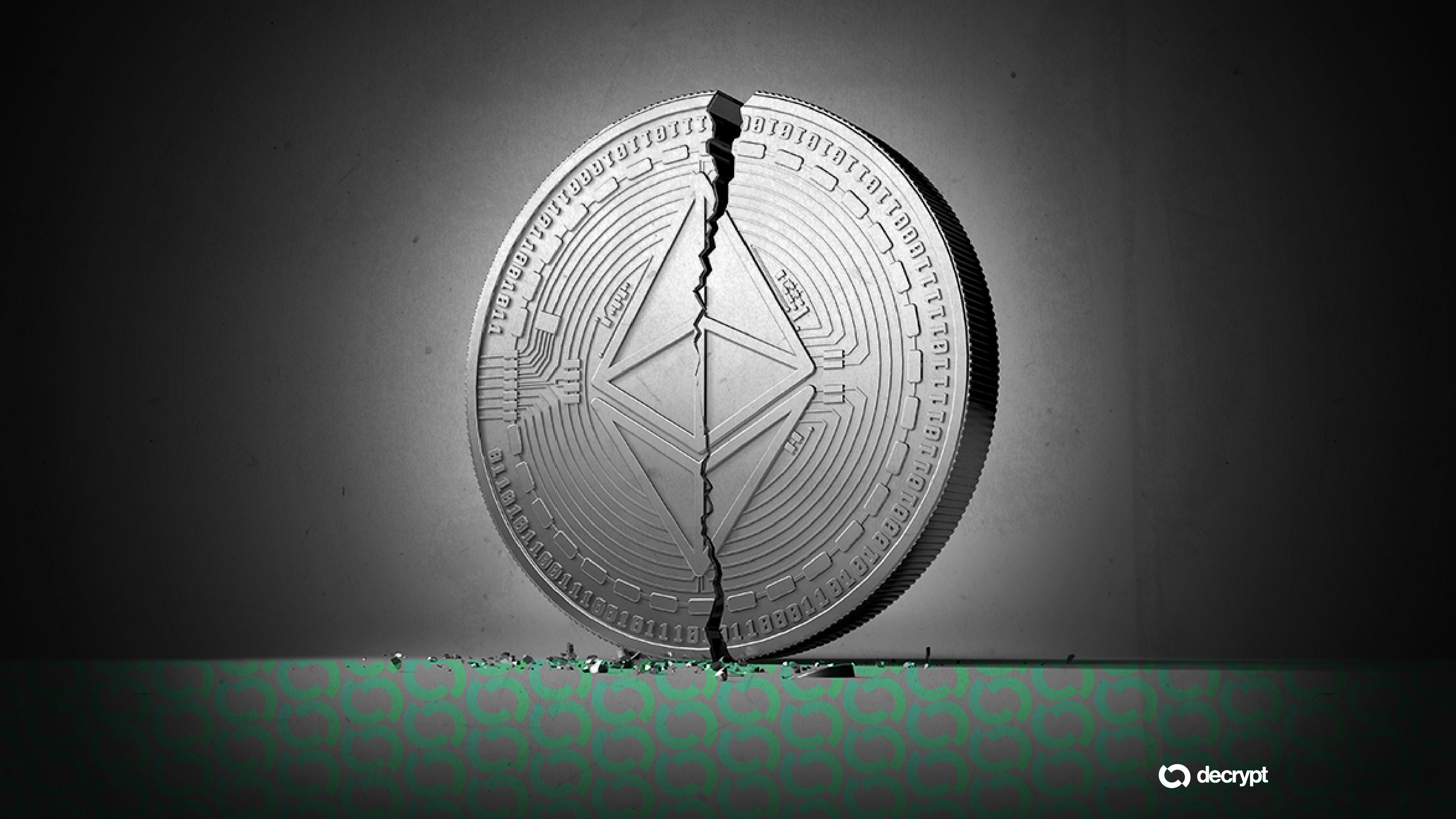
We have spent the last decade worrying about the wrong apocalypse. For years, the boogeyman of the crypto industry has been the quantum computer—a theoretical machine that could, in theory, crack the elliptic curve cryptography that secures every ETH wallet in existence. We treated it like a slow-moving storm on the horizon. Something to fix 'eventually.'
But the Ethereum Foundation just signaled a massive shift in priority. They aren't just looking at the horizon anymore; they are looking at the tools already in our hands. The Foundation has doubled its protocol security team, and the reason isn't a breakthrough in quantum physics. It is the rapid, terrifyingly efficient advancement of Artificial Intelligence.
The Myth of the Quantum Boogeyman
To understand why this matters, you have to understand the current state of play. Most of the blockchain world relies on specific mathematical problems that are easy to verify but incredibly hard to solve. It is the digital equivalent of a one-way street. Right now, a standard computer would take billions of years to guess your private key. A quantum computer, using Shor’s algorithm, could theoretically do it in minutes.
The problem is that useful quantum computers don't really exist yet. They are finicky, prone to error, and require temperatures colder than deep space to operate. Builders have viewed quantum resistance as a 'nice to have' for the 2030s. We figured we had time to swap out the plumbing before the flood hit.
AI changed the math. We are no longer waiting for a new type of hardware to emerge. We are watching software get exponentially better at finding patterns in places where humans thought there were none.
Why AI Is the Immediate Threat
AI doesn't need to be 'quantum' to be dangerous. It just needs to be smarter than the people who wrote the code. The Ethereum Foundation’s decision to beef up its security wing is a reaction to how AI can be weaponized for cryptanalysis. If an AI model can identify subtle biases in how private keys are generated or find flaws in cryptographic implementations that human auditors missed, the game changes overnight.
For builders, this is a wake-up call. We’ve spent years building complex smart contracts, layer-2 scaling solutions, and DeFi protocols under the assumption that the underlying math is 'settled.' But math is only as secure as our inability to solve it. AI is a world-class problem solver.
The Foundation is now fast-tracking a cryptographic overhaul. They are looking at 'post-quantum' signatures and new ways to harden the protocol not just against future hardware, but against current algorithms that are getting scarily good at finding needles in haystacks.
What This Means for Founders and Devs
If you are building in the Ethereum ecosystem, your threat model just shifted. We can no longer afford to be complacent about 'legacy' cryptography. Here is how the landscape is changing for those of us on the ground:
- The End of 'Set It and Forget It': Security is no longer a milestone you check off before launch. It is a continuous race against automated discovery tools. If the Foundation is doubling their team, you probably need to rethink your own audit frequency.
- Cryptographic Agility: Protocols need to be built with the ability to swap out their underlying signatures. If a specific curve is found to be vulnerable to AI-assisted attacks, migrating users needs to be a feature, not a frantic bug fix.
- Formal Verification is Non-Negotiable: We are entering an era where human eyes aren't enough. We need to use AI to defend against AI. This means integrating formal verification into the dev pipeline from day one.
The Efficiency Trap
The irony here is that the crypto industry has been one of the biggest cheerleaders for AI integration. We want AI agents to manage our portfolios, AI to write our smart contracts, and AI to optimize our gas fees. But every tool that makes a developer more efficient also makes a hacker more potent.
The Ethereum Foundation isn't being alarmist; they are being pragmatic. They recognize that the barrier to entry for high-level exploits is dropping. You don't need a PhD in cryptography to find a zero-day vulnerability if you can train a model to scan millions of lines of code for specific logical inconsistencies.
"The threat isn't just that a machine will crack a code. It's that a machine will find the one mistake a human made while writing that code."
A New Standard for Security
By prioritizing this overhaul now, Ethereum is trying to stay ahead of a curve that is accelerating. This isn't just about protecting the $300 billion or so currently in the ecosystem. It’s about ensuring that the next trillion dollars of value isn't built on a foundation that can be dismantled by a script running on a GPU cluster in a basement.
We are seeing a move toward 'hardened' cryptography that doesn't rely on the same assumptions we've used since the 70s. This includes things like STARKs (Scalable Transparent Arguments of Knowledge), which are inherently more resistant to the types of attacks both quantum computers and advanced AI might mount.
The Takeaway
The message from the Foundation is clear: The window of 'safe' experimentation is closing. The tools we use to build are being turned into tools to destroy. If you are a founder, your primary job is no longer just shipping features; it is ensuring that your protocol doesn't become a casualty of the AI arms race.
Quantum computing is still a 'maybe.' AI is a 'now.' The Ethereum Foundation is moving to protect the protocol from the reality of 2024, not the science fiction of 2040. We should probably do the same.
Read the original at Decrypt →