The Era of the Protected Founder
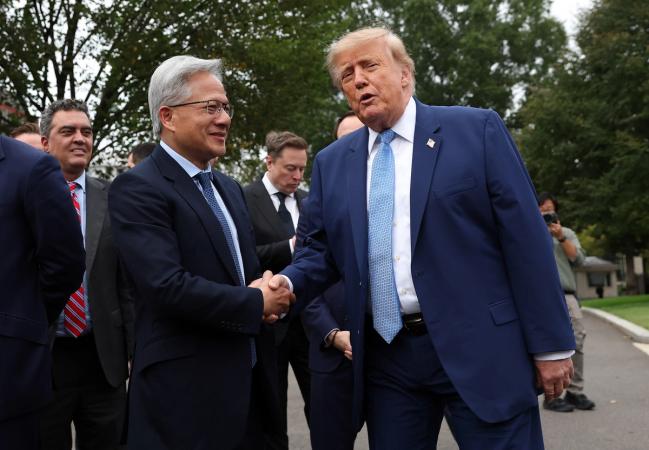
We are entering a strange phase in the relationship between the United States government and the tech sector. For years, the narrative was about regulation, antitrust, and slowing down the giants. But as the AI race becomes a matter of national security, the tone is shifting from oversight to insulation. The recent comments from Donald Trump regarding Jensen Huang, the CEO of Nvidia, are a perfect example of this new reality.
When a President discusses a preemptive or hypothetical pardon for a corporate leader involved in a personal scandal, it is not just about the law. It is about value. Huang is the architect of the hardware powering the entire artificial intelligence movement. In the eyes of the current administration, he is not just a CEO; he is a strategic asset. The message is clear: if you are building the infrastructure that keeps the U.S. ahead of the rest of the world, the usual rules might not apply to you in the same way they apply to everyone else.
Value Over Optics
The situation involves allegations surrounding Huang's personal life, specifically an affair scandal that has been circulating in political and business circles. Normally, this is the kind of PR nightmare that leads to board meetings and resignation rumors. However, the political reaction has been the opposite. Trump noted that while he doesn't think Huang actually needs a pardon, he would be willing to grant one if it meant keeping the gears of Nvidia turning.
For those of us building in the crypto and AI space, this is a massive signal. It tells us that the government is prioritizing technical dominance over traditional optics. Nvidia's H100 and B200 chips are the fuel for the modern economy. Without them, the U.S. falls behind in the LLM race, the robotics race, and the defense tech race. In that context, a personal scandal is viewed by the executive branch as a distraction rather than a disqualifier.
What This Means for the Builders
If you are a founder, you have to look at this through a pragmatic lens. We have spent the last decade worrying about the 'move fast and break things' mantra getting us into legal trouble. We saw what happened to SBF, and we see the ongoing pressure on decentralized protocols. But there is a hierarchy of protection. If you are building foundational technology—stuff that the state actually needs—you gain a level of leverage that was previously reserved for defense contractors like Lockheed or Boeing.
This doesn't mean you should go out and break the law. What it means is that the 'Founder-King' archetype is being reinforced by the highest levels of government. The state is identifying key individuals whose presence is essential to the GDP and the technological frontier. If you are one of those people, the state will protect you from the 'noise' of civil or personal litigation to ensure you keep shipping.
The Skeptic's Corner
I have to be honest: this sets a dangerous precedent. While it is good to have a pro-tech stance in the White House, the idea of a 'pardon culture' for tech elites creates a two-tier justice system. One tier for the builders of 'strategic assets' and another for the rest of the startup ecosystem. If a small-scale crypto founder gets caught in a similar scandal, they are finished. There is no presidential interview coming to save them.
We also have to ask what the cost of this protection is. Nothing in Washington is free. If the government is willing to shield the leaders of Nvidia, they will eventually expect Nvidia to align its roadmap with government interests. This is the 'nationalization' of tech by proxy. We are seeing the lines between private enterprise and state capability blur. For a sector that was founded on the idea of decentralization and independence, this is a double-edged sword.
The Global AI Arms Race
The reason this is happening now is because of the sheer scale of the AI arms race. We are no longer talking about social media apps or ad tech. We are talking about the compute power required to simulate biology, crack encryption, and automate warfare. Nvidia is the only shop in town that can provide that power at scale right now. The U.S. government knows that a leadership vacuum at Nvidia would be a gift to competitors like China, who are already struggling to bypass export controls on these very chips.
By publicly backing Huang, the administration is effectively telling the markets and the world that Nvidia is 'too big to fail' and its leadership is 'too important to prosecute.' It is a blunt instrument of foreign policy disguised as a comment on a scandal. It stabilizes the stock price and ensures that the roadmap remains uninterrupted by legal discovery or personal drama.
The Founder Takeaway
The takeaway for founders is simple: Utility is your best defense. If you build something that the world—and specifically the government—cannot live without, your personal and professional resilience increases exponentially. We are moving away from an era of 'polite' corporate governance and into an era of 'strategic' governance. The founders who survive and thrive will be those who make themselves indispensable to the national infrastructure.
Keep your head down and keep building the hard stuff. The more your work impacts the core of the economy, the more 'grace' you will be afforded when things get messy. It might not be fair, but it is the reality of the 2026 tech landscape. The government isn't just watching us anymore; they are picking winners, and they are willing to protect those winners at all costs.
Read the original at CoinDesk →