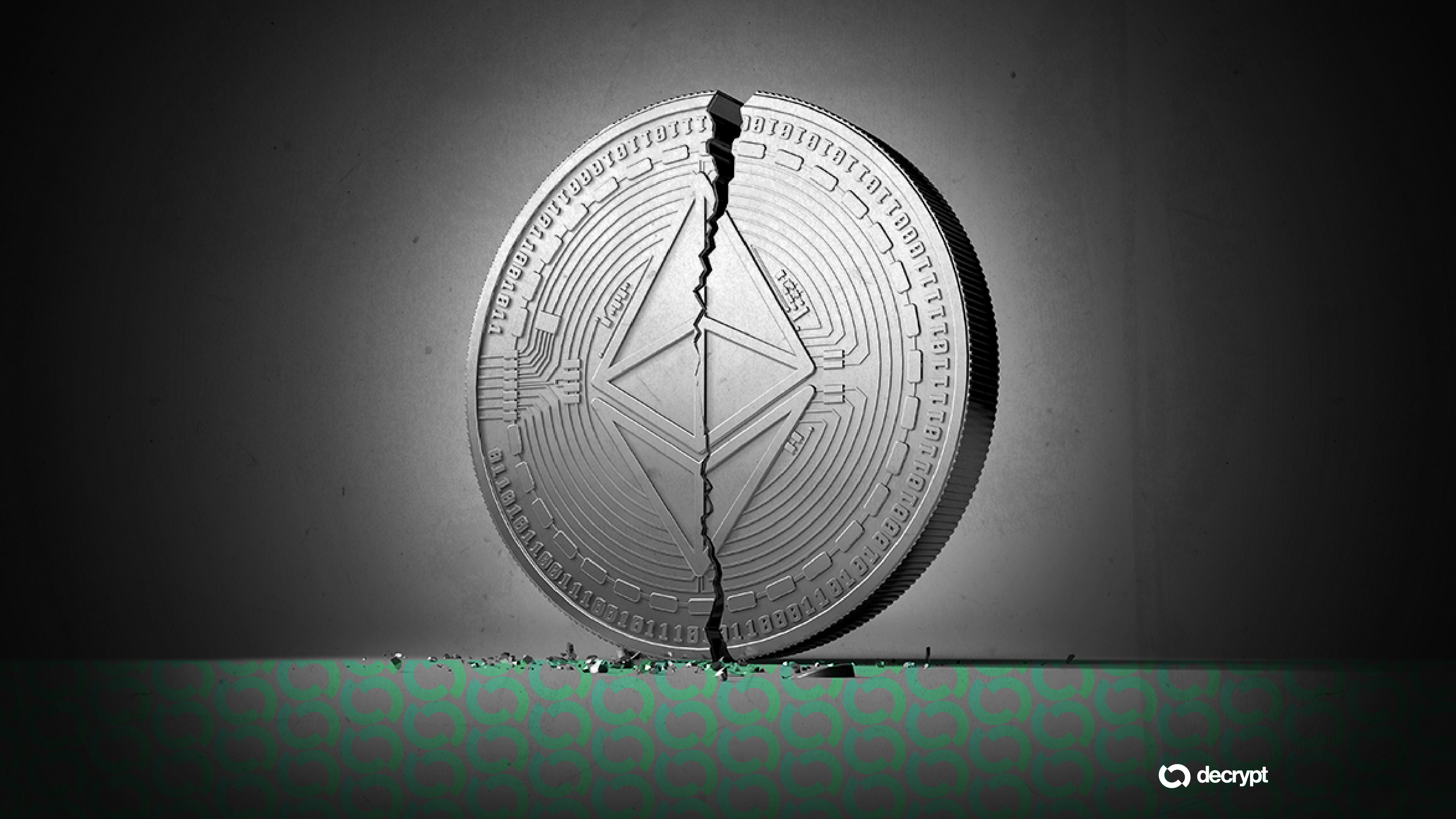
We are seeing another one of those weeks where the screen turns red and the leveraged gamblers start sweating. Ethereum just took a 6% haircut, sliding toward the $2,500 mark. While the headlines usually focus on the price drop, the real story for anyone actually building in this space is the leverage trap waiting to spring.
The Billion-Dollar Hangover
Data is showing that roughly $1.35 billion in leveraged long positions are currently sitting in the danger zone. These are bets made by people who assumed Ethereum would only go up, or at least wouldn't drop this far, this fast. Now, as the price hovers near $2,500, those positions are facing forced liquidations. When a liquidation happens, it’s not just a private loss; it triggers a cascade of selling that puts even more downward pressure on the price, creating a feedback loop that nobody likes.
On the flip side, short positions—those betting the price will fall further—are sitting at around $999 million in potential liquidation risk if the market suddenly bounces. But right now, the weight is clearly on the side of the longs. The market is top-heavy, and the floor is looking thin.
Why Builders Should Care
If you are a founder or a developer, you might think the perpetual swap market doesn't affect your roadmap. You’re wrong. When $1.35 billion is at risk of being wiped out, it impacts the entire ecosystem’s health. High volatility driven by leverage makes gas fees unpredictable and scares off the retail users your dApp actually needs to survive. More importantly, it impacts treasury management.
I’ve seen too many teams treat their ETH holdings like a bank account that always grows. When these liquidation cascades happen, the general sentiment shifts from "let’s build something cool" to "how do I survive the winter?" Leverage is the enemy of long-term building. It introduces artificial noise into what should be a signal-driven industry.
The $2,500 Psychology
The $2,500 level isn't just a random number on a chart. It’s a psychological barrier. For many traders, this was the line in the sand. Falling below it doesn't just trigger automated liquidations; it triggers a shift in the narrative. We’ve spent months talking about the institutionalization of ETH through ETFs and EIP upgrades, but a 6% slide reminds us that Ethereum is still a high-risk asset class prone to violent swings.
The discrepancy between long and short exposure tells us that the market was leaning too far into optimism. Whenever you see $1.35 billion in longs versus less than a billion in shorts, you’re looking at a crowded trade. In crypto, crowded trades usually end in tears.
Separating Value from Price
As a builder, your job is to ignore the liquidations while understanding the macro environment they create. The technology behind Ethereum hasn't changed in the last 24 hours. The L2 scaling roadmap is still progressing, and the move toward a more modular future is still happening. However, the capital flowing into these projects is often tied to the perceived value of the underlying asset.
When the leverage gets wiped out, it’s actually a healthy, albeit painful, reset. It flushes out the speculators and leaves the people who are here for the tech. The problem is that the "flush" often takes out good projects with bad luck—teams that didn't have enough runway or were relying on ETH-collateralized loans to fund operations.
The Founder Perspective
If you’re running a startup in this space, this 6% drop is a wake-up call. Stop checking the price every hour and start checking your burn rate. If your project’s survival depends on ETH staying above $3,000, you aren't building a business; you’re running a hedge fund with a UI.
We need to move away from the obsession with liquidation levels and toward an obsession with utility. The reason the market is so sensitive to these billion-dollar liquidations is that we haven't built enough real-world demand to offset the speculative gambling. Until the "use case" volume outweighs the "leverage" volume, we will continue to be at the mercy of these cascades.
What Happens Next?
If the $2,500 support holds, we might see a slow grind back up as the weak hands are shaken out. If it breaks, that $1.35 billion in longs will start hitting the market as market-sell orders. That’s when things get ugly. We’ve seen this movie before, and it usually ends with a lot of people complaining on Twitter while the smart money quietly buys the dip.
For those of us in the trenches, the goal remains the same: keep shipping. Volatility is a feature of crypto, not a bug. The builders who survive are the ones who don't play the leverage game and keep their eyes on the five-year horizon rather than the five-minute candle.
The Bottom Line
The $1.35 billion at risk is a reminder that greed has a high cost. Ethereum is a powerful tool for decentralization, but it’s currently being used as a casino chip by a significant portion of the market. Don’t get caught in the blast radius. Focus on building products that people will use regardless of whether ETH is at $2,500 or $5,000. That’s the only way to win in the long run.
Read the original at CryptoSlate →