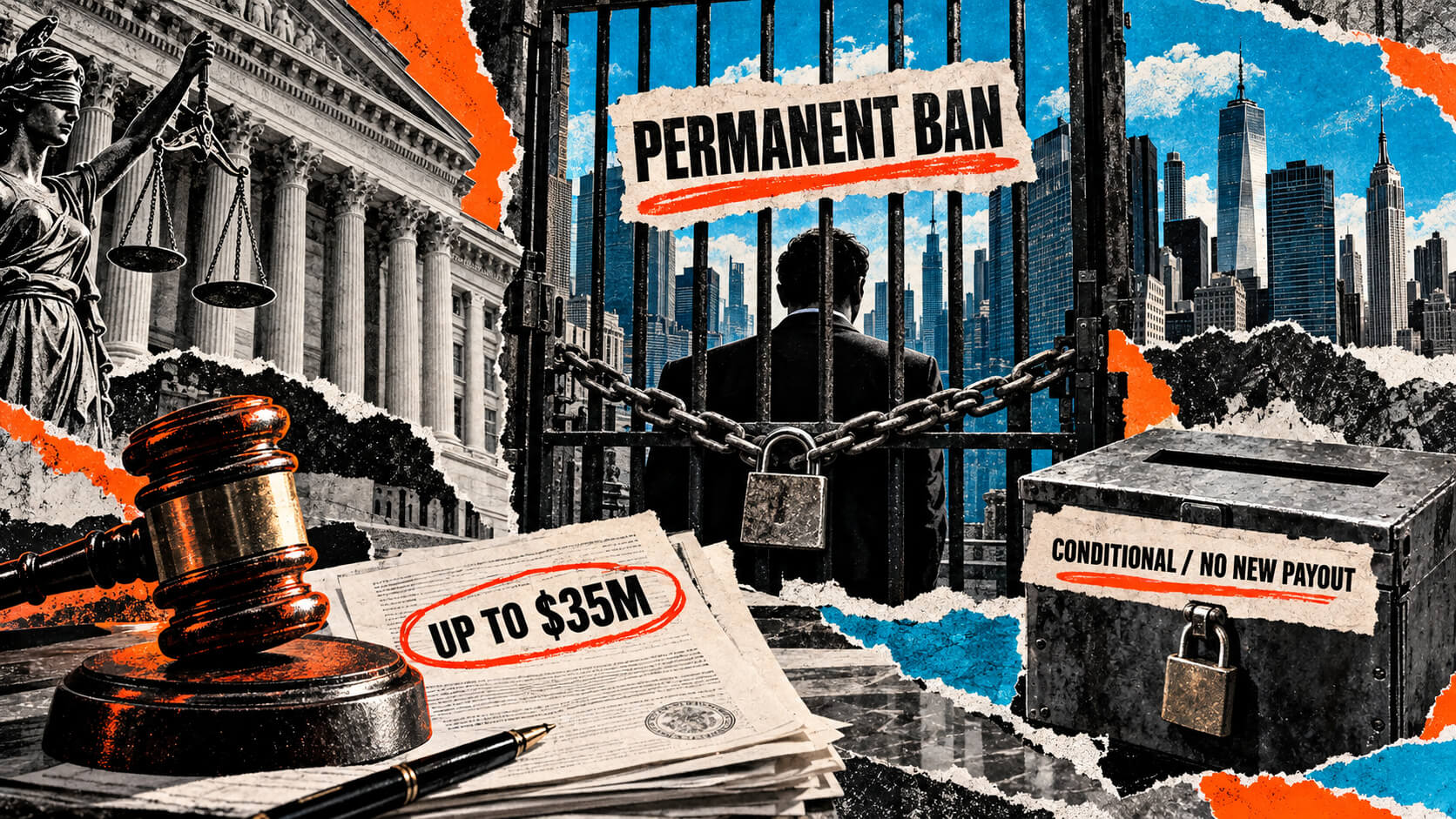
We keep seeing this pattern in the crypto space: founders who think they are smarter than the protocol. Raheim Hamilton, one of the minds behind the massive dark web bazaar Empire Market, was just handed a 40-year prison sentence. Along with the time, he is forfeiting over 1,230 BTC. That is a heavy price to pay for a project that, at its core, was built on the flawed assumption that blockchain equals invisibility.
For those who joined the space after 2020, Empire Market was the spiritual successor to the Silk Road. It filled a vacuum, facilitating roughly $430 million in transactions involving everything from narcotics to stolen credit card data. But for builders, the real story here isn't the contraband. It is the technical and legal hubris that continues to land developers in federal housing.
The Illusion of the Permanent Ghost
Early dark web pioneers operated under the belief that if you layered enough proxies and used a decentralized ledger, you were untouchable. Hamilton and his partner, Thomas Pavey, built a robust platform that survived several DDoS attacks and rival takeovers. From a technical standpoint, the infrastructure was resilient. From a security standpoint, it was a ticking time bomb.
The problem with building on public blockchains is that the evidence is permanent. You are not just dealing with the technology of today; you are gambling against the forensic tools of ten years from now. The 1,230 BTC Hamilton is giving up isn't just a fine—it is a digital breadcrumb trail that investigators followed until they had enough to close the case. If you are building anything today, you have to assume that your current obfuscation methods will be trivial for an AI-enhanced federal investigator to crack in the future.
Operational Security is Not a Feature
In the founder community, we often talk about 'product-market fit.' Empire Market had it. They had the users, the volume, and the revenue. But they lacked the one thing that matters more than scale: sustainable operational security. Most developers treat security as a feature or a sprint goal. In reality, security is a lifestyle that most humans are psychologically incapable of maintaining for years on end.
Hamilton’s sentencing, with Pavey’s expected soon, highlights the reality that law enforcement plays the long game. They do not need to catch you the day you launch. They only need you to slip up once in a five-year window. Whether it is an IP leak, a reused handle, or a physical delivery, the friction between the digital world and the physical world is where founders usually bleed out.
The Founder’s Fallacy
There is a specific kind of arrogance that comes with building high-traffic platforms. You start to believe your own hype. You think that because the site is still up, you are winning. But in the eyes of the DOJ, you are just a pig being fattened for slaughter. The 40-year sentence handed to Hamilton is meant to be a deterrent, but it also serves as a reminder of the 'Founder’s Fallacy': the belief that code can protect you from the law.
Code is just logic. Law is just power. When the two collide, power usually wins because it controls the physical infrastructure of your life. Hamilton didn't just lose his Bitcoin; he lost his productive years. For builders, this should serve as a wake-up call regarding the ethics and long-term viability of the projects they choose to lead. If your business model relies on hiding from the sunlight, your exit strategy is almost always a courtroom.
Bitcoin is Not Your Friend
We need to stop pretending that Bitcoin is a privacy tool. It is a transparency tool that happened to be misunderstood for its first decade. The forfeiture of thousands of BTC between these two co-founders proves that the government is now highly proficient at tracking, seizing, and liquidating these assets. If you are a builder today, you should be looking at this case and realizing that 'pseudonymous' is a temporary state of being.
The shift from the Silk Road to Empire Market to whatever comes next shows that the technology is getting better, but the human element remains the weakest link. Hamilton and Pavey managed to facilitate nearly half a billion dollars in trade, yet they couldn't buy their way out of a blockchain that remembers every move they made.
The Takeaway for Builders
If you are building in the crypto or AI space, your primary goal should be to create something that doesn't require you to live in the shadows. The 'move fast and break things' mantra works for software, but it is a disaster for legal compliance. When you build tools that facilitate illegal activity, you aren't just a developer—you are a target.
Building for the long haul means building with the light on. The era of the anonymous dark web kingpin is ending, replaced by the era of forensic accountability. 40 years is a long time to think about a codebase that ended up being your own prison cell. Don't build things that you wouldn't be proud to defend in front of a judge, because eventually, you might have to.
Read the original at Decrypt →