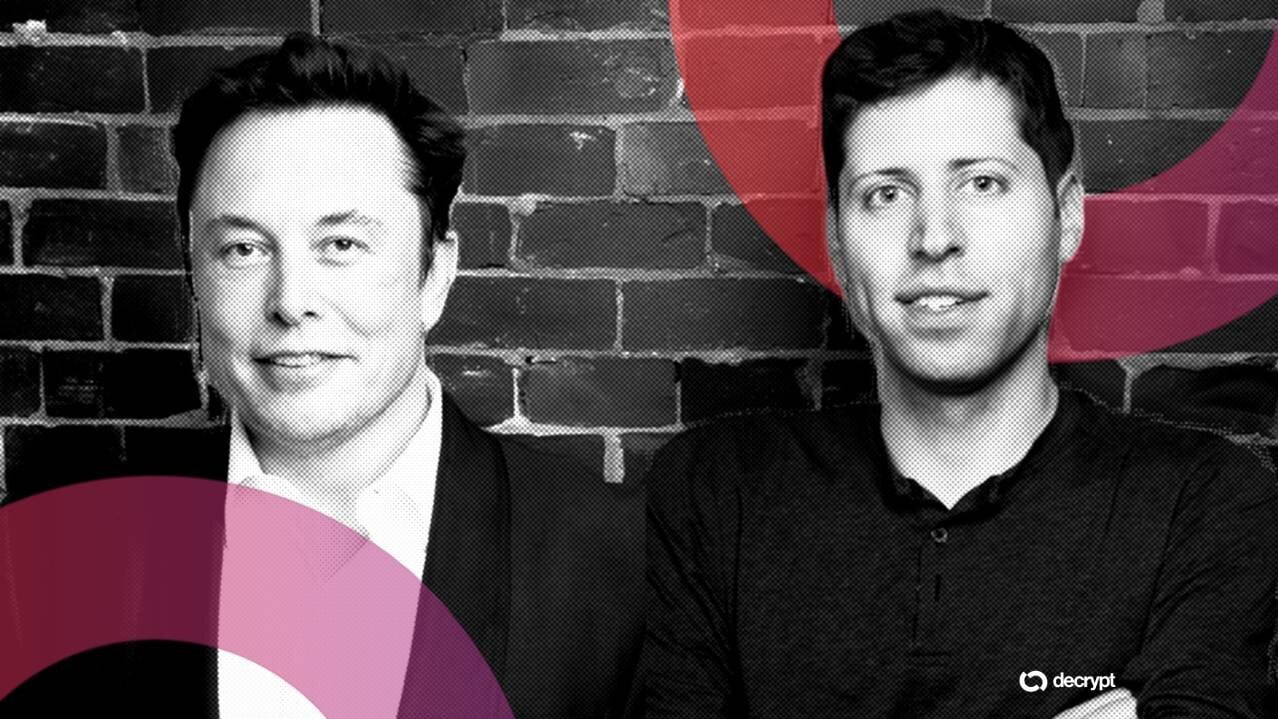
We are entering the phase of the AI cycle where the people building the foundation models start looking at your personal belongings with a bit of envy. Sam Altman, the face of OpenAI, recently sparked a heated debate across social media by suggesting that the vast amounts of RAM sitting in consumer laptops and desktops is essentially a wasted resource. His logic is simple: while data centers are starving for memory to run massive inference tasks, your MacBook is sitting on a desk doing nothing.
The Scarcity Mindset
Elon Musk, never one to miss a chance to jab at his former OpenAI colleague, was quick to mock the suggestion. But beyond the billionaire bickering, there is a fundamental philosophical divide here that builders need to pay attention to. Altman’s comments point toward a future where compute is treated like a public utility—or perhaps more accurately, a resource that should be centralized and optimized at all costs. Musk’s reaction reflects the older school of thought: what is on your desk belongs to you, and the inefficiency of personal ownership is the price of digital sovereignty.
For those of us building in this space, this isn't just about RAM. It is about the direction of the stack. We are seeing a massive supply crunch in the data center world. H100s are hard to get, energy grids are straining, and the cost of inference is the single biggest hurdle for any AI startup trying to find product-market fit. When the CEO of the world's most capitalized AI company starts looking at consumer hardware as 'underutilized,' it tells you exactly how desperate the industry is becoming for raw silicon.
The Distributed Dream vs. The Centralized Reality
Altman's perspective is technically correct but socially tone-deaf. Yes, if you aggregated the idle DRAM in every home in America, you would have a supercomputer that dwarfs anything in a Microsoft data center. This is the core thesis behind projects like Render, Akash, or various DePIN protocols that try to tokenize idle compute. However, there is a reason these haven't replaced the centralized giants yet: latency and reliability.
Building a product on top of 10,000 different home PCs with varying internet speeds is a nightmare for a founder. You want your model to respond in milliseconds, not wait for a teenager in Ohio to stop playing Valorant so his RAM can help process a prompt. Altman knows this. His frustration likely isn't that he can't tap into your 16GB of DDR5 memory today; it's that the current hardware paradigm is built for the individual, while the AI era demands collective massive scaling.
What This Means for Founders
If you are a builder, you should be reading between the lines of this spat. First, the cost of compute is not going down anytime soon. If the biggest players are lamenting 'wasted' consumer RAM, they aren't expecting a sudden surplus of enterprise-grade hardware. You need to be optimizing your models now. The 'just throw more GPU at it' strategy is becoming a luxury for the elite.
Second, we are seeing the rise of 'Edge AI' as a defensive necessity. If Altman thinks your home PC is wasting RAM, the best way to prove him wrong is to actually use it. We are seeing a surge in interest for local LLMs—models that run entirely on your machine without sending a single packet to an OpenAI server. As a founder, building tools that allow users to keep their data and their compute local is a massive opportunity. It bypasses the data center crunch entirely and offers a privacy guarantee that centralized providers can never match.
The tension here is between the model-as-a-service providers who want to centralize everything, and the users who are increasingly aware that their hardware is their last line of defense against subscription-only intelligence.
The Efficiency Trap
There is a dangerous path where we start viewing individual ownership as 'inefficient.' We saw this with the cloud. We were told it was more efficient to rent servers than to own them. Twenty years later, many companies are realizing the 'cloud tax' is their biggest line item and are migrating back to on-prem hardware. Altman's comments suggest a similar land grab for compute.
Musk’s mockery, while often low-brow, taps into a very real sentiment: people don't want their hardware to be a node in someone else's hive mind unless there is a very clear benefit to them. The idea that your computer is 'wasting' memory because it isn't serving a global AI model is a perspective that only makes sense if you view the world from the top of a trillion-dollar tower.
Takeaway for the Week
The scarcity of DRAM and compute is forcing a shift in how the industry views consumer hardware. As a founder, don't wait for data center costs to drop. Instead, look at the hardware already in your users' hands. The real innovation in the next two years won't just be bigger models in bigger data centers; it will be the software that finally puts that 'wasted' home RAM to work for the user, not the provider.
Read the original at Decrypt →