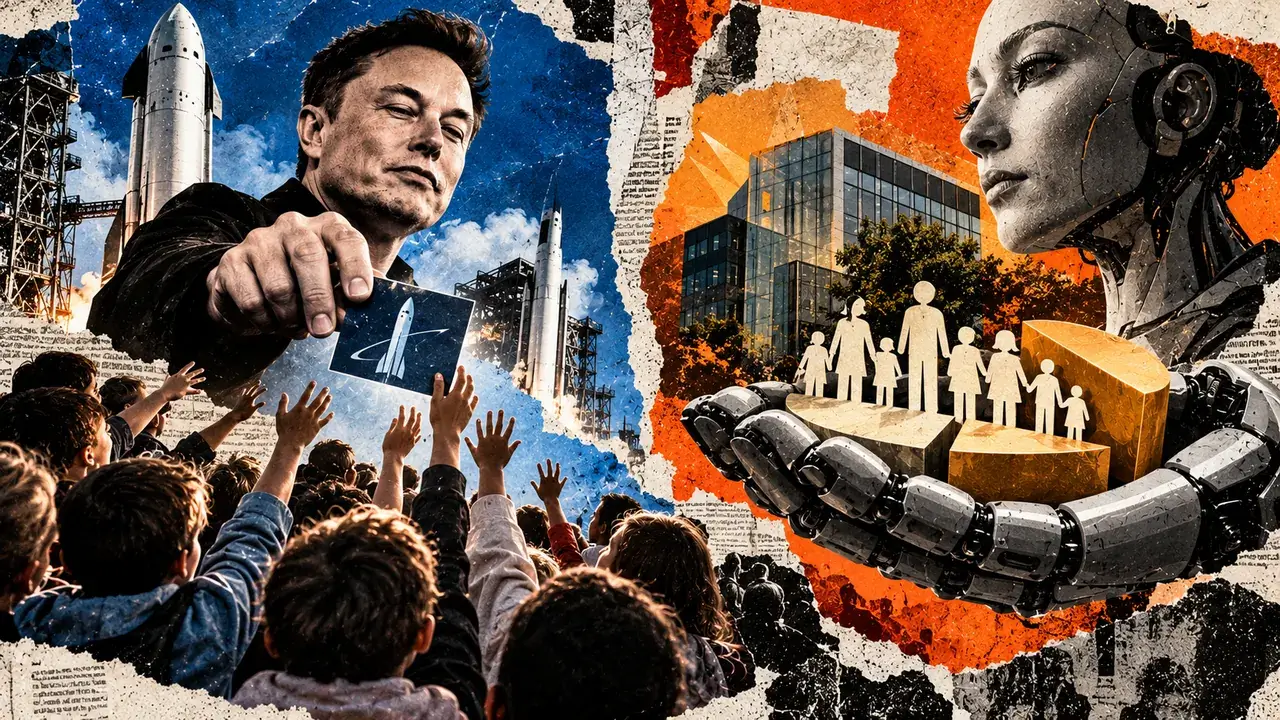
We have reached the stage of the AI cycle where the main characters are trying to figure out how to give away money they haven't technically earned yet. Both Elon Musk and Anthropic have recently signaled plans to redistribute the massive wealth generated by their respective AI ventures. On the surface, it looks like high-level philanthropy or a solution to the inevitable displacement of human labor. If you look closer, it looks like a sophisticated strategy for maintaining control and social permission.
The Musk Multi-Billion Dollar Promise
Elon Musk has been vocal about the potential for xAI, his artificial intelligence firm, to reach a valuation in the trillions. In a recent move, he suggested that a significant portion of his personal stake in the company—estimated at over $100 billion by 2027—could be diverted into a wealth-sharing model. The idea is that as AI takes over jobs, the value created shouldn't just sit in a billionaire's bank account.
But we have to look at the math and the timeline. Musk is talking about his personal holdings, not the company's treasury. This is an important distinction. For builders, this isn't a business model; it is a personal legacy play. It is also tied to his vision of Universal High Income rather than Universal Basic Income. He is betting that AI doesn't just meet our needs, but creates an abundance that makes traditional work optional. It sounds great, but it relies on a single point of failure: Elon's personal discretion and the continued hyper-growth of xAI.
Anthropic and the Long-Term Benefit Trust
Anthropic, the well-funded rival to OpenAI, is taking a more institutional approach. They have proposed an initial allocation that could reach billions, but there is a catch. This plan requires stockholder approval. Unlike a solo founder making promises on a social media platform, Anthropic has to navigate a board and a complex web of investors including Amazon and Google.
Their model involves a Long-Term Benefit Trust. The goal is to ensure that the development of AGI (Artificial General Intelligence) benefits humanity as a whole, rather than just the people who bought in early. While the intent seems noble, the structure remains discretionary. Future additions to this fund are not guaranteed. For those of us building in the trenches, this looks like a corporate governance experiment. It is a way to bake ethics into the cap table, but it remains to be seen if the trust actually has teeth when real profits are on the line.
What This Means for AI Builders
If you are a founder or a developer, these headlines might feel distant. You aren't sitting on $100 billion. However, these moves set a precedent for how the public expects AI companies to behave. We are seeing the birth of a new corporate standard where "safety" and "sharing" are part of the marketing stack.
- Expectation of Social Impact: Investors may soon start asking how your AI tool benefits more than just your customers.
- Governance as a Feature: Anthropic's trust model shows that how you govern your AI might be as important as the code itself.
- Personal vs. Institutional: Musk is doing this via personal wealth; Anthropic is doing it via corporate structure. Builders need to decide early which path they are on.
The Skeptical View: Marketing or Mission?
I have spent enough time in this industry to know that a promise for 2027 is an eternity in tech years. A lot can happen between now and then. Valuations can crater, boards can be overthrown, and regulatory environments can shift. When I see figures like $110 billion being tossed around, I don't see a gift to humanity yet—I see a defensive moat. By promising to share the wealth, these companies are trying to head off government intervention and public backlash.
They want us to believe that AI won't just take our jobs, but will also pay our bills. But until these plans are legally binding and the money starts flowing into the hands of the people, it is just a high-stakes PR campaign. Real wealth sharing happens through decentralized access to tools, not through centralized benevolence from the top of the pyramid.
The Takeaway for the Ecosystem
We shouldn't dismiss these plans entirely, but we shouldn't celebrate them as a solved problem either. The total figure of $110 billion is a massive number designed to grab headlines. For the builder, the real story is the shift toward "AI for Good" as a core business requirement. Whether it's Musk or Anthropic, the message is clear: if you want to build the future of intelligence, you have to at least pretend you're doing it for everyone.
The value of AI shouldn't be measured by how much a founder promises to give away, but by how much utility and agency it puts back into the hands of the individual user.
As we move toward 2027, watch the fine print. Watch the stockholder votes at Anthropic and watch the actual liquidity of xAI. The bridge between a billionaire's promise and a functional social safety net is a long one, and it hasn't been built yet.
Read the original at CryptoSlate →