The PHP Ghost in the Machine
For most founders building in the Web3 and AI space, PHP feels like a relic from a different era. We talk about Rust, Solidity, and Python. We argue about LLM architectures and Layer 2 scaling solutions. But beneath the shiny surface of the modern stack, the internet is still held together by legacy code. And right now, that foundation is cracking.
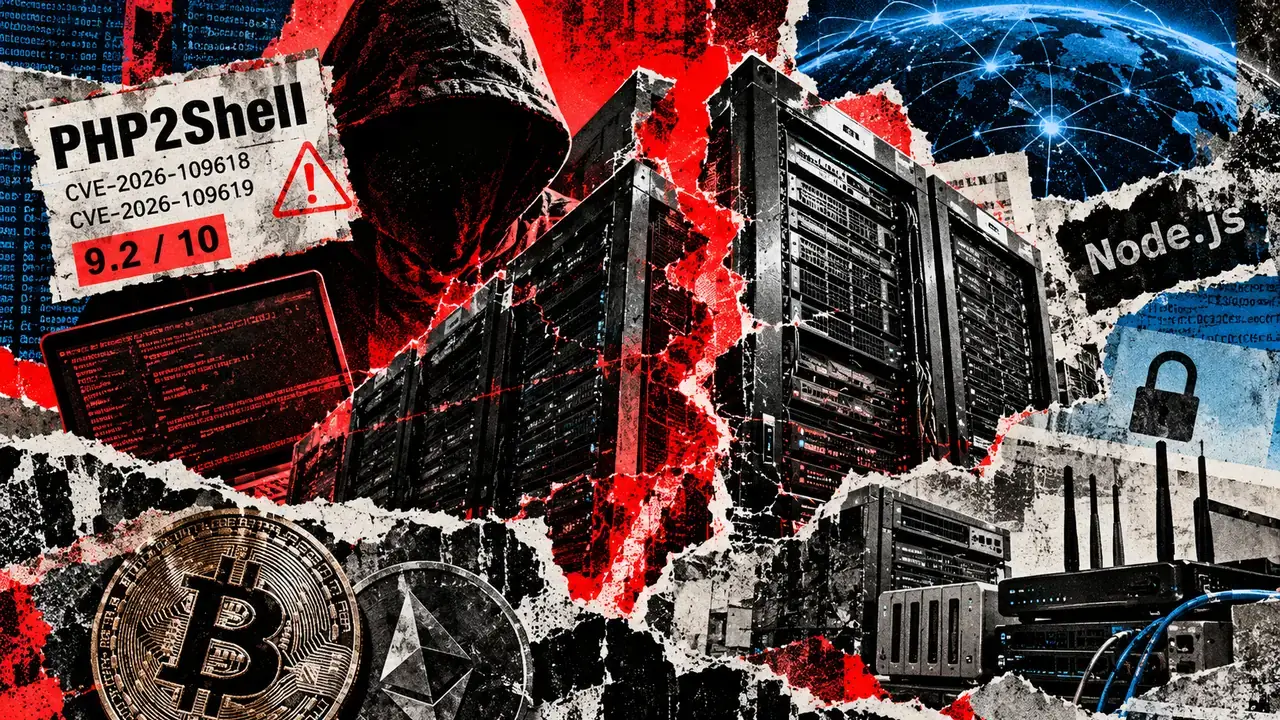
On October 21, the PHP development team pushed out emergency patches for two critical vulnerabilities, identified as CVE-2026-109618 and CVE-2026-109619. These aren't minor bugs that require a specific set of stars to align. These are remote code execution flaws. That means an unauthenticated attacker can run their own code on your server without needing a password, an API key, or an invite. If your server is running a vulnerable version of PHP, you are effectively leaving the front door unlocked and the lights on.
Why This Hits Crypto Harder
You might think your dApp is safe because you don't use PHP for your smart contracts. That is the wrong way to look at security. In my experience, the biggest risks for crypto projects aren't usually in the core protocol; they are in the periphery. Your marketing site, your blog, your documentation portal, or your customer support ticketing system—much of this third-party software still runs on PHP.
If an attacker gains control of your web server through a legacy PHP site, they have a beachhead. From there, they can intercept traffic, inject malicious scripts into your frontend, or phish your users by altering the UI they trust. Security chiefs across the industry are sounding the alarm because they know how many projects have forgotten corners of their infrastructure that haven't been touched in years.
The Developer Trap: Infrastructure Blindness
As a founder, it is easy to get tunnel vision. We focus on the product we are shipping today. We forget about the WordPress site we stood up three years ago to post dev updates, or the internal dashboard built by an intern who left in 2022. This is what I call infrastructure blindness.
The CVSS v4.0 severity scores for these vulnerabilities are at the top of the scale. This isn't a drill. The PHP team even took the rare step of issuing an advance warning on October 20 to give operators a head start. When the maintainers of one of the most widely used languages on earth start shouting, you need to listen. The scramble we are seeing worldwide is a direct result of teams realizing just how much of their stack is actually exposed.
What Builders Need to Do Right Now
If you are managing a team or a project, your first step isn't to panic; it's to audit. Do not assume your stack is 'modern' enough to be immune. Here is the immediate checklist:
- Inventory your subdomains: Often, it is not the main app that is the problem, but a legacy blog or landing page running on a separate server.
- Check third-party dependencies: Are you using managed services that might be running PHP under the hood? Ask your providers for their patch status.
- Automate your patching: If this event caught you off guard, your CI/CD pipeline or your server management isn't robust enough. Security shouldn't be a manual fire drill every time a CVE drops.
The Founder's Perspective
I have a healthy skepticism for the 'emergency' of the week, but this one is different. In the crypto world, reputation is your only real currency. You can have the best tech, the fastest transactions, and the most innovative AI agents, but if your site gets defaced or your users' sessions get hijacked because of a five-year-old PHP installation, you are done. The trust is gone, and in this market, it rarely comes back.
We spend so much time talking about 'decentralization,' but the reality is that most of our touchpoints with users remain centralized. The servers that host our frontends and our data are the weakest link. This PHP patch scramble is a reminder that we are all building on top of layers of software that we didn't write and often don't understand.
Stop Ignoring the Legacy
There is a tendency in the 'builder-first' culture to ignore anything that isn't new. We want to talk about the future. But the future is built on the past. If you are a founder, you need to be just as obsessed with your legacy maintenance as you are with your new features. A vulnerability like this is an opportunity to clean house.
Don't just patch these two CVEs and walk away. Use this as a reason to sunset the services you don't need. If that old PHP blog is just sitting there, delete it. If you can migrate a legacy tool to a static site generator or a more modern framework, do it. The less surface area you have to defend, the less likely you are to be the next headline on a security blog.
The most secure code is the code you deleted three months ago because it served no purpose. Everything else is a liability waiting for a CVE.
The Takeaway
The PHP emergency patch isn't just a technical hurdle; it’s a management test. If your team can't identify and patch these vulnerabilities within 24 hours, your internal processes are broken. Security isn't a department; it's a culture. In an era where AI can help attackers find these vulnerabilities faster than ever, your response time is the only thing that stands between you and a total breach. Patch now, audit later, and never assume your infrastructure is 'too modern' to fail.
Read the original at CryptoSlate →