We talk a lot about the 'trustless' nature of blockchain, but the reality for most investors is still rooted in old-school signals. If a company has a fancy office, a high-profile legal team, or a footprint on a government website, people assume the due diligence has already been done. That assumption just cost investors a collective $130 million.
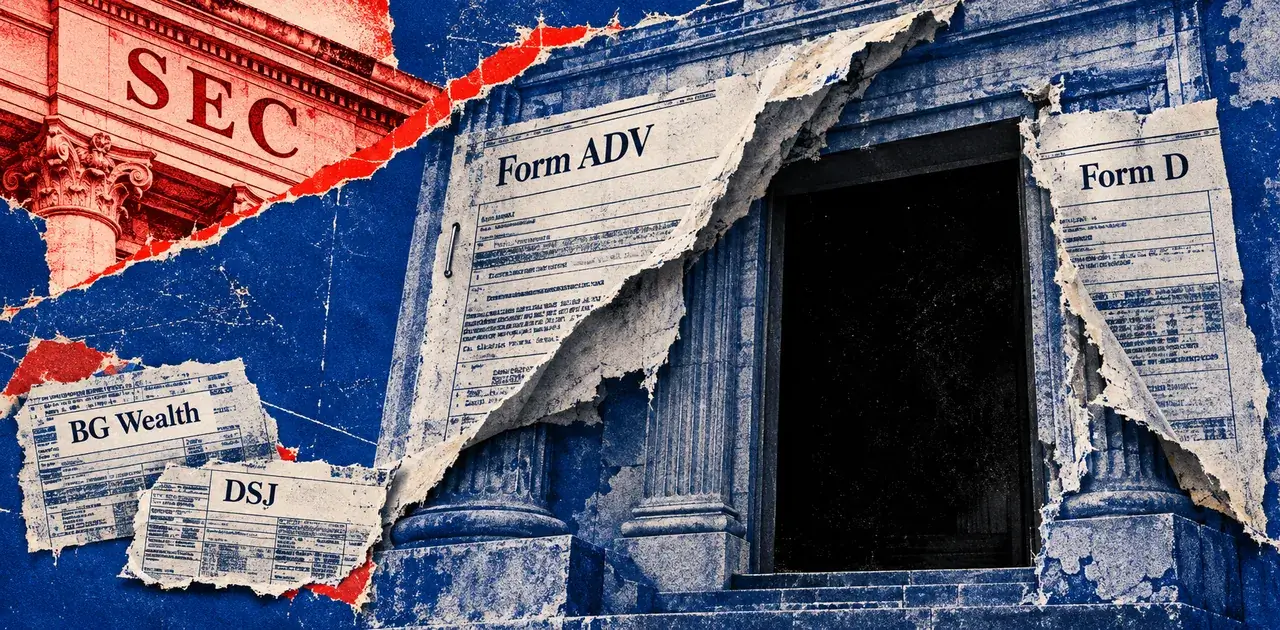
The SEC recently filed a complaint against a group that allegedly turned the agency’s own EDGAR database into a marketing tool for fraud. For those outside the regulatory loop, EDGAR is the system where public companies file their required disclosures. It is supposed to be the gold standard for transparency. Instead, it became a backdoor for a sophisticated grift.
The Illusion of Legitimacy
The core of this scheme wasn't particularly revolutionary, but the execution was clever. The defendants allegedly used the SEC’s filing system to post documents that made their operation look like a regulated, multi-million dollar venture. To an average investor, seeing a filing on a .gov domain is the ultimate green light. It bypasses the natural skepticism we usually have for random Telegram shills or Twitter bots.
As a founder, you know how hard it is to build trust. You spend years shipping code and talking to users to earn a sliver of credibility. These bad actors skipped that process by hijacking the reputation of the regulator itself. They didn't break the blockchain; they broke the human interface of the financial system.
Why the EDGAR System Failed
The SEC’s filing system is designed for high-volume corporate reporting, but it relies on a certain level of good faith and administrative processing that isn't built for the speed of modern crypto scams. The agency is now seeking a future filing bar against the individuals involved, which is essentially the regulatory equivalent of a restraining order for paperwork.
This highlights a massive gap in how we view authority in the digital age. Just because a document exists on a government server doesn't mean the government has verified the contents of that document. It’s a repository, not a validation engine. Scammers exploited this nuance, knowing that the average person wouldn't know the difference.
The Cost of 'Official' Signal Noise
The alleged $130 million loss is a staggering figure, but the damage to the industry’s reputation is even worse. Every time a story like this breaks, it reinforces the narrative that the crypto space is nothing but a digital Wild West. It makes it harder for legitimate builders to get bank accounts, find insurance, or convince non-crypto natives to use their products.
What’s particularly frustrating for those of us in the trenches is that these scams often use the language of innovation to hide the mechanics of theft. They talk about high-yield returns and revolutionary tech, but the underlying 'innovation' is usually just a new way to lie. In this case, the lie was wrapped in the flag of the SEC itself.
What Builders Can Learn From This
If you’re building in this space, there are a few hard truths to take away from this mess. First, don't rely on third-party institutions to carry your credibility. If your project’s primary value proposition is that it’s 'officially recognized' by an agency, you’re building on sand. True trust in the crypto world should come from open-source code and verifiable on-chain history.
Second, we need to be louder about educating users on how to verify information. We’ve spent so much time teaching people how to secure their private keys that we’ve forgotten to teach them how to spot a fake filing. If the industry wants to move past this phase, we have to prioritize tools that provide actual verification rather than just visual signals of authority.
- Don't assume a .gov link equals a government endorsement.
- Verify the entities behind the filings through independent legal registries.
- Remember that the SEC is a reactive body, not a proactive filter for every document uploaded to their servers.
The Regulatory Backlash
The SEC is understandably embarrassed here. When your own infrastructure is used to facilitate a nine-figure fraud, you tend to overcompensate in your response. We should expect the filing process for small or crypto-adjacent firms to become significantly more painful. The 'bad actor' tax is real, and the entire industry pays it every time something like this happens.
The agency is asking for monetary relief and permanent bans, but for the victims, that money is likely long gone. This is the cycle we’ve seen repeated for decades: a loophole is exploited, a massive loss occurs, and the regulator tightens the screws on everyone—usually hurting the honest startups more than the agile scammers who have already moved on to the next tactic.
The Bottom Line
This isn't a failure of crypto technology; it’s a failure of the legacy systems we still use to vet information. The fact that $130 million could be drained by leveraging a government website shows that we are in a weird transitional period. We have 21st-century financial assets running on 20th-century regulatory rails.
The biggest risk to the industry isn't a lack of regulation, it's the false sense of security that 'official' systems provide while being easily gamed by those with bad intentions.
Stop looking for the seal of approval from agencies that aren't equipped to give it. Build products that prove their own worth through transparency and code. Until the physical and digital worlds are better synced, the only person you can trust to do the due diligence is yourself.
Read the original at CryptoSlate →