The Trust Tax is Coming Due
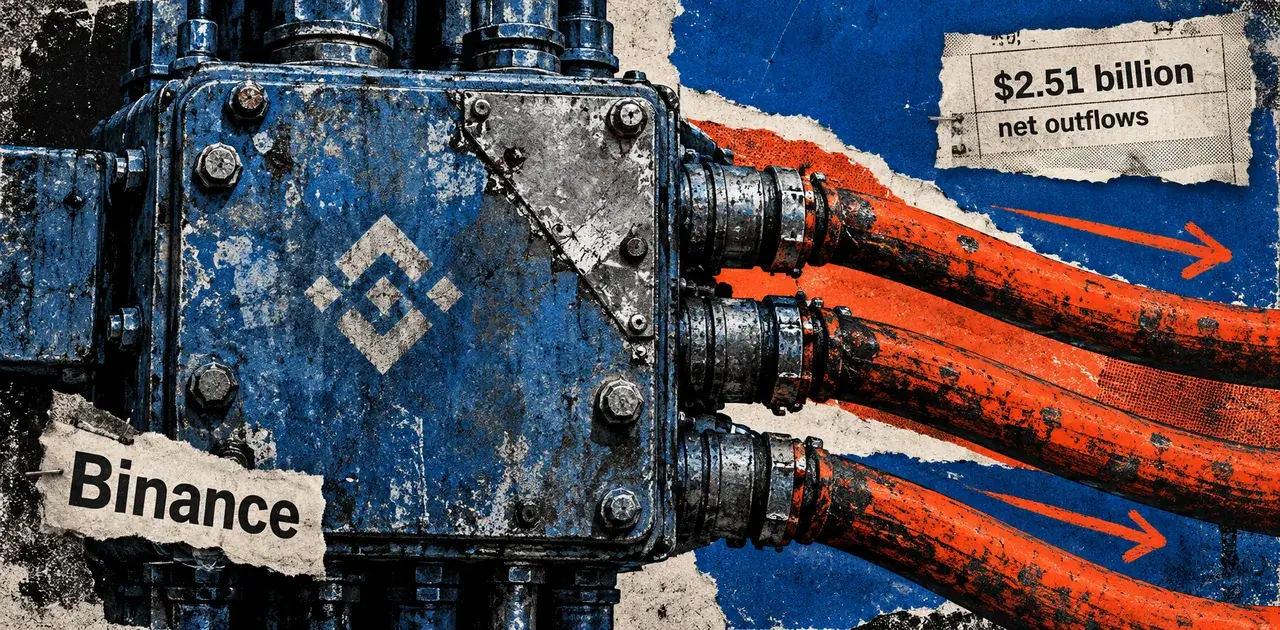
We are watching a stress test of the highest order. After a massive security breach and a temporary freeze on operations, Binance has finally reopened the gates. The result? A staggering $3.6 billion in capital vanished from the platform in a matter of hours. This isn't just a number on a spreadsheet; it is a clear signal that the market is finally putting a price on central counterparty risk.
As builders, we often talk about the benefits of centralized exchanges for liquidity and onboarding. But when the dust settles on a hack of this magnitude, the reality is that users don't care about your UI or your marketing budget. They care about custody. When you lock the doors, even to protect them, you break the fundamental promise of self-sovereignty that crypto was built on. The $3.6 billion exodus is a collective vote of no-confidence in the safety net of centralized custody.
The Immutable Wall
While Binance is managing a PR and liquidity crisis, the decentralized side of the fence is having an even more important philosophical battle. The co-founder of THORChain has recently come out against the idea of freezing assets on the protocol, even when faced with pressure from federal authorities. This isn't just a rebel stance for the sake of being difficult; it is a foundational argument for what a protocol actually is.
If a decentralized protocol can be toggled on and off by a few developers or a legal mandate, it isn't really decentralized. It is just a slow database with extra steps. The THORChain team is pointing out a harsh truth: if you want the benefits of a permissionless system, you have to accept the reality that the system cannot be weaponized against specific individuals, regardless of who is asking. This puts developers in a tight spot between legal compliance and the technical integrity of their code.
Why This Matters for Builders
If you are building in this space, you are likely feeling the squeeze. On one hand, you have the Binance model: high efficiency, high compliance, but a single point of failure that can lead to billions in outflows when things go wrong. On the other hand, you have the THORChain philosophy: total immutability, no kill-switches, and a high risk of regulatory friction.
As a founder, you have to decide which side of the line you are going to stand on before the crisis hits. You cannot build a "sort of" decentralized protocol. If you leave a back door open for a regulator, a hacker will eventually find it, or the users will realize you are just another centralized entity wearing a mask. The market is becoming smarter. They are watching how these protocols react under fire, and they are moving their money to the teams that stay true to their technical architecture.
The Fallout of the Big Hack
The sheer scale of the Binance breach has shifted the conversation from "if" a major exchange will get hit to "how often." We have reached a point where the complexity of these platforms is their greatest weakness. By trying to be everything to everyone—a bank, a broker, a launchpad, and a custodian—these giants have created an attack surface that is impossible to fully defend.
When users see $3.6 billion moving to on-chain wallets or smaller, more focused competitors, they are telling us that they would rather deal with the complexity of their own keys than the uncertainty of a frozen account. This is a massive opportunity for founders building non-custodial tools. The friction of self-custody is still high, but the fear of centralized failure is finally starting to outweigh that friction.
Regulation by Code
The THORChain situation highlights a growing divide in the industry. We are seeing a shift toward "Regulation by Code" versus "Regulation by Compliance." If the code doesn't allow for a freeze, the developer physically cannot comply with a request to stop a transaction. This creates a fascinating legal gray area. Can you be held liable for something your software is technically incapable of doing?
For years, we have hidden behind the word "decentralized" as a marketing buzzword. Now, the FBI and other agencies are calling the bluff. The founders who survive this era will be the ones who actually built what they said they were building. If your protocol has a multi-sig that can halt the chain, you are a financial institution. If your code is truly immutable, you are a software provider. You need to know which one you are today.
The Founder's Takeaway
The lesson from this week is simple: Liquidity follows trust, and trust follows transparency. Binance is losing billions because they had to go dark to save themselves. THORChain is drawing a line in the sand because they know that if they cross it once, the protocol's value proposition is dead forever.
If you are building an app or a protocol, don't wait for a hack to decide your stance on censorship and custody. Build the architecture that matches your values. If you want to be compliant and safe, lean into it and build the best centralized experience possible. If you want to be decentralized, ensure the code is actually out of your hands. The middle ground is a dangerous place to be, and as we saw with the Binance outflows, it's an expensive place to stay.
The market is no longer forgiving of protocols that claim to be decentralized but act like banks when the pressure is on.
We are entering an era of accountability. The billions leaving centralized platforms are looking for a new home. Whether they land in your protocol depends on whether you've built a fortress or a house of cards.
Read the original at Cointelegraph →